

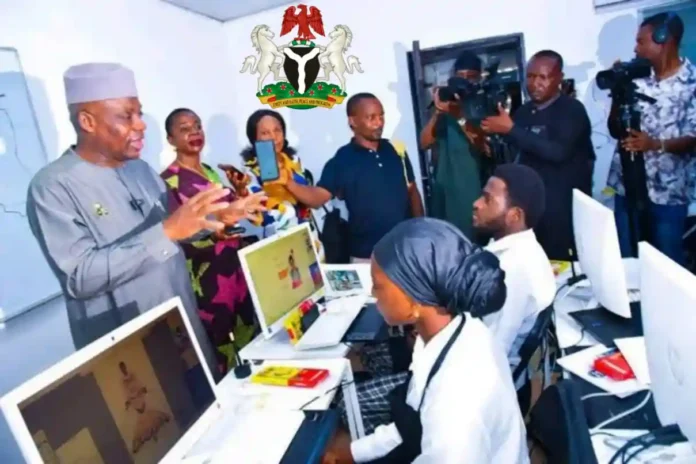
As 2026 approaches, many Nigerians are already looking ahead to federal government programmes that offer skills training, structured opportunities, and practical empowerment rather than empty promises. Under the Renewed Hope agenda, several initiatives are designed to help young people learn, earn, and build sustainable livelihoods. Participants also get paid, either monthly stipend or a one-time payment, and also given free starter packs.
Below are nine key FG programmes expected to be open for applications in 2026, based on how they currently operate.
1. Youth Economic Intervention and De-Radicalization Programme (YEIDEP)
YEIDEP, formerly Nigerian Youth Economic Engagement and De-Radicalization Programme (NIYEEDEP) focuses on enterprise support and economic inclusion. It is implemented in batches, and YEIDEP batch B portal is open via yeidep.org. Applicants will receive one time payment ranging from ₦50,000 to ₦500,000, depending on their business category and assessment outcome.
The programme targets Nigerian youths between 18 and 35 years old, who have a business idea or a small existing venture and are willing to undergo basic training or mentoring before disbursement.
2. Technical and Vocational Education and Training (TVET)
Federal Ministry of Education (FME) TVET is the federal government’s flagship skills pathway for trades and technical careers. Participants are trained in areas such as electrical work, mechanics, ICT, construction, and other vocational skills. Trainees currently receive ₦22,500 monthly as a stipend, while accredited training centres are paid monthly N45,000 per trainee. TVET is open to Nigerians willing to commit to hands on learning, and attendance is required to qualify for stipends. Applicant must be under 35 years to apply on tvet.education.gov.ng for batch 2 in 2026.
3. National Directorate of Employment (NDE)
The National Directorate of Employment runs multiple training and resettlement schemes for unemployed Nigerians under Renewed Hope Employment Initiative (RHEI). These include vocational skills development, entrepreneurship training, and community based programmes. Stipends under NDE vary by scheme and duration, but recent FG payments range from ₦10,000 to ₦35,000. NDE phase 3 programme is expected open in 2026 to youths, school leavers, artisans, women, and graduates seeking practical skills and self reliance. NDE RHEI application uses nderegistrationportal.ng.
4. Nigeria Jubilee Fellows Programme (NJFP)
The NJFP is a structured 12 month fellowship that places young graduates in paid work environments. Fellows currently receive ₦150,000 monthly throughout the programme. NJFP targets unemployed Nigerian graduates aged 30 or below, who have completed NYSC and meet minimum academic requirements. It is designed to improve employability through real work experience rather than classroom training. Interested applicants apply via njfp.ng.
5. 3 Million Technical Talent Programme (3MTT)
The 3MTT is a large scale digital skills programme aimed at building Nigeria’s tech workforce. Participants are trained in software development, data, cybersecurity, cloud computing, and related fields. There is no fixed monthly cash stipend, but training is free and sometimes supported with learning resources or device partnerships. Eligibility is broad, focusing on Nigerians interested in digital careers, with selection done in cohorts.
6. ITF Skill Up Artisans Programme (SUPA)
Industrial Training Fund’s SUPA focuses on upgrading the skills of artisans across different trades. Recent cohorts have received stipends of ₦35,000 during training. Beyond stipends, participants benefit from structured practical training and certification. SUPA is open to existing and aspiring artisans who register through the official portal at supa.itf.gov.ng.
7. Circular Economy Youth Empowerment Initiative (CEYEI)
Often called Waste to Wealth initiative, CEYEI trains youths in recycling, waste management, and green enterprise. While there is no fixed national stipend publicly stated, participants gain skills and access to support that can lead to eco friendly businesses. It targets young Nigerians interested in sustainability and climate related opportunities.
8. Creative Economy Development Fund (CEDF)
CEDF is a Federal Government initiative approved to support Nigeria’s creative and cultural industries, including film, music, fashion, digital content, gaming, publishing, and related sectors. CEDF operates in phases, and Phase 3 is expected to be opened to SMEs and MSMEs in the creative space. Support is project based and may include grants, equity, or structured financing, depending on scale. There is no fixed stipend.
Applications are submitted during announced calls through the official portal at cedf.gov.ng, with funding amounts determined per project.
9. National Talent Export Programme (NATEP)
The National Talent Export Programme is a Federal Government programme designed to prepare Nigerians for global service export and remote work opportunities. The aim is to create one million direct export-linked jobs by 2030. It focuses on training, certification, and positioning Nigerian talent for international markets in sectors such as technology, digital services, creative services, and outsourcing. NATEP is not a grant, loan, or stipend programme. Its value lies in skills development and access to export pathways.
Training duration varies by sector and partner institution. Applications are cohort based and announced periodically, with programme application provided through natep.gov.ng.
These programmes show that 2026 applications will likely favour skills, structure, and real participation over quick cash. For applicants, understanding what each programme truly offers is key to choosing the right path.

