Governor Abdullahi Sule has disclosed that the World Food Forum (WFF) has selected Nasarawa State for a major investment in sustainable agriculture, pledging to inject $200 million into the sector.
 Follow us on Google News
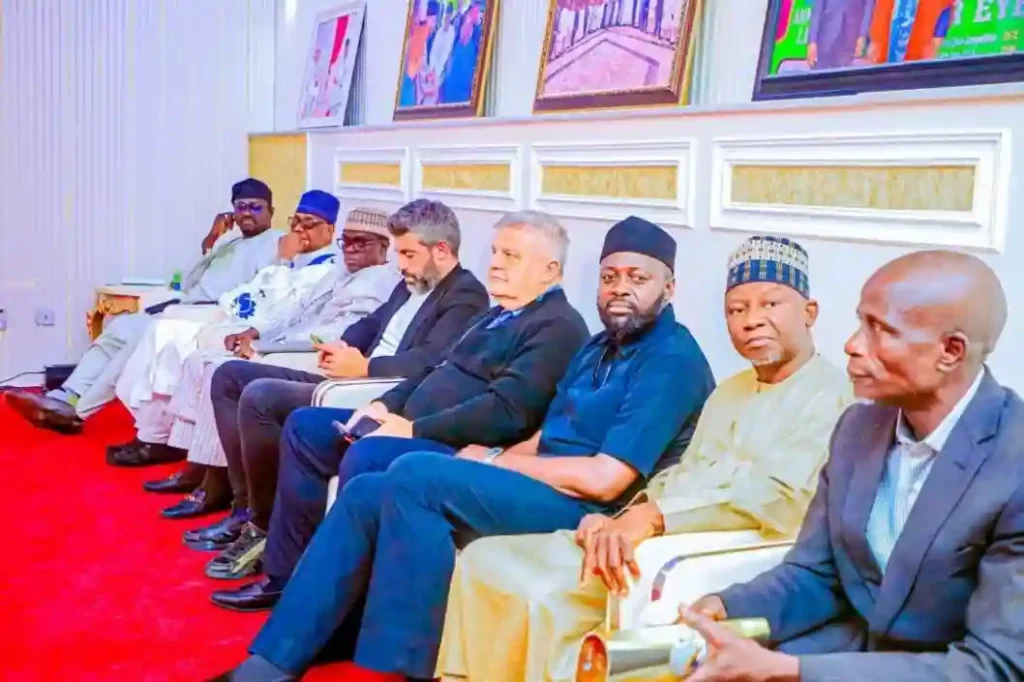
The Governor made this known on Thursday when he received the Chairman of the National Steel Council, Professor Abdulkarim Abubakar Kana (SAN), who led two private firms on a courtesy call at the Government House in Lafia.
Governor Sule explained that the World Food Forum had invited him to speak at the Nigeria Economic Summit Group, where Nasarawa and Kano States were identified as models of sustainable agriculture. He noted that the commitment from the global body was a sign of confidence in Nasarawa’s agricultural growth.
“The World Food Forum believes that agriculture is sustainable in Nasarawa State. That’s why they are also bringing their money. They are pledging about $200 million that they can start with for us in Nasarawa State. I promised them that I will be there because if I see 200 million coming to Nasarawa State, I will run to Abuja,” the Governor stated.
He emphasized that Nasarawa remains open for business, highlighting agriculture, mining, and solid minerals as key areas of competitive advantage. According to him, his administration is committed to supporting serious investors with a conducive environment for their operations.
While addressing the delegation, Governor Sule reflected on the challenges facing the steel industry in Nigeria, recalling the collapse of the rolling mills in Jos, Katsina, and Oshogbo. He reassured the visiting investors of his government’s readiness to provide the needed guidance for sustainable ventures in the state.
Drawing from his background as an engineer at the Jos Steel Rolling Mills, the Governor stressed that investment in steel production remains viable despite the comatose state of Ajaokuta and Aladja steel plants.
“You will write your name in gold if you take steel development seriously in Nigeria. We are ready in Nasarawa State. We will talk to you from a point of knowledge. We are happy to discuss the scale of your projects and the processes you want to use,” he said.
The visit also marked the presentation of two companies exploring opportunities in Nasarawa. Professor Kana introduced the Turkish Koseoglu Group, which has expressed interest in tin mining for steel production, and Copenhagen Nigeria Ltd, a firm focusing on bridging investment gaps in development sectors.
Speaking during the visit, Professor Kana stated that the National Steel Council is now taking an active role in facilitating investments in the sector after years of inactivity.
“We are here, Your Excellency, on behalf of the National Steel Council. We are investment facilitators in the steel sector. We brought these investors here for a reason. First of all, it is my state, and secondly, Your Excellency, we’re here to do with you what you’ve been doing, what you know how to do best, to bring investors and to establish investments in the state,” Kana explained.
He recalled that although the NSC was established in 1979 to coordinate the steel industry, it never functioned as intended, leaving the sector in a weak state. He lamented that without a central coordinating agency, Nigeria invested massively in steel projects that eventually became moribund, with rolling mills across the country shutting down.
The Chairman then presented the Turkish investors and representatives of Copenhagen Nigeria Ltd, describing them as serious partners ready to commit to projects that could revive the steel and mining sector in Nasarawa and beyond.
Prof Kana was accompanied on the visit by the Executive Secretary of the National Steel Council, Ambassador Musa Fari, alongside other senior officials.
Governor Sule reiterated that Nasarawa’s focus on sustainable agriculture and mining aligns with global investment trends. He assured the delegation that the state government is determined to support initiatives that will create jobs, drive industrial growth, and expand economic opportunities in the region.