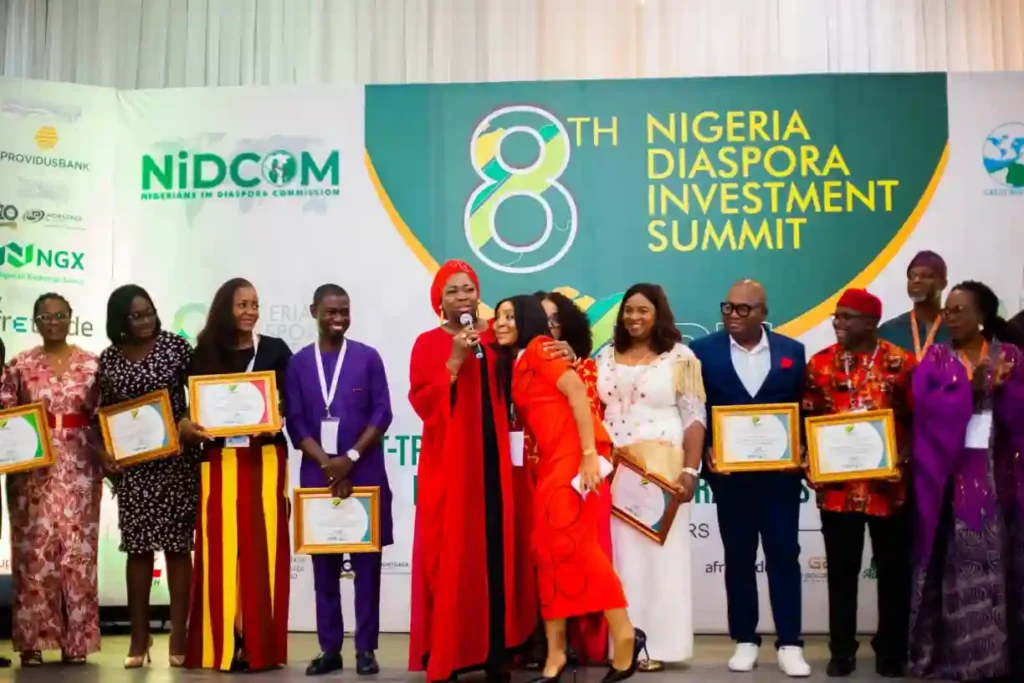
Diaspora investors are showing growing interest in scalable opportunities in Nigeria’s expanding economy as the three-day 8th Nigerian Diaspora Investment Summit (NDIS 2025) ended with a strong display of investment-ready ideas. The event featured high-profile pitching sessions across real estate, health, creative and entertainment, sports, agriculture, and renewable energy. Sector experts guided entrepreneurs as they presented innovations aimed at attracting diaspora-backed funding, boosting economic growth, and strengthening Nigeria’s position as a rising investment destination.
 Follow us on Google News
The Real Estate Pitching Session, moderated by Dr Henry Ogunjobi, highlighted the sector’s potential to reshape infrastructure and housing development. Ogunjobi said Nigeria is at an important stage for investment, noting that the combination of expertise, capital, and global exposure can accelerate growth. He explained that “Nigeria is at a turning point, where expertise, capital, and global exposure can redefine real estate and infrastructure development.” He encouraged participants to be clear about their business models and investor needs, adding, “Tell us the challenge you are solving, your corporate structure, and the support you need. Clear, actionable pitches help connect ideas to the right investors both here and online.”
The Health Pitching Session, moderated by Jane Osaretin Ifechukwu, pointed out the country’s health system gaps, including fragile primary care structures and supply shortages. She emphasized that the sector provides space for impactful innovation, saying, “Nigeria faces numerous health challenges, but this is also an opportunity for bold, practical solutions.” She urged entrepreneurs to present well-defined ideas, stating, “We want to hear what problem you are solving, how you are structured, and what specific support will turn your idea into impact. This is how we build partnerships that strengthen our national health ecosystem.” The session aligned with high-value health sector investment trends and highlighted the growing interest in digital health, medical technology, and improved care delivery.
Moderating the Creative, Entertainment and Sports Session, Beverley Agbakoba Onyejianya stressed the rising global influence of Africa’s creative industries. She described the sector as one experiencing rapid expansion, explaining, “We are witnessing a renaissance across Nollywood, sports tech, and the creative industries. These sectors are no longer cottage industries — they are scalable, exportable, and globally competitive.” She added that the emergence of local streaming platforms, the growth of sports technology, and increased digital engagement show “a new era where African talent becomes a major global export.” The session reflected how creative entrepreneurship is becoming a leading contributor to Nigeria’s digital economy and attracting high-value investments.
Agribusiness and Energy & Renewables sessions also drew significant interest, focusing on critical national needs such as food security and sustainable power. During the agribusiness segment, Dr Moji Davids described agriculture as the “lifeline” of the economy and stressed that food security remains a pressing global issue. She called for stronger collaboration between innovators and technologists to address shortages and create job opportunities. Davids, who owns Xtralarge farms and resorts, praised the summit for giving young entrepreneurs visibility and a chance to develop impactful ideas. The pitches showcased precision farming technologies, improved seed systems, aquaculture enhancements, women-focused leadership initiatives, and solutions for strengthening agricultural value chains. Startups also presented digital marketplaces and value-addition processes aimed at helping smallholder farmers access markets and improve income.
In the Energy and Renewables session, moderators and interventionists Nick Agule, Managing Partner at Dominus Consulting, and Dr Peter Ntephe, CEO of ERHC, emphasized the importance of diversifying Nigeria’s energy supply. They pointed out that adopting renewable energy and cleaner systems would support job creation and a more sustainable economy. They also noted that a shift toward clean energy would benefit public health and environmental quality. Agule encouraged Nigerians to take advantage of new opportunities available under the recent Electricity Act, which is supported by President Bola Ahmed Tinubu’s Renewed Hope Agenda. He highlighted that the Act encourages electricity generation and distribution at both federal and state levels. Startups in this session presented solar mini-grid systems, clean cooking solutions, compressed natural gas options for transportation, and waste-to-energy technologies.
Across sessions, experts emphasized innovation, investor-readiness, mentorship, gender inclusion, and the commercial viability of emerging businesses. The final day of NDIS 2025, themed Fast-Tracking Regional and National Development by Mobilising Diaspora Investment, reinforced the summit’s role in connecting Nigerian entrepreneurs with diaspora investors. The platform continues to serve as a bridge for investment, job creation, and opportunities aimed at driving sustainable national development.