
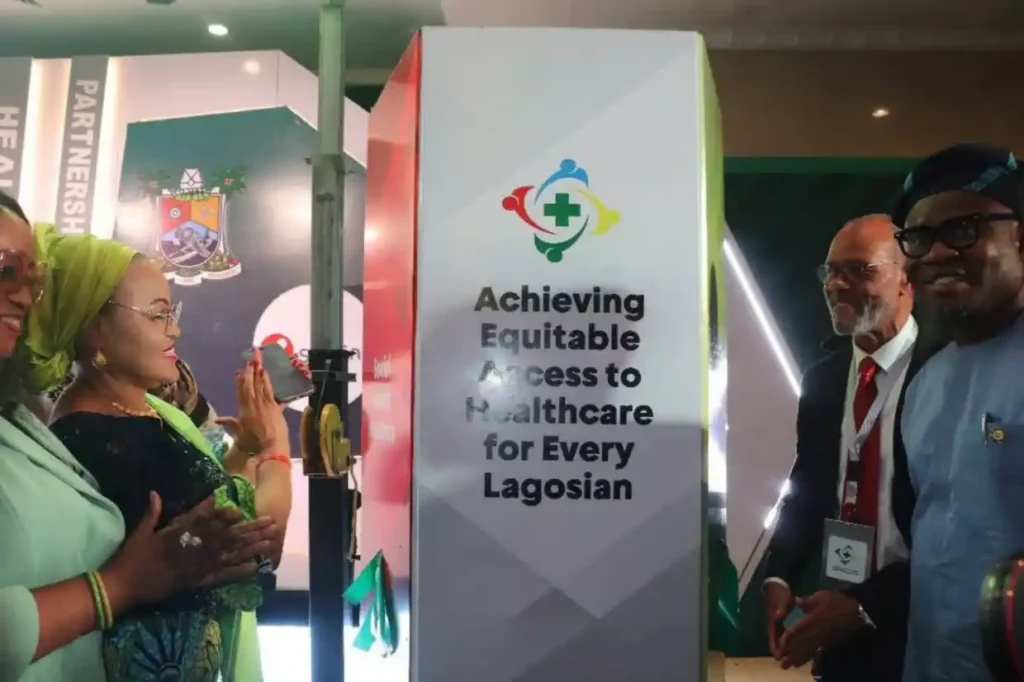
Lagos State on Tuesday marked a major step in its health sector reforms with the official launch of the Lagos Private Health Partnership, a new framework aimed at transforming health financing and expanding insurance coverage for millions of residents.
 Follow us on Google News
The event, held at the Civic Centre in Victoria Island, brought together government officials, private insurers, healthcare regulators, financial institutions, and development partners who all expressed support for a more transparent and unified approach to health insurance and service delivery in the state.
Delivering the keynote address on behalf of the Lagos State Governor, the Secretary to the State Government, Abimbola Salu-Hundeyin, described the initiative as “a historic step towards building a resilient and future-driven health financing architecture capable of protecting households from catastrophic expenditure.” She explained that the Lagos Private Health Partnership shows the state’s determination to translate compulsory insurance mandates into workable and sustainable systems that will support long-term reform and economic growth.
According to the Governor, the initiative grew directly from Lagos’ domestication of the National Health Insurance Authority Act of 2022, which the state implemented through an Executive Order signed in July 2024. The order made health insurance mandatory for all residents and created enforcement mechanisms to improve compliance. He noted that a Technical Working Group made up of industry stakeholders produced the operational guidelines that later led to the Lagos Private Health Partnership, ensuring that the private sector aligns with the state’s policy direction, risk pooling goals, and digital accountability requirements.
The Governor emphasised that more than 70 percent of healthcare encounters in Lagos occur in the private sector, and the reform is designed to strengthen that reality by ensuring that private providers and insurers operate within a stable framework that balances profitability, service quality, and equity. He also announced that the state has adopted a population-based enrolment model for employees of private organisations to ensure fair risk distribution and increase access to subsidised health plans.
Lagos Commissioner for Health, Akin Abayomi, said in his opening remark that the launch represents a firm break from a decade of fragmented and inefficient private health insurance practices marked by unhealthy competition, enrollee restrictions, and loss of trust among providers and beneficiaries. He stated that the Lagos Private Health Partnership was built to restore fairness, transparency, and sustainability by introducing a collaborative procurement platform that places value-driven outcomes above price wars.
Abayomi expressed concern that despite Lagos’ population of more than 25 million and its strong economic base, the state still struggles with low insurance penetration, workforce shortages, and rising medical tourism. He said the new reform is one of the strongest tools the government has introduced to improve health outcomes, rebuild trust, and enhance the overall performance of the state’s healthcare system. He stressed that improved financing, digital governance, and coordinated insurance processes will give residents better access to affordable and reliable healthcare services.
The Commissioner explained that the system uses a fully digital marketplace to manage enrolment, provider selection, fund disbursement, claims processing, monitoring, reporting, and evaluation. According to him, this digital footprint will make the system more transparent and shift competition from pricing to value delivery, with quality assurance supervised by the state’s health facility monitoring agency. He added that full enforcement of mandatory health insurance will begin after a six-month sensitisation campaign, which aligns with the Governor’s directive to strengthen financial protection and cross-subsidisation.
Further detailing the reform, Abayomi said that the Lagos Private Health Partnership includes a state-managed risk equalisation and solidarity fund that will require private insurers to contribute 13 percent of premiums. He explained that the fund will support vulnerable groups, boost emergency response systems, and help Lagos move closer to achieving universal health coverage. He projected that if 20 million residents enrol at an average premium rate of 20,000 naira yearly, the state could inject more than 400 billion naira into the health financing system annually, creating a stronger and more stable sector.
Chairman of the Lagos State Health Management Agency, Adebayo Adedewe, said the initiative is a credible solution to long-standing challenges in health insurance and praised the government for its broad stakeholder engagement and technical planning. He described the launch as “a watershed moment” for health financing and gave assurance that the agency will remain committed to supporting the reform and guiding its implementation across the state.
National Adviser on Health Insurance Matters for the Healthcare Providers Association of Nigeria, Jimi Arigbabuwo, said the launch marks an important turning point in recognising the essential role of private healthcare providers. He urged the government to ensure fair compensation to promote sustainability, improve patient satisfaction, and reduce the rate of medical tourism by giving residents confidence in local health services.
Managing Director of Sterling Bank, Abubakar Suleiman, said the bank’s involvement aligns with its HEART agenda, which focuses on health, education, agriculture, renewable energy, and transport. He stressed that healthcare financing remains expensive without structural reform and that the bank will continue providing both financial and digital support to help the system remain efficient. Suleiman added that Lagos has created “a unified marketplace where digital governance, transparency, payment integration, and enrollee empowerment work together to improve value-based healthcare.”
Participants at the event agreed that the Lagos Private Health Partnership is one of the most comprehensive health financing reforms introduced in Nigeria and is likely to become a national model.
They emphasised that its success will depend on multisector collaboration, continuous public education, and firm policy enforcement. The Ministry of Health confirmed that the next steps include onboarding health maintenance organisations, piloting the system, reviewing early results, and expanding implementation across the entire state.
The event ended with a call to residents, private employers, civil society groups, insurers, and healthcare providers to support the shared vision of creating affordable, digital, and universal healthcare access for everyone living in Lagos.