
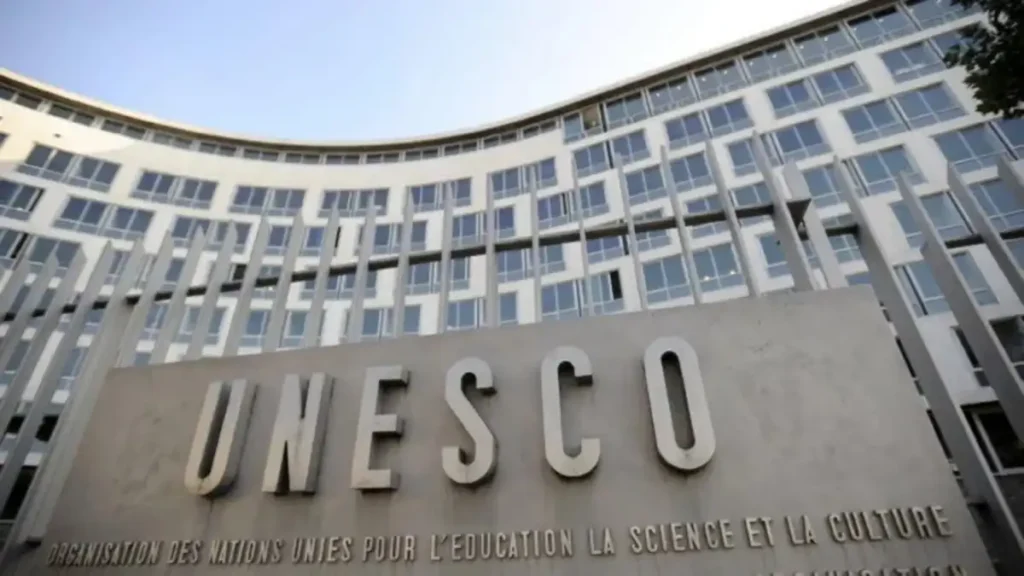
The Federal Government has announced a major partnership with the United Nations Educational, Scientific and Cultural Organisation Read and Earn Federation, UNESCO REF, to empower 4.5 million Nigerians under a national agricultural enterprise programme aimed at strengthening food security and climate resilience. The initiative was confirmed by the Office of the Senior Special Assistant to the President on Food Security, SSAP-FS, during a joint press briefing in Abuja.
 Follow us on Google News
Barrister Yejide Ogundipe, SSAP-FS, led the announcement alongside notable organisations including the Police Officers’ Wives Association, POWA Nigeria, the Road Safety Officers’ Wives Association, ROSOWA, and the Maryam Babangida National Centre for Women Development, MBNCWD, which is serving as the National Secretariat for the programme.
The government explained that this project forms part of the UNESCO REF Strategic Intervention Programme – Alpha, under Category II Framework, with a special focus on the Young Women in Agriculture component. It also aligns with global efforts supporting the United Nations Sustainable Development Goals, SDG 2 on Zero Hunger and SDG 13 on Climate Action.
The programme is planned to run until 2030, fitting into Nigeria’s commitment under the UN 2030 Agenda. Ogundipe stated that food security is central to President Bola Ahmed Tinubu’s Renewed Hope Agenda, describing it as more than a policy. She said, “Food security under President Bola Ahmed Tinubu’s Renewed Hope Agenda is not merely policy; it is a covenant with the Nigerian people.”
She assured Nigerians that funding and support will be driven through her office. “Through my office, the Presidency will broker the financial support required to ensure that millions of Nigerians benefit from this National Empowerment Programme. This is not just an agricultural intervention; it is a national security and empowerment strategy,” she said.
The scheme will be implemented in two phases. The first phase will financially sponsor 3 million Nigerians, while the second phase will support an additional 1.5 million beneficiaries, totalling 4.5 million participants. Ogundipe noted that these beneficiaries are part of a larger 12 million Nigerians expected to be empowered by 2030 under a national mobilisation plan. She explained the group includes young women, youth across all regions of the country, and civil servants preparing for retirement who will be provided post-service livelihood opportunities.
Participants will be trained in Hydroponic and Agro-Kenaf Enterprise Development, providing modern agricultural knowledge and tools needed to build climate-smart agribusinesses. Ogundipe highlighted that those engaged in Kenaf production can expect earnings of at least N400,000 every twelve weeks. She stressed this as a pathway to financial independence and wider economic growth.
According to her, “The programme is designed to stimulate inclusive economic growth, reduce vulnerability to climate shocks, and strengthen national food sovereignty. It is expected to generate billions of Naira across new agricultural value chains, catalyse thousands of homegrown agribusinesses, and transform rural communities into engines of resilience and prosperity.”
Government assessments show that the programme’s projected impact has already been confirmed by relevant agencies and institutions, creating confidence in its structure. Ogundipe added, “This validation underscores the programme’s readiness to deliver measurable impact across Nigeria’s agricultural and socio-economic landscape.”
Speaking at the event, Prince Ladigbolu-Oranmiyan, President of UNESCO REF, praised the initiative as both nationally and globally relevant. He said, “This programme is not only a national empowerment strategy but also a model of international best practice. By aligning Nigeria’s agricultural transformation with the United Nations 2030 Agenda and the African Union Agenda 2063, we are positioning the country as a continental leader in climate-smart food systems, women’s economic empowerment, and inclusive growth.”
He described the effort as a tool for hope and transformation. “Above all, this initiative is designed to serve as an instrument of stability, prosperity, and hope for millions of Nigerians and, by extension, Africa,” he added.
The UNESCO REF President also emphasised the organisation’s role in keeping the programme sustainable, enhancing global recognition, and ensuring alignment with international development goals, which he said would strengthen Nigeria’s voice in agricultural innovation and Africa’s long-term development vision.