
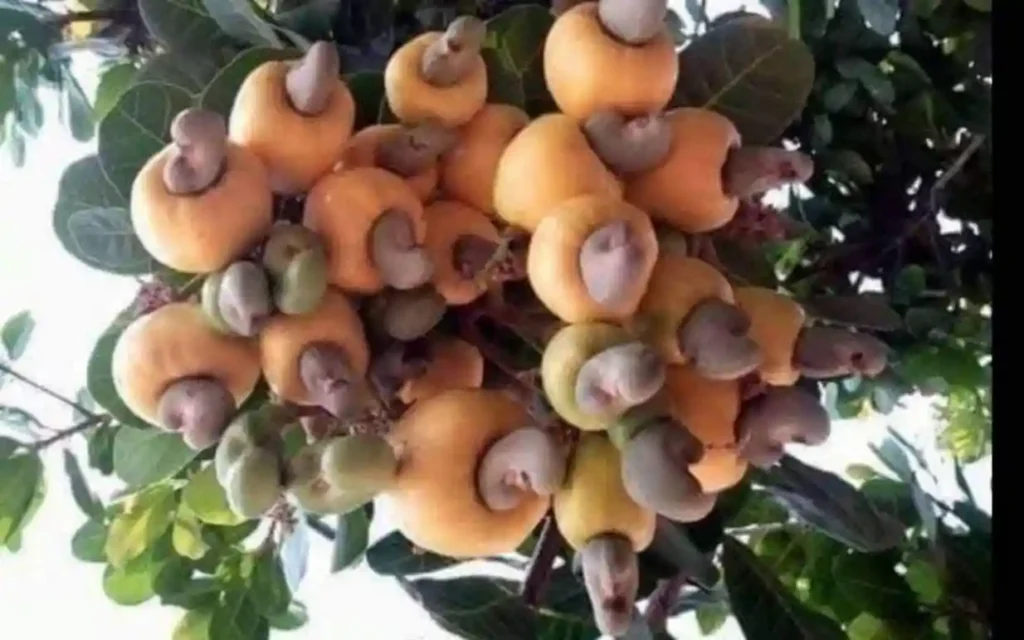
Stakeholders in Nigeria’s cashew industry have warned that the country risks massive job losses, collapsing farms, and a damaged export market if the Federal Government agrees to calls from the Cashew Processors and Packers Association of Nigeria to ban the export of raw cashew nuts. CAPPAN, through a statement issued by Air Vice Marshal Tunde Awoyoola (rtd.), who is also Managing Director of Nutslink Limited, argued that foreign buyers are dominating the farm gates and preventing local processors from accessing raw materials, a situation it believes justifies a proposed export ban.
 Follow us on Google News
But the Chairman of the Kogi Cashew Dealers and Stakeholders Association, Alhaji Makama Ademu, countered that Nigeria lacks the capacity to process even a small fraction of its yearly cashew output. He warned that the consequences of such a decision would be devastating. According to him, “If the government bans raw cashew export, 95 per cent of what we produce will be left to rot. We don’t have the processing capacity to handle even a fraction of Nigeria’s output. This will destroy the farmers, destroy the value chain and eliminate three major segments — sub-buyers, licensed buying agents and merchants.”
Ademu said the impact would be immediate and severe, particularly for rural communities that rely heavily on cashew earnings. He stated, “This value chain employs farmers, women, rural youth and thousands of workers who dry, bag and prepare cashew. Once exports stop, these jobs disappear overnight. A lot of businesses will be destroyed, and many farms will fold up because it will no longer be economical to farm cashew.” He also accused processors of pushing a narrow agenda, saying, “They want prices to crash so they can buy cheaply. How does a farmer survive on prices that do not even cover cost of production? Their agitation is selfish, short-term and myopic.”
Vice Chairman of the Kogi Cashew Dealers and Stakeholders Association, Dr. Idrisu Yakubu, also described the proposed ban as “enormous and dangerous.” He argued that the country’s processors cannot handle the current supply. He said, “All the cashew processing factories in Nigeria combined cannot process what Kogi State produces in just one day of cashew season. If they cannot handle one day’s output in a whole year, what happens to the remaining 364 days? Should farmers burn their harvest?”
Yakubu dismissed claims that processors are prepared to absorb local production. He said, “Some of the people calling themselves processors don’t even have factories. They are just politicians within the industry being sponsored to bring the business down. They want the federal government to peg prices so farmers can be shortchanged. We will not accept that.” He further warned that discouraging farmers could worsen insecurity. “In the current security situation, discouraging farmers from going to their farms can trigger new unrest. A ban on exports will have serious social and economic consequences.”
Also speaking, Board of Trustees Chairman of the Kogi Cashew Dealers Stakeholders Association, Alhaji Mohammed Demo, warned that processors’ demands threaten livelihoods. He argued that, “Because of their lateness or inability to establish viable factories, they now want to suffocate the entire industry. Farmers will suffer. We cannot allow people who don’t have functioning processing plants to dictate policies that will destroy a major economic hub.” He insisted that stakeholders in leading cashew states would resist such moves, adding that “We will disassociate ourselves publicly. If anything goes contrary, it could lead to tension, and with the security challenges in the country, this is not the time to provoke farmers.”
Stakeholders questioned why CAPPAN is singling out cashew when Nigeria also exports cocoa, sesame seed, ginger, soybean and other produce. Ademu asked, “Have they banned the export of cocoa? Have they banned sesame or coffee? Why cashew? It shows their agenda is not in the national interest.” Yakubu added that export activities built the industry. “Before exporters came into the market, cashew had no value. Farmers were burning it on their farms. Export revived the industry. Killing that market now will reverse all progress made.” He stressed support for industrialisation but warned against harming producers. “We support industrialisation. But not by destroying farmers and traders. You don’t build factories by killing the market,” Yakubu said.
Kogi Cashew Farmers Association spokesperson, Nuhu Adaji, assured that the group remains committed to transparency and accountability, explaining that ongoing reforms are meant to strengthen internal processes, improve service delivery and ensure timely information for stakeholders. He urged the public to stay calm, noting that further updates will be shared as developments unfold.
The group appealed to the Federal Government to ignore the recommendation and instead focus on investing in power, infrastructure and incentives to help processors expand capacity over time. They warned that adopting CAPPAN’s proposal would throw thousands into unemployment and crash a valuable export market that generates foreign exchange for the country.