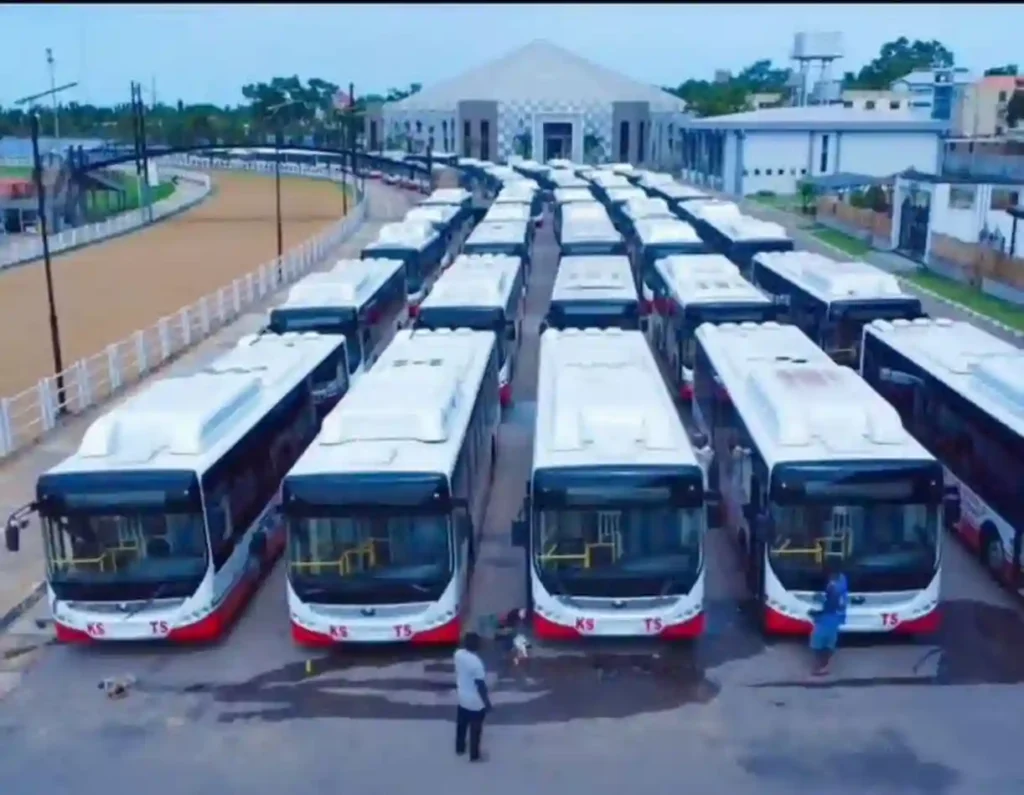
Kaduna State says its free CNG bus service has transported over 1.4 million passengers and saved residents more than N1.39 billion in transport costs within its first five months. The Commissioner for Information, Mallam Ahmed Maiyaki, shared the figures during a media briefing on Thursday, noting that the programme has delivered relief to many households. Fresh data released by the state government shows that the buses, which operate across Kaduna metropolis, Zaria, and Kafanchan, recorded high patronage between July and November 2025.
 Follow us on Google News
Maiyaki explained that the assessment was conducted to measure the true impact of the free-ride policy introduced by Governor Uba Sani. He said public adoption of the service surpassed initial expectations. According to him, the scheme initially targeted civil servants and students but was later expanded to include all commuters on selected routes. He stated, “From July 7 to the end of November, the buses have moved an impressive number of our people at zero cost.”
The government data shows that in Q3 2025, covering July to September, the buses conveyed 683,650 passengers, amounting to a fare value of N738.8 million in savings. Ridership rose further in October and November with 626,710 passengers recorded and an extra N667.2 million saved for commuters. October alone accounted for 339,530 users because of school resumption and increased mobility needs. Maiyaki said, “In total, Kaduna residents who rely on these four routes have saved N1.39 billion in just five months,” describing it as proof of Governor Sani’s effort to reduce hardship.
The commissioner noted that 30 CNG buses operate daily from 7:00 a.m. to 6:00 p.m. across 200 bus stops. The serviced routes include Tudun Wada–Kawo–Rigachikun, Rigachikun–Yakowa–Maraban Rido, Rigachikun–Kasuwa–Maraban Rido, and Rigasa–NEPA Roundabout. He added that the average daily passenger lift stands at 18,426 people, translating to about 294,824 passengers monthly. Each bus reportedly completes eight trips daily, reflecting strong demand and operational efficiency.
Maiyaki highlighted additional benefits beyond mobility, saying the project has revived economic activity for petty traders previously displaced by urban policies. “Kaduna’s economy suffered when thousands of small operators were pushed out. This intervention is gradually restoring mobility and livelihoods,” he stated. He also stressed that Governor Sani launched the policy out of empathy for residents facing financial pressure. “His Excellency is concerned about the well-being of everyone, civil servants, students, market women, and ordinary citizens who move daily to survive,” he said.
Despite offering free rides, Maiyaki said the system shows financial viability, and projections indicate it could generate surplus revenue if fares are restored. He assured that the state will continue to assess long-term sustainability but will keep citizen welfare at the centre of its decisions. Updated ridership figures beyond November will be released as demand grows.
The initiative began after Governor Uba Sani commissioned 100 CNG buses in July 2025, first providing free rides to civil servants, students, retirees, and security personnel before expanding to wider public use. Authorities say the goal is to reduce transport pressure and support residents facing rising living costs.