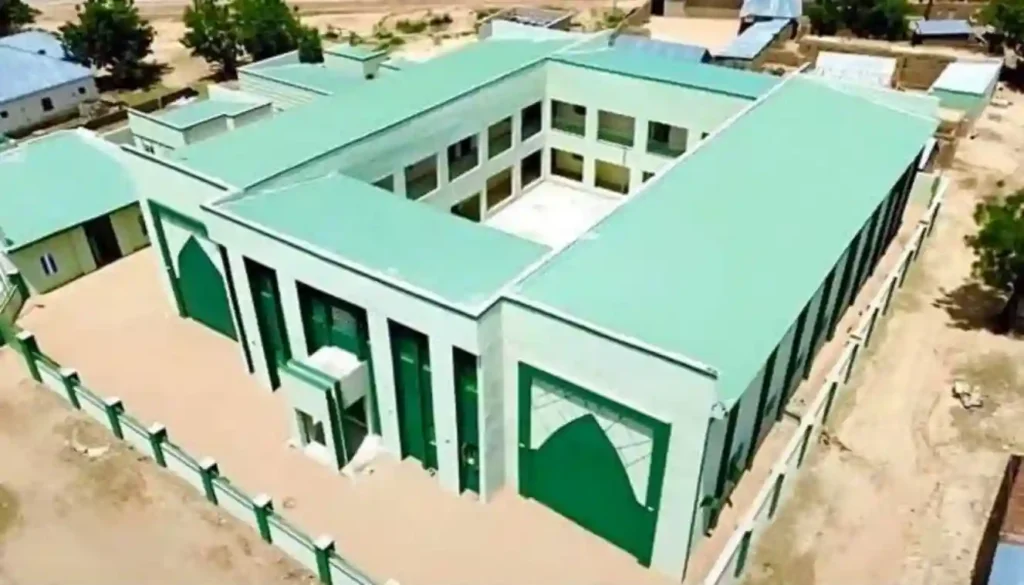
The Federal Government has established 119 learning centres across the country to improve access to foundational education for Almajiri learners and out of school children. This development was disclosed by the spokesperson for the National Commission for Almajiri and Out of School Children Education, Nura Muhammad, in an interview with the News Agency of Nigeria in Abuja on Sunday.
 Follow us on Google News
Muhammad explained that the centres work under two different models. Some are designed to support existing Almajiri schools by adding structured literacy and numeracy lessons, while others serve only out of school children using the Accelerated Basic Education Programme curriculum. He said this approach helps learners finish foundational education within a shorter period.
He also confirmed the successful development of a National Policy on Almajiri Education, championed by the Minister of Education, Tunji Alausa. According to him, “Almajiri learners would no longer be classified as out of school children.” He added that Almajiri schools will now receive the same level of support and funding as standard schools.
Muhammad noted that the commission has expanded its reach nationwide, setting up an office in every state within 28 months of existence. In addition, a ward to ward advocacy campaign was launched in seven pilot states, namely Kano, Jigawa, Yobe, Borno, Lagos, Ogun and Cross River. He said, “The campaign engages parents, traditional rulers, religious leaders, civil society groups, and children, sensitising communities to the dangers of leaving the Almajiri system unregulated and the importance of enrolling children in schools.”
He revealed that Lagos, Cross River, Ogun and Yobe have already covered all wards in their states, recording encouraging public responses. He added that the remaining states are also making good progress, and the model will be expanded nationwide.
According to Muhammad, these reforms align with the establishment Act of the commission, already passed by the National Assembly and signed into law by the President in May 2023. He said the mandate of the commission covers reforming the longstanding Almajiri system through literacy, numeracy and skills training, while ensuring that millions of out of school children enter formal or non formal education pathways.
He stated that when the Executive Secretary, Muhammad Idris, assumed office, he began nationwide engagement with stakeholders. These included visits to the Sultan of Sokoto, the CAN President, the Oba of Lagos, the Shehu of Borno, the Ooni of Ife and the Olubadan. “These engagements culminated in two major Abuja retreats organised with the Office of the National Security Adviser, focusing on reforming Almajiri education and addressing out of school children,” he said.
Muhammad explained that the retreats produced the NCAOOSCE Strategic Plan 2025 to 2035, which offers a roadmap for the coming decade. One of the commission’s top projects is the Tinubu Legacy Skills Training Institute, created to give Almajiri youths both religious knowledge and practical job skills.
He said that at the Kaduna campus, 200 Almajiri learners completed a nine month intensive programme covering Arabic and English literacy, Qur’anic interpretation, and various vocational skills such as POP design, plumbing, agriculture, tiling, solar installation, GSM repair and ICT. He added that the trainees used the National Board for Arabic and Islamic Studies curriculum, wrote their examinations and are now awaiting results. “Many of them, previously unable to communicate in English or Arabic, can now do so fluently,” he said.
Muhammad also revealed that another branch of the institute in Ibadan is training 150 girls using the ABEP curriculum to fast track their learning alongside vocational skills. He said that after nine months, the girls will be qualified to continue their formal education.
“These initiatives reflect the Tinubu administration’s determination to reform the Almajiri system and ensure no child is left behind. From expanded learning centres to community advocacy and skills development, the Commission is laying a foundation that will shape Nigeria’s education landscape for years to come,” Muhammad said.