
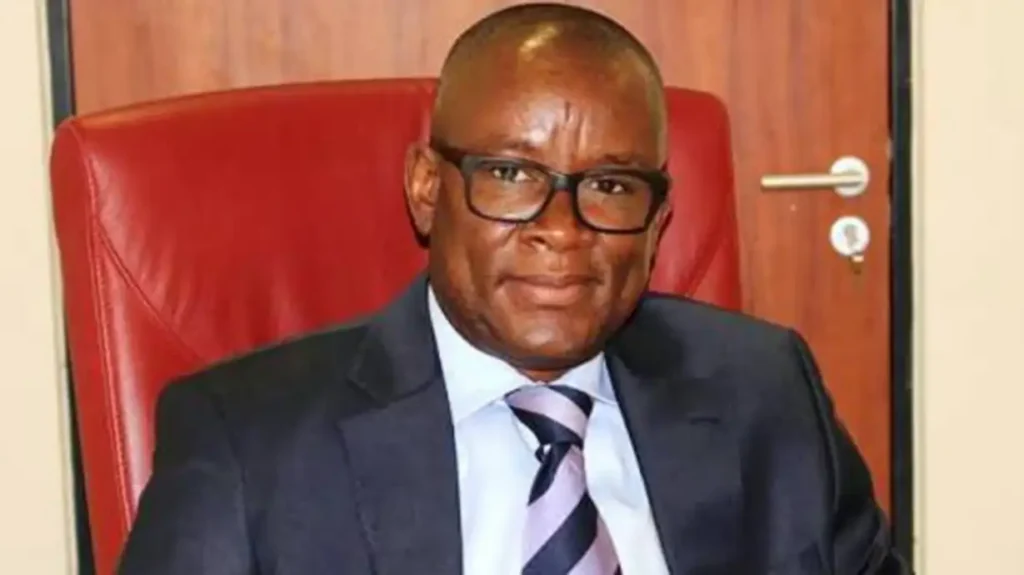
The federal government says Nigeria must prioritise industrialisation and a dependable energy supply to reduce the export of raw materials and strengthen local value chains. Minister of State for Industry John Enoh stated this at the Industrial Revolution Work-Group Premier Ministerial Roundtable on Energy, Security, and Industrial Infrastructure held on Wednesday in Abuja.
 Follow us on Google News
Speaking on the theme “Beyond Power: Building the Backbone of the Industry—Energy, Infrastructure, and Sovereignty in Action,” Mr Enoh described industrialisation as an economic imperative for the country. He stressed the need to increase productivity through value addition and processing, noting that Nigeria must shift away from sending out unprocessed raw materials.
Mr Enoh said the programme was designed to help Nigeria become more productive by reducing raw material exports and improving economic management. According to him, discussions within the Industrial Revolution Workgroup identified energy security and weak industrial infrastructure as major challenges slowing growth. He explained that the roundtable series would start by addressing power supply issues in industrial clusters since energy remained central to industrial development.
He added that strengthening clusters was the most practical way to deliver energy and infrastructure efficiently. While recognising the role of the national grid, Mr Enoh said alternative energy options must complement it. He explained that blended power from gas, solar, and other sources was important, especially in areas where grid supply was unreliable.
Mr Enoh said the forum aimed to produce actionable solutions, including identifying priority industrial clusters and determining the quickest ways to provide them with power. He also highlighted obstacles such as right-of-way delays affecting transmission projects and called for faster implementation. He added that there was now consensus on the need for stronger collaboration between the Ministry of Power and the industrial sector to resolve challenges systematically, cluster by cluster.
Minister of Power Adebayo Adelabu said economic growth depended on a vibrant industrial sector supported by reliable and affordable electricity. He stated that ongoing reforms in legislation, policy, and infrastructure had improved grid stability while boosting generation and consumption.
Mr Adelabu said the government was strengthening transmission, distribution, regulation, and investment to ensure a sustainable electricity supply and reduce grid disturbances nationwide.
President of the Manufacturers Association of Nigeria, Francis Meshioye, said the roundtable discussed important issues, including alternative power sources to guarantee an independent and reliable electricity supply for industries.
He said the discussions covered options such as independent power and dual international connections, guided by cost-benefit analysis, and expressed confidence that practical power solutions for industrial clusters would emerge in the coming months.