
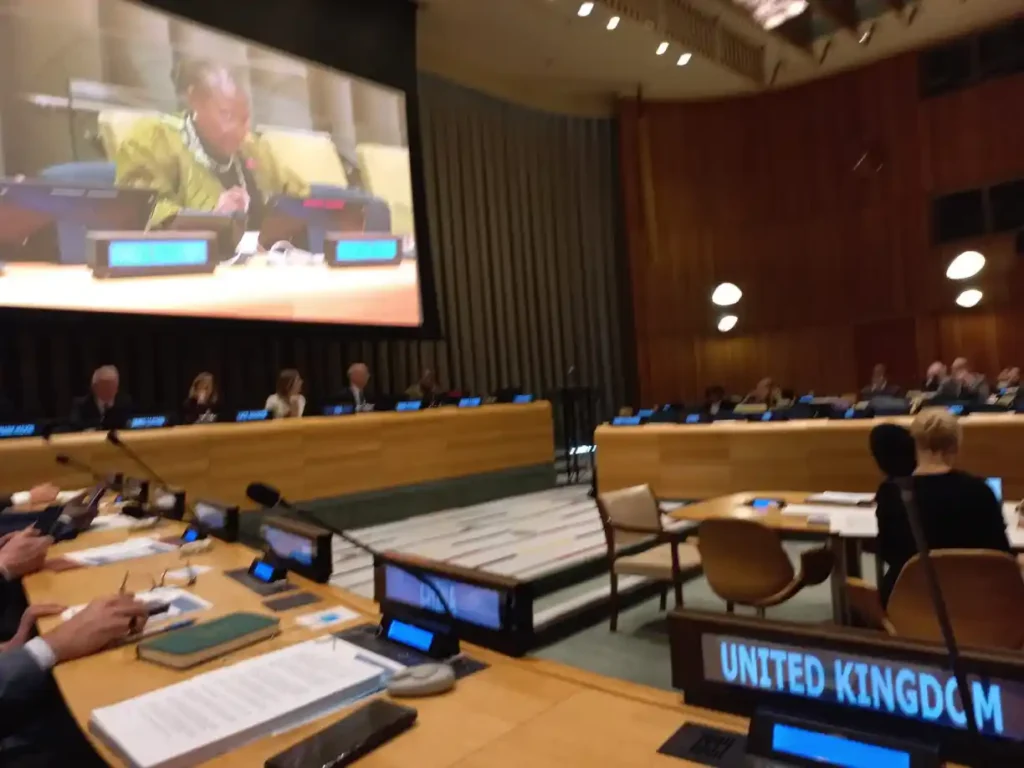
The International Association of Public Transport (UITP) has announced new global goals that will shape public transport development over the next decade, including plans to train 20,000 professionals. This update was shared during the official United Nations launch of the Decade of Sustainable Transport (2026–2035) in New York, where Engr. Mrs. Abimbola Akinajo, Managing Director of the Lagos Metropolitan Area Transport Authority (LAMATA) and Chairperson of UITP’s Africa Division, introduced the first World Public Transport Day.
 Follow us on Google News
Speaking at the event in the ECOSOC Chamber at UN Headquarters, Mrs. Akinajo said UITP is moving “from support to concrete, actionable commitments” to help countries strengthen sustainable mobility. The gathering followed the UN General Assembly’s adoption of Resolution 78/148, which calls for better integration of all transport modes to drive progress toward the Sustainable Development Goals. She was invited by Juwang Zhu, Acting Director of the UN Division for Sustainable Development Goals, to address global leaders as the Implementation Plan for the Decade was presented.
Mrs. Akinajo highlighted the urgent need to make public transport more accessible. She explained that “Half of urban citizens still lack access to public transport; this is a social equity emergency,” noting that the gap reflects both policy and development challenges that must be addressed.
UITP outlined two major pillars for its commitments: awareness and capacity building. As part of its awareness programmes, UITP will launch World Public Transport Day on April 17 starting in 2026. With its network of 2,000 member organizations across 100 countries, the annual observance is expected to promote global conversations on sustainable mobility and highlight innovative solutions.
On capacity building, Mrs. Akinajo reminded stakeholders that “awareness alone doesn’t build public transport—people do.” UITP plans to double its training capacity by training more than 20,000 public transport professionals and delivering over 100,000 hours of capacity-building, focusing on fast-growing cities and emerging economies.