
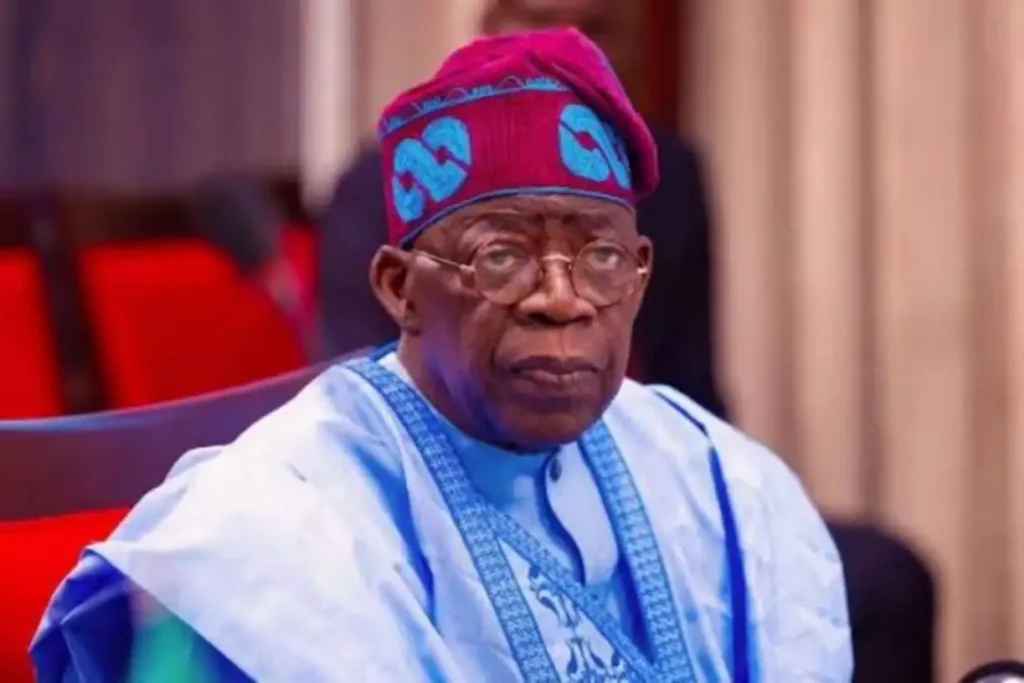
President Bola Ahmed Tinubu has said Nigeria’s economy recorded stronger growth in the third quarter of 2025, pointing to early gains from ongoing reforms as he presented the 2026 Appropriation Bill to a joint sitting of the National Assembly.
 Follow us on Google News
Speaking on Friday while laying a proposed N58 trillion budget before lawmakers, Tinubu said the economy grew by 3.98% in Q3 2025, an improvement over the 3.86% recorded in Q3 2024. According to him, the figures show that recent policy decisions are beginning to produce measurable results.
“Our economy grew by 3.98% in Q3 2025, higher than the 3.86% recorded in Q3 2024,” the President said, noting that the performance reflects deliberate efforts to stabilise the economy and rebuild confidence.
Tinubu explained that the 2026 Budget was prepared against what he described as an improving global outlook, but stressed that the administration’s main focus remains strengthening Nigeria’s domestic economy. He said reforms introduced over the last two and a half years were aimed at addressing long-standing structural weaknesses and creating a more resilient economic base.
The President also highlighted progress in inflation management, saying inflation has moderated for eight consecutive months. He stated that headline inflation declined to 14.45% in November 2025 from 24.23% in March 2025, attributing the trend to stabilising food and energy prices, tighter monetary conditions, and improved supply responses.
“With stabilising food and energy prices, tighter monetary conditions, and improving supply responses, we expect the disinflationary trend to persist,” Tinubu said, adding that inflation is expected to decline further over the 2026 horizon, barring major supply shocks.
He said oil production has improved, supported by enhanced security, technology deployment, and sector reforms, while non-oil revenues have expanded through better tax administration rather than what he described as excessive taxation. According to him, these developments have helped boost government earnings and reduce pressure on public finances.
Tinubu also pointed to renewed investor confidence, saying it is reflected in increased capital inflows, renewed project financing, and stronger private-sector participation. He added that Nigeria’s external reserves rose to about US$47 billion as of 14 November 2025, a seven-year high, providing more than ten months of import cover and a stronger buffer against economic shocks.
“These outcomes are not accidental,” the President said. “They reflect difficult but deliberate policy choices.”
He said the focus for 2026 will be to consolidate these gains so that economic stability can translate into improved living standards for Nigerians. Tinubu described the proposed budget as a tool to turn recovery into broader prosperity, saying the government’s task is to ensure growth becomes inclusive and sustainable.
According to him, the improved economic indicators form the foundation of the 2026 fiscal plan, which he said is designed to deepen stability, strengthen resilience, and support long-term economic expansion across the country.