
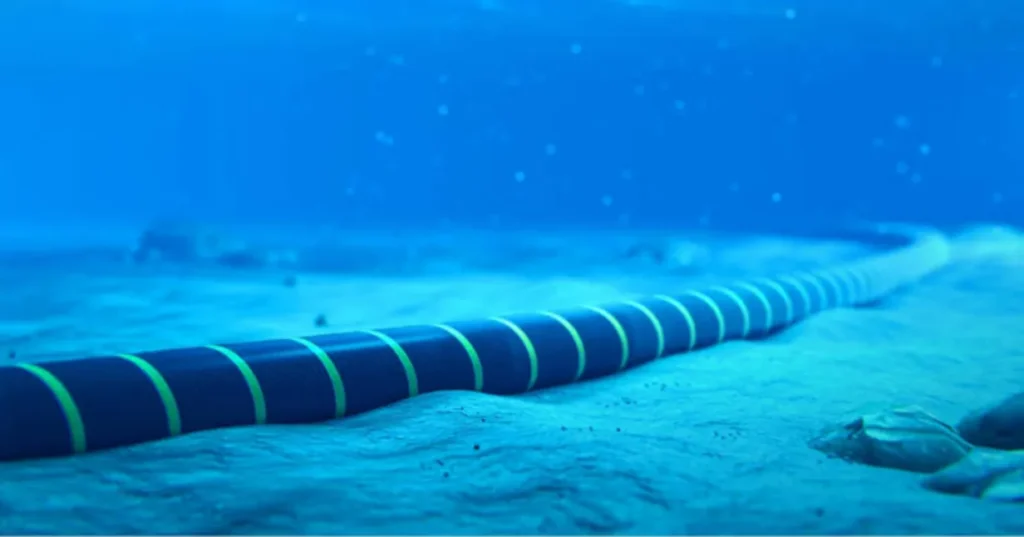
The federal government of Nigeria is in advanced talks with Alphabet Inc.’s Google to establish a new undersea cable aimed at strengthening the nation’s digital resilience. This move comes as Nigeria works to reduce its dependence on existing undersea links to Europe, which officials say follow the same route and pose a “single point of failure.”
 Follow us on Google News
Kashifu Inuwa Abdullahi, the director general and chief executive officer of the National Information Technology Development Agency (NITDA), said the project is part of Nigeria’s effort to improve its digital infrastructure and safeguard against internet disruptions. “Nigeria’s current reliance on cables that follow the same path is a single point of failure,” Abdullahi said during an interview in Abuja.
He explained that the country is seeking to enhance investment in technology systems that would make cloud and computing power more reliable. “We are talking to other tech giants alongside Google,” he added, noting that the discussions aim to support long-term digital growth.
A Google spokesperson confirmed that the talks were at an advanced stage but declined to give further details. The company had earlier announced plans for four new infrastructure hubs across Africa to connect its latest underwater fiber-optic cables for the continent.
Africa has faced several internet outages in recent years caused by damaged subsea cables. The continent, home to the world’s fastest-growing population, continues to see rising demand for improved access to advanced technology, including artificial intelligence.
Abdullahi said the government’s goal goes beyond connectivity. He emphasized that increasing investment in digital infrastructure will improve access to cloud and computing resources, helping Nigeria become a regional digital hub. He also said the initiative could boost internet access and strengthen economic activity in Africa’s most populous nation.