
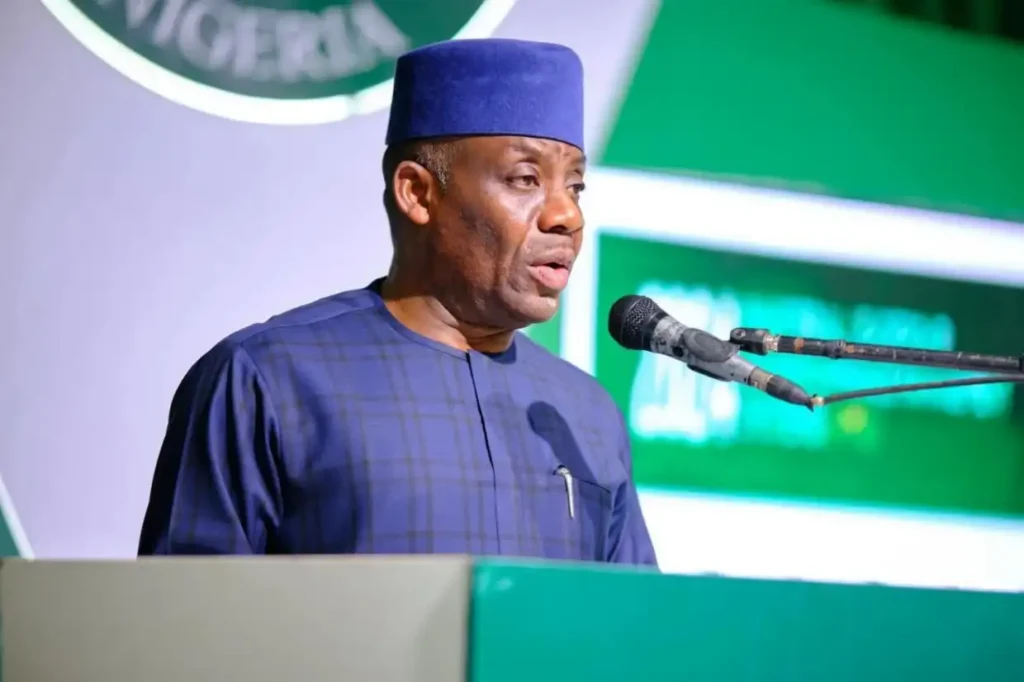
The Federal Government says it is rolling out a digital teacher training programme supported by zero-rated internet data, starting with pilot states before nationwide expansion.
 Follow us on Google News
Speaking during an interview on Channels Television, the Minister of Education, Morufu Olatunji Alausa, said the programme is designed to remove cost barriers and make teacher professional development continuous and measurable.
Alausa said the government identified internet access as a major obstacle preventing teachers from improving their skills, especially in public schools. He explained that moving teacher training online without addressing data costs would have excluded many educators. According to him, “One of the biggest challenges we identified was internet access, because you cannot say training is digital and then leave teachers to struggle with data. That is why we are using zero-rated data so teachers can access these platforms freely without paying for internet.”
The minister said teacher professional development has now been redesigned as a structured digital process rather than occasional workshops. He explained that training is broken into modules that teachers complete online at their own pace. He said, “We have moved teacher professional development fully into a digital space. Teachers now go online, complete structured modules, and take short quizzes at the end. This allows us to track participation, measure learning outcomes, and ensure that training is not just theoretical.”
Alausa added that the programme is not being rolled out all at once, stressing that pilot phases are important to get it right. He said, “We are piloting this in a number of states because we want to be sure that the infrastructure works, that teachers can access the platforms easily, and that the system is stable before we expand it nationwide. This is a phased rollout, not something we are rushing.”
He said incentives are a core part of the digital training framework, noting that teachers are rewarded for completing modules successfully. According to him, “After a teacher completes a module and passes the required assessment, we pay or incentivise that teacher. This is deliberate. We want to recognise effort, encourage participation, and motivate teachers to continuously improve their skills.”
The minister explained that linking incentives to completion also improves accountability. He said, “In the past, training was done without proper tracking. Now, everything is digital. We know who completed a module, who passed, and who needs support. This helps us deploy resources better and improve the overall quality of teaching.”
Alausa said the federal government is building a central digital infrastructure under the Ministry of Education to host training content and reduce dependence on external platforms. He said, “We are building our own Federal Ministry of Education digital hub where all teacher training content will be hosted. This gives us control, sustainability, and the ability to scale without relying entirely on third-party platforms.”
He added that the digital hub will also support broader education delivery in the future. According to him, “This is not just about teachers today. It is about building a foundation where education content can be delivered efficiently, monitored properly, and expanded as our needs grow.”
The minister linked the digital teacher training programme to wider efforts to rebuild confidence in public schools. He said improving teacher quality was central to improving learning outcomes. He said, “You cannot talk about rebuilding trust in public schools without talking about teachers. When teachers are well trained, motivated, and supported, the quality of education improves, and parents begin to see the difference.”
Alausa said the use of technology also allows for better coordination between the federal and state governments. He explained that data from the training platforms helps education authorities identify gaps and respond more quickly. He said, “With digital systems, we can see where teachers need more support, which areas are lagging, and how to intervene. This is a more efficient way of managing education than guesswork.”
He maintained that the programme is part of a long-term reform agenda rather than a short-term intervention. According to him, “This is about sustainability. We are building systems that can run continuously, adapt over time, and improve teaching standards across the country. Education reform cannot succeed if it depends on one-off workshops or temporary measures.”
The minister said once the pilot phase is completed, the government will move to scale the programme across more states. He said, “As we stabilise the pilots, we will expand this nationwide. The goal is to ensure that every public school teacher has access to quality training without cost barriers, and that professional development becomes a normal part of teaching in Nigeria.”