
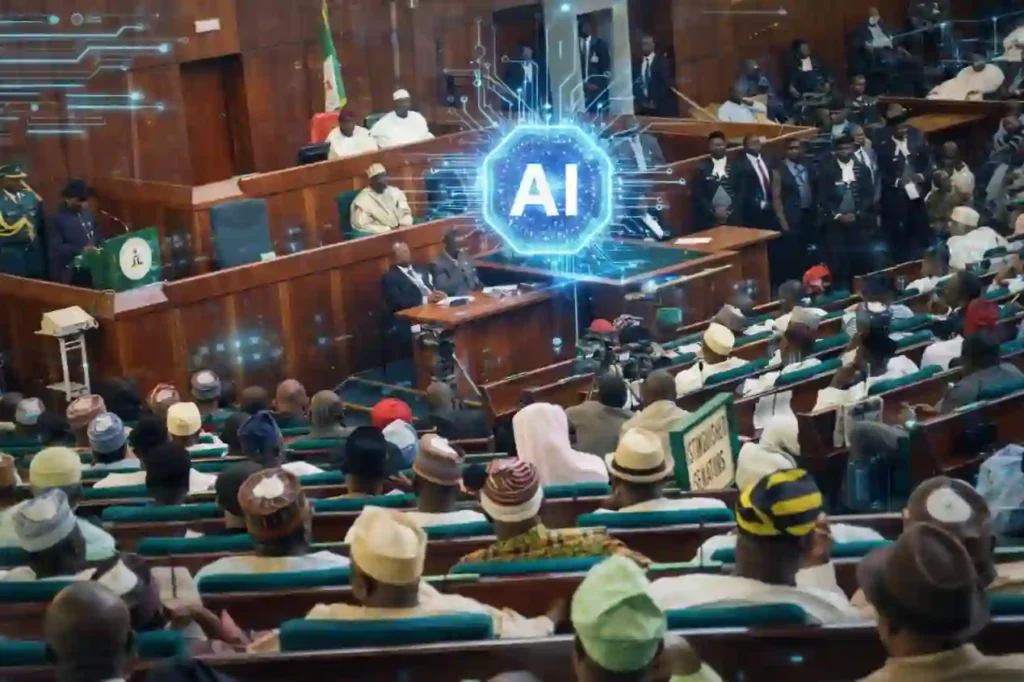
Nigeria is set to become one of the first African countries to formally regulate artificial intelligence (AI), as lawmakers prepare to pass a bill that will strengthen oversight of the rapidly growing digital sector currently led by global technology firms.
 Follow us on Google News
The proposed National Digital Economy and E-Governance Bill seeks to give regulators wider powers over data use, algorithms, and digital platforms, closing a gap that has existed since Nigeria released its draft national AI strategy in 2024.
Lawmakers have indicated that the bill could be approved by the end of March.
Under the proposal, AI systems considered high-risk, such as those used in finance, public administration, surveillance, and automated decision-making, would undergo stricter scrutiny. Developers will be required to submit yearly impact reports explaining potential risks, how they plan to reduce them, and how their systems perform.
The bill also includes penalties for violations, allowing regulators to issue fines of up to 10 million naira ($7,000) or as much as 2 percent of an AI company’s yearly income generated in Nigeria. However, it does not specify exactly how these fines will be calculated or enforced.
According to Kashifu Abdullahi, director-general of the National Information Technology Development Agency (NITDA), the move is meant to regulate AI early before its widespread adoption becomes more complex. He said the framework would help guide the use of AI in Nigeria’s finance industry, public sector, and private businesses.
“If passed, Nigeria would be among the first African countries to adopt an economy-wide regulatory framework for artificial intelligence,” Abdullahi said in an interview with Bloomberg.
While countries like Mauritius, Egypt, and Benin have developed AI strategies, few have created complete laws to govern the technology.
The new law promotes ethical standards built on transparency, fairness, and accountability. It follows a risk-based model similar to emerging frameworks in Europe and parts of Asia. This could influence how major international tech companies, including Google and Chinese cloud service providers, operate in Nigeria.
“In governance, we need safeguards and guardrails to ensure the AI we build operates within acceptable boundaries,” Abdullahi said. “That way, bad actors can be detected and contained.”
The bill also gives regulators the authority to request information from AI providers, issue enforcement orders, or suspend unsafe or non-compliant systems. It introduces regulatory sandboxes to help startups and institutions test AI models under supervision, balancing regulation with innovation.
“Regulation is not just about giving commands,” Abdullahi said. “It’s about shaping market and societal behaviour so people can build AI for good.”