
Nigeria’s headline inflation rate eased to 15.15 percent year on year in December 2025, according to the latest Consumer Price Index report released by the National Bureau of Statistics, reflecting slower price increases compared to previous months and the same period last year.
 Follow us on Google News
The CPI report, dated January 2026, showed that the Consumer Price Index rose to 131.2 points in December 2025, up from 130.5 points recorded in November. While prices continued to rise, the pace of increase slowed, offering a signal of moderation after months of sharp inflationary pressure.
On a year-on-year basis, the 15.15 percent headline inflation rate was lower than the 17.33 percent recorded in November 2025. It also represented a significant decline from the 34.80 percent inflation rate recorded in December 2024. The statistical agency explained that the sharp difference was influenced by changes to the inflation base period.
According to the report, “the December 2025 year-on-year Headline inflation rate, including all other sub-indexes, were obtained through maximisation of the index reference period,” adding that the use of a 12-month average for 2024 helped avoid an artificial spike caused by base effects. The agency said the adjustment was “in line with international best practice.”
On a month-on-month basis, inflation stood at 0.54 percent in December, down from 1.22 percent in November. The report noted that “this means that in December 2025, the rate of increase in the average price level was lower than in November 2025,” indicating a slowdown in short-term price growth.
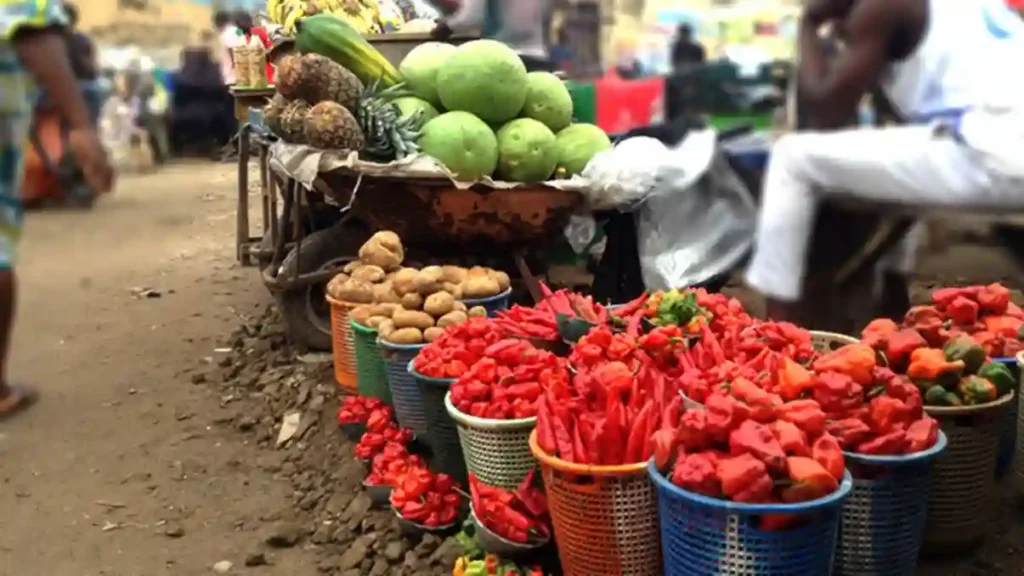
Food inflation provided the most visible relief during the month. The food inflation rate dropped to 10.84 percent year on year from 39.84 percent in December 2024. Month on month, food inflation declined by 0.36 percent. The agency attributed this to price reductions in items such as tomatoes, garri, eggs, onions, beans, vegetables, and grains, stating that the decline was driven by “a decrease in the average prices of selected food items.”
However, core inflation, which excludes farm produce and energy, remained elevated. Core inflation stood at 18.63 percent year on year in December 2025, compared to 29.28 percent in December 2024. On a monthly basis, core inflation was 0.58 percent, showing that pressure from services and non-food items remained persistent.
The report also highlighted differences between urban and rural areas. Urban inflation stood at 14.85 percent year on year, while rural inflation was slightly lower at 14.56 percent. On a month-on-month basis, urban inflation rose to 0.99 percent, while rural inflation declined to minus 0.55 percent. The agency noted that spending patterns differ across locations, affecting price movements.
At the state level, inflation trends varied widely. Abia, Ogun, and Katsina recorded the highest year-on-year headline inflation rates, while Sokoto, Plateau, and Kaduna recorded the lowest. For food inflation, Yobe, Ogun, and Abuja posted the highest year-on-year rates, while Akwa Ibom, Sokoto, and Plateau recorded the slowest increases.
Despite the moderation in December, the report showed that inflation pressures remained high over the year. The average inflation rate for the twelve months ending December 2025 stood at 23.01 percent, underscoring that households faced elevated prices for most of the year, even as the pace of increase slowed toward year end.