Canada is providing CAD$5 million, with Germany offering technical support through the IKI Small Grants scheme, for a programme targeting about 5,000 women-led businesses across Nigeria, with 240 of them set to receive seed funding.
 Follow us on Google News
Global Affairs Canada, the Development Bank of Nigeria, and Germany’s International Climate Initiative are partnering to expand access to climate and biodiversity financing for women-owned enterprises in Nigeria. The initiative combines Canada’s financial support with Germany’s technical backing through the IKI Small Grants programme and is designed to strengthen local institutions while lowering barriers to climate finance for women entrepreneurs.
Canada has committed 5 million Canadian dollars, equivalent to about 3.4 million euros, as co-financing for the programme. The cooperation builds on the IKI Small Grants “Funding the Funders” approach, which allows local actors to access climate and biodiversity financing through trusted funding institutions in partner countries. With Canada’s contribution and Germany’s technical support through the IKI Small Grants programme, the initiative will run until August 2029.
During this period, the Development Bank of Nigeria will establish and manage a nationwide funding programme. The state-owned bank will provide small grants and targeted training to women-led micro, small and medium enterprises across the country. These measures are intended to help businesses contribute to climate and biodiversity protection through their products or services, reduce carbon emissions, and improve how they manage climate-related risks.
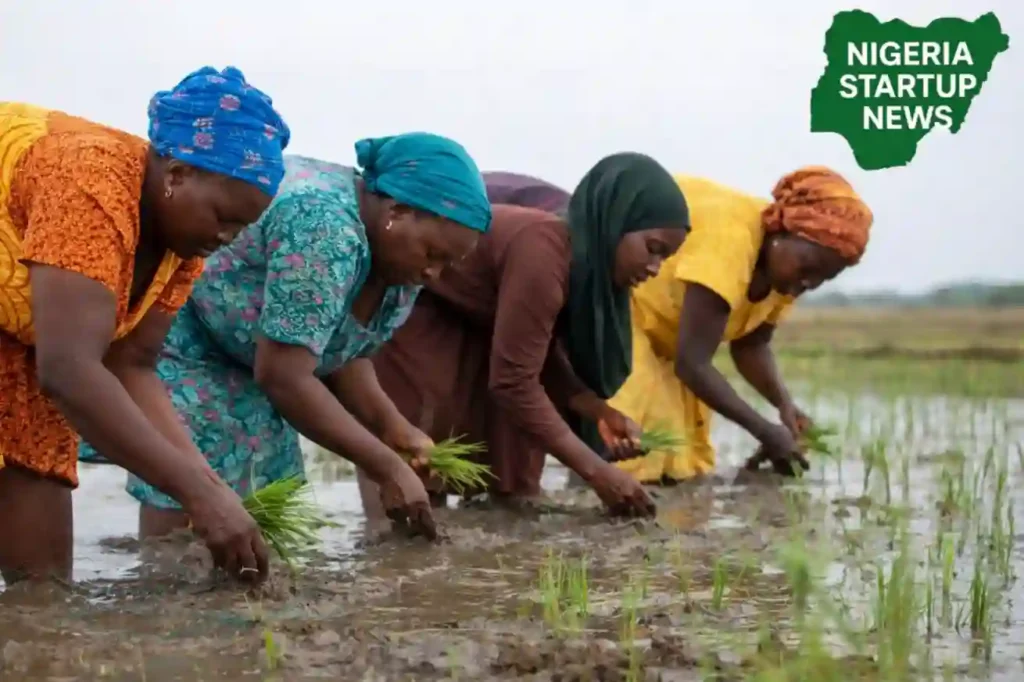
The collaboration is expected to reach about 5,000 women-led businesses. All participating enterprises will receive capacity development support aimed at improving skills, knowledge, and business practices. Out of this group, 240 of the most promising enterprises will be selected to receive additional seed funding to further strengthen and expand their businesses. The programme also projects around 25,000 indirect beneficiaries, including workers, suppliers, and community members linked to the supported enterprises.
The focus is largely on rural regions, where women are often more exposed to the impacts of climate change but have limited access to funding to address local challenges. These challenges include changing weather patterns, declining agricultural productivity, and damage to livelihoods. For DBN’s Managing Director, Dr. Tony Okpanachi, achieving social impact through targeted funding remains one of the bank’s key objectives.
Bringing funding to local women entrepreneurs
Officials at the Development Bank of Nigeria say the programme is designed to address long-standing gaps in access to finance for women. Theresa Lawal, Head of Product Development and Strategic Alliances at DBN, said women are often more affected by climate change and face greater difficulties accessing credit from traditional banks.
“This partnership with Global Affairs Canada and IKI Small Grants allows us to reach women entrepreneurs who face barriers to accessing climate financing in Nigeria,” Lawal said. She explained that through Canada’s co-financing, Germany’s IKI Small Grants can support DBN in providing grants for women-led micro, small or medium enterprises.
According to Lawal, this support will put beneficiaries in a better position to adapt to the impacts of climate change while growing their businesses and contributing to the economy. “Imagine a woman running an off-grid business adopting solar solutions, or a smallholder farmer transitioning to climate-smart agriculture,” she said while describing the target group.
Lawal added that women in Nigeria receive less than 20 percent of available funding overall. “This programme will increase financial inclusion, enhance women’s contribution to climate action, and improve their ability to adapt to climate change,” she said.
Fostering local impact through global partnerships
From the Canadian perspective, the initiative reflects broader priorities around gender equality, climate action, and economic empowerment in Africa. Arash Irantalab, Head of Development Cooperation at the High Commission of Canada in Nigeria, said the programme aligns with Canada’s approach to working with African partners.
“For Global Affairs Canada, the significance of the initiative lies in its commitment to gender equality, climate action, and economic empowerment in Africa,” Irantalab said. He noted that Canada works with African partners by increasing mutually beneficial economic opportunities and advancing shared priorities on the international stage to address global challenges, including climate change.
Irantalab added that the decision to work with IKI Small Grants was based on the need to partner with an initiative that has already proven effective. He said building on established global partnerships helps deliver stronger results at the local level and supports sustainable development outcomes.
Localising access to empower community-led climate and biodiversity action
David Fuchs from IKI Small Grants said local actors often struggle to obtain financial resources because of complex application processes and high administrative requirements. He explained that the “Funding the Funders” concept is meant to address these challenges by supporting national or regional institutions that can channel small grants directly to local actors.
As outlined under various international agreements, local climate and biodiversity action is essential for global environmental transformation. As one of its financing mechanisms, IKI Small Grants supports institutions that are closer to communities and better positioned to identify suitable projects.
Working with Canadian co-financing channelled through IKI Small Grants, the Development Bank of Nigeria will be able to plan and run a national funding programme, select grant recipients, and process payouts. This approach allows funding calls to be conducted in local contexts, including the use of local languages, while reducing administrative hurdles for women-led businesses seeking climate finance.
About the project
The project, titled Climate and Biodiversity Action: How Germany is ‘Funding the Funders’, is co-financed by Global Affairs Canada and implemented within the IKI Small Grants programme, which focuses on strengthening local solutions for effective climate and biodiversity action. IKI Small Grants is funded by Germany’s Federal Ministry for the Environment, Climate Action, Nature Conservation and Nuclear Safety and run by Deutsche Gesellschaft für Internationale Zusammenarbeit (GIZ) GmbH as part of Germany’s International Climate Initiative.