
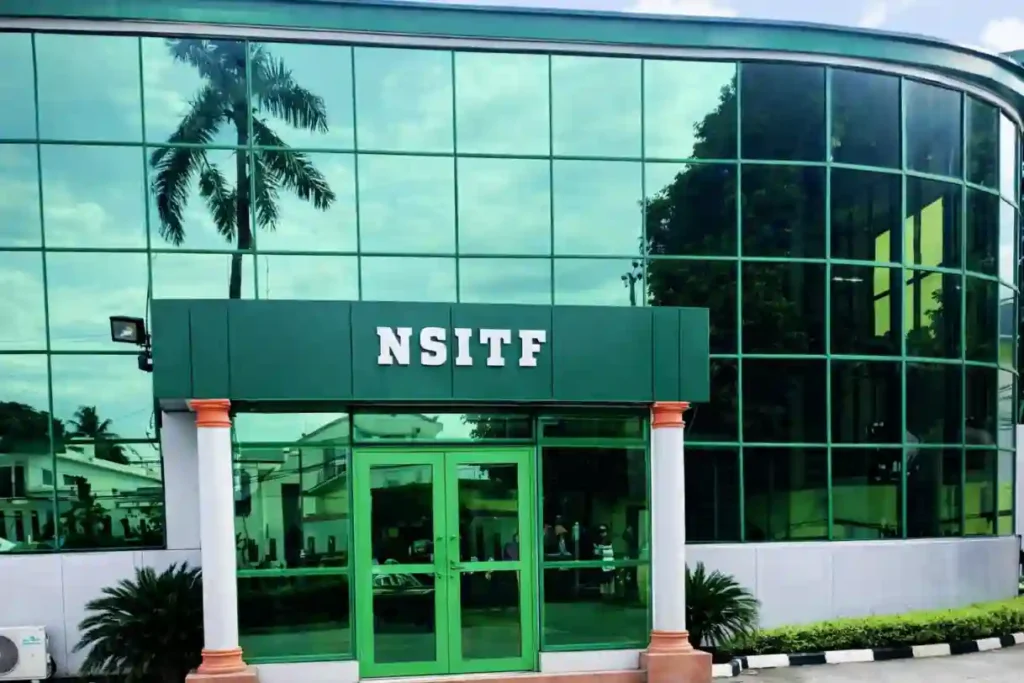
The Managing Director of the Nigeria Social Insurance Trust Fund, NSITF, Barrister Olúwaṣeun Faleye, has said that economic activities and sustainable growth in Nigeria are built on the protection, responsibility to, and respect for the country’s workforce.
 Follow us on Google News
Faleye made this known at a press conference held to flag off the 2025 Safe Workplace Intervention Project, SWIP, an initiative jointly organised by NSITF and the Nigeria Employers’ Consultative Assembly, NECA.
He explained that although the project was initially planned for 2025, it was shifted to January 2026 due to what he described as “operational exigencies on both sides,” making it necessary for the partners to reconvene at a later date.
Speaking on the rationale behind the initiative, Faleye said SWIP was developed as a response to ongoing workplace safety challenges across the country. According to him, “SWIP was conceived as a practical response to a persistent national challenge: the reality that too many Nigerian workers remain exposed to avoidable workplace risks, and too many employers still do not fully understand, or comply with, the protections provided under the Employees’ Compensation Act, 2010.”
He added that the goal of the project goes beyond compliance alone. “The core purpose of SWIP is simple but profound: to save lives, protect livelihoods, and strengthen productivity by making workplace safety and compliance the norm rather than the exception,” he said.
Faleye further noted that legislation alone cannot address safety gaps in workplaces. “Experience has shown us that laws alone do not change behaviour. The Employees’ Compensation Act is robust, but its effectiveness depends on awareness, trust, and consistent engagement,” he stated.
He explained that many workplace accidents occur due to weak systems and limited understanding of risks, rather than deliberate neglect. “Many workplace injuries and fatalities occur not out of malice, but because safety systems are weak, risks are poorly understood, or compliance is viewed narrowly as a regulatory burden,” Faleye said.
According to him, SWIP was created to bridge this gap by translating legal provisions into everyday practice. He said the initiative brings the law to life, helps employers see the business value of compliance, and reinforces workplace safety as a human and economic necessity.
Faleye also called on journalists to play an active role in promoting safer workplaces nationwide. “The role of the media in this effort cannot be overstated. By telling these stories, highlighting best practices, and sustaining public conversation, you help reposition workplace safety from a peripheral issue to a national priority,” he said.
In a message delivered on behalf of the Permanent Secretary of the Federal Ministry of Labour and Employment, Dr. Sally Ousmane, the Director of Regional Health and Safety, Mrs. Florence Owie, commended NSITF and NECA for sustaining the initiative.
She said the Safe Workplace Intervention Project demonstrates the benefits of collaboration among government institutions, employers, and social security bodies. “The Safe Workplace Intervention Project is a clear demonstration of what can be achieved through effective collaboration between governments, employers, and social security institutions,” she said.
She disclosed that the 2025 edition of the project audited at least 200 workplaces across the six geopolitical zones of the country, with technical support from the ministry’s Occupational Safety and Health Department.
According to her, the ministry’s involvement was to ensure the audits met national occupational health and safety standards and aligned with global best practices.
Also speaking at the event, the Director-General of NECA, Mr. Adewale Smatt Oyerinde, said occupational safety and health has become a core convention of the International Labour Organization.
He explained that the SWIP awards are aimed at encouraging voluntary compliance among employers. He revealed that some organisations that emerged as winners will receive ambulances and personal protective equipment in Lagos, Enugu, and Abuja on January 20, 22, and 27, 2026, respectively.
On the credibility of the selection process, Oyerinde said it involved rigorous auditing and multi-level scrutiny to ensure fairness and transparency.
Looking ahead, he noted that occupational safety and health discussions would increasingly focus on emerging issues linked to artificial intelligence, remote work, and other technological innovations.
In a call to action, the Executive Director of Operations at NSITF, Hon. Mojisola Ali-Macaulay, said the joint assessment carried out by the Federal Ministry of Labour and NSITF confirms that safe workplaces are achievable.
She urged employers to urgently institutionalise preventive safety measures and encouraged award-winning organisations to serve as ambassadors by sharing best practices within their sectors.
Ali-Macaulay also called on NECA to intensify advocacy efforts, while urging stakeholders to deepen collaboration through stronger inspections, quicker interventions, and improved enforcement.
She appealed to the media and the public to keep occupational safety and health issues visible, stating that safe work is a shared responsibility and a key foundation for national productivity and economic stability.
Read also: The Alternative Bank Recruitment for Sales Team 2026