
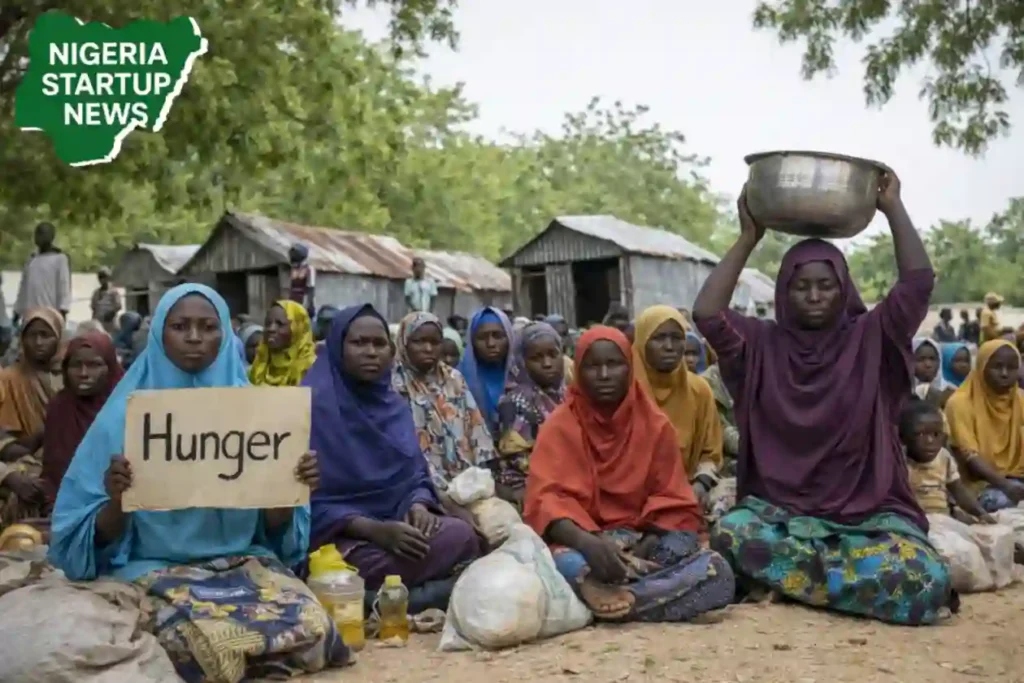
The United Nations World Food Programme (WFP) has announced that it is being forced to reduce food assistance in northeast Nigeria, cutting support from about 1.3 million people to only 72,000 due to surging violence across the country’s northern regions.
 Follow us on Google News
Nigeria is currently facing one of its worst hunger crises in recent times. Nearly 35 million people are projected to experience acute and severe food insecurity during the 2026 lean season, according to the most recent Cadre Harmonisé, the regional equivalent of the Integrated Food Security Phase Classification (IPC) for West and Central Africa. Of this figure, an estimated 15,000 people in Borno State are at risk of catastrophic hunger, classified as IPC Phase 5, one step away from famine. This represents the worst level of hunger recorded in the country in the past decade.
“Now is not the time to stop food assistance,” said David Stevenson, WFP’s Nigeria Country Director. “This will lead to catastrophic humanitarian, security and economic consequences for the most vulnerable people who have been forced to flee their homes in search of food and shelter. Humanitarian solutions are still possible and are one of the last stabilizing forces preventing mass displacement and regional spillover.”
WFP has been providing food assistance in northeast Nigeria since 2015, reaching nearly two million women, men and children in hard hit areas each year. Its work combines emergency food support with longer term assistance aimed at helping communities withstand food shocks and reduce dependence on aid. The agency’s home grown solutions support the local economy by procuring food domestically to strengthen value chains and promote self sufficiency.
However, renewed violence has devastated fragile rural communities, displacing families, destroying food reserves and accelerating alarming levels of hunger and insecurity. In the past four months alone, about 3.5 million people have been forced to flee their homes, with around 80 percent of these displacements occurring in the country’s north.
Malnutrition rates across several northern states have also worsened, reaching critical levels. Despite generous contributions that sustained WFP’s life saving assistance in recent months, the organization said those resources have now been exhausted.
“If WFP cannot continue supporting displaced populations in camps, they will leave the sites in a desperate attempt to survive. They will try to migrate, or they may join insurgent groups to feed themselves and their families,” Stevenson said.
WFP said it urgently requires 129 million dollars to sustain operations in northeast Nigeria. Without this funding, the agency faces the risk of a full operational shutdown.
About WFP
The United Nations World Food Programme is the world’s largest humanitarian organization, saving lives in emergencies and using food assistance to build pathways to peace, stability and prosperity for people recovering from conflict, disasters and climate change.
Read Also: FG begins empowerment of 14 million farmers in cassava