
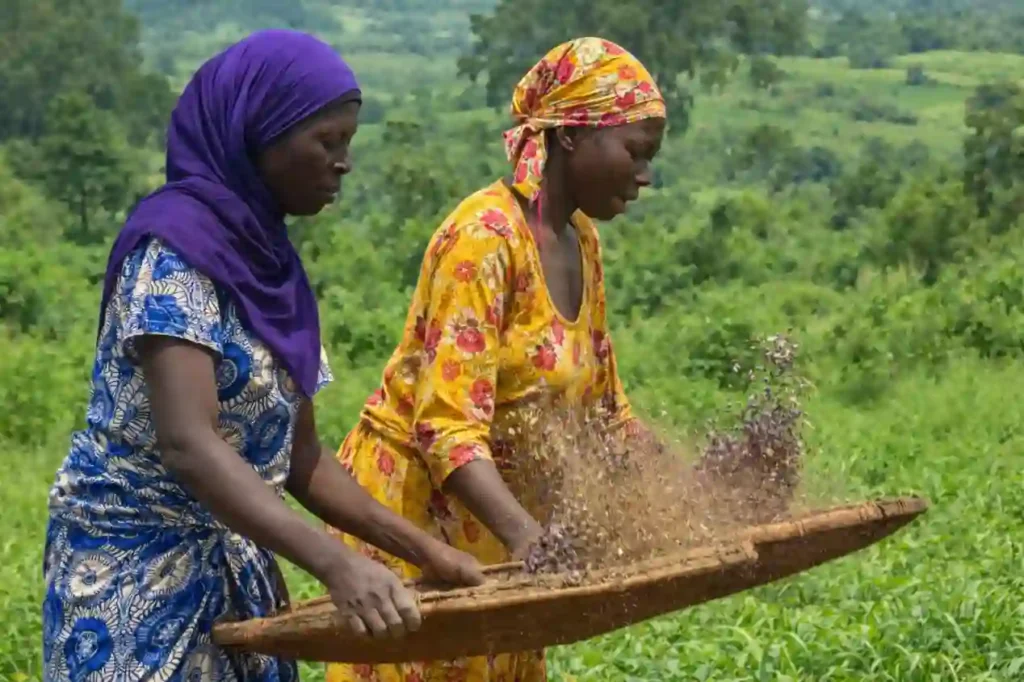
ActionAid Nigeria has trained over 12,000 small holder women farmers in the Federal Capital Territory (FCT) on organic farming practices aimed at improving healthy food production, climate resilience, and sustainable livelihoods.
 Follow us on Google News
The training was conducted under the three-year Strategic Partnership for Agroecology and Climate Justice (SPAC) project, implemented in partnership with the Smallholder Women Farmers Organisation of Nigeria (SWOFON).
The intervention focused on equipping women farmers with practical agroecological skills that support environmentally friendly agriculture and improved food systems across communities in the FCT.
Speaking at a stakeholders’ campaign on land ownership and market access for smallholder women farmers in Abuja, SWOFON Programme Officer, Hajara Ramson, said the initiative strengthened women’s capacity to produce food sustainably while protecting the environment and public health.
She explained that agroecology promotes organic farming practices that help regenerate soil, reduce dependence on chemical inputs, and improve food quality and safety.
Ramson said that despite the progress recorded from the training, many women farmers still face challenges that limit the benefits of the programme.
“Without secure land rights and functional market access, the skills and knowledge these women have gained cannot translate into improved food security or sustainable income,” she said.
According to her, the stakeholders’ engagement created an opportunity for government officials, development partners, and community leaders to examine ways to improve women’s access to land, strengthen market connections, and expand agroecological practices nationwide.
She urged governments at all levels to support agroecology through policies that guarantee women’s access to land, markets, and productive resources, noting its importance to food security and environmental protection.
Ramson added that although the SPAC project has ended, sustained government commitment and stakeholder collaboration are needed to scale its impact and improve the livelihoods of women farmers across Nigeria.
Also speaking, the District Head of Abaji, Alhaji Kamal Adamu Shuaibu, said improved farming practices could increase food production in the FCT.
He noted that with population growth, sustainable agricultural development remains essential to ensuring food security for residents.
While acknowledging the challenge of land grabbing in the FCT, Shuaibu encouraged women farmers to organise themselves to secure access to land.
He called on them to work collectively to position the FCT as a centre for organic food production, including supplying schools and institutions, to boost incomes and community wellbeing.