The federal government is set to empower GEEP 3.0 beneficiaries with vocational training to help them effectively repay the loans, as part of efforts to strengthen empowerment initiatives across the country.
 Follow us on Google News
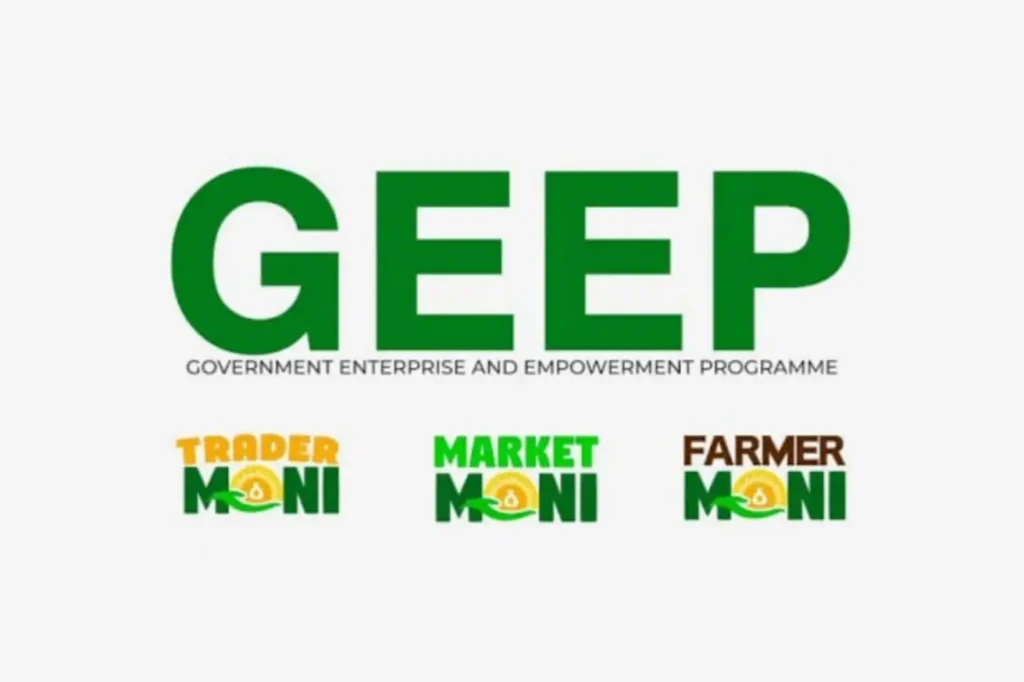
The Government Enterprise and Empowerment Programme is a flagship initiative under Nigeria’s National Social Investment Programme Agency (NSIPA). It was created to promote financial inclusion and economic empowerment through zero-interest, collateral-free loans to smallholder farmers, petty traders, artisans and market women nationwide.
Hamza Baba, National Programme Manager of GEEP, alongside the Federal Ministry of Humanitarian Affairs and Poverty Reduction, spoke to NTA on the latest move of the programme, known as GEEP 3.0.
Speaking on what Nigerians should expect, Baba explained that the new phase builds on the existing structure of the programme. “There’s not much difference,” he said. “The Government Enterprise and Empowerment Programme is one of the key components of the Nigeria Social Investment Programme Agency under the Federal Ministry of Humanitarian Affairs and Poverty Reduction. It’s not something new.”
He noted that the programme began in 2016–17 but has now been recalibrated. “Recently, the federal government recalibrated GEEP and that’s why we’re calling it GEEP 3.0 in line with the Renewed Hope Agenda of President Bola Ahmed Tinubu. That’s just the difference,” he stated.
According to him, one of the major changes in GEEP 3.0 is the introduction of structured vocational and financial literacy training for beneficiaries. He explained that in the previous phase, there was limited training for participants under the three schemes: TraderMoni, MarketMoni and FarmerMoni.
“In the previous GEEP, there was not much financial literacy training for beneficiaries,” Baba said. “But now we’re looking at empowering our beneficiaries with vocational training and also ensuring effective recovery of the loans.”
He admitted that loan recovery was a challenge in the past. “Previously, we had issues with recovering the loans where we recorded between 40 to 50 percent recovery rate,” he said. “But now we are targeting at least 90 percent recovery rate from the loans we are giving out.”
Under GEEP 3.0, FarmerMoni is receiving special focus, especially as the rainy farming season begins. The scheme is expected to serve as a strong tool for financial inclusion and economic empowerment for farmers across Nigeria.
On how beneficiaries will be selected, Baba said technology will play a central role. “We are deploying technology,” he said, noting that the government has introduced a more structured registration and verification process at both national and subnational levels.
He explained that the programme is partnering with key stakeholders to ensure that only genuine farmers benefit. “We are partnering with agencies like the All Farmers Association of Nigeria (AFAN) and also at the subnational levels to be able to reach out to genuine farmers,” he said.
He added that mechanisms have been put in place to guarantee transparency. “We have put necessary mechanisms to ensure that the selection process is very transparent and that actual farmers who are into different farming activities like poultry, aquaculture and livestock are the ones selected,” he stated.
The loans under GEEP 3.0 remain collateral-free. However, new systems are being introduced to improve repayment. Baba explained that weak recovery mechanisms at the early registration stage affected repayment in the past.
“From the inception, there were not many mechanisms in place to ensure effective recovery. If you don’t get it right from the registration stage, you will not be able to recover these loans,” he said.
He noted that in GEEP 3.0, fintech solutions and banking partnerships are being integrated into the process. “Starting from the FarmerMoni this rainy farming season, we are using fintech, we’re using technology and working with banks,” he said. “We’re ensuring that we reach out through cooperatives and various associations of farmer groups to ensure that these farmers are verified, identified and digitised before they receive the loans.”
According to him, these measures will help improve accountability and repayment rates. “All these mechanisms we are putting in place will ensure recovery of these loans,” he said.
On sustainability, Baba emphasised that repayment remains key. “It’s sustainable. We make it sustainable by actually recovering the money,” he said.
He also revealed plans to link successful beneficiaries with other financing institutions. “We are trying to link them up with other lending agencies like NIRSAL (Nigeria Incentive-Based Risk Sharing System for Agricultural Lending) and Bank of Agriculture (BOA), where they can have single-digit interest loans,” he said.
He explained that beneficiaries who repay on time could access higher funding opportunities. “If our farmers under FarmerMoni are able to collect our loans and repay on time, we will be able to recommend them to get higher loans from NIRSAL and Bank of Agriculture,” he added.
Baba described the initiative as part of a broader national strategy. “All this is part of the broader Renewed Hope Agenda of President Bola Ahmed Tinubu, which focuses on inclusive economic growth and expanding financial access to people at the grassroots level,” he said.
The federal government has also launched the GEEP 3.0 portal for eligible Nigerians to register. According to officials, the registration is strictly for genuine farmers who either own or rent farms and are Nigerian citizens.
Authorities stressed that not everyone will qualify, as the goal is to ensure that the programme reaches real farmers and small-scale entrepreneurs who need support to grow their businesses and contribute to national economic development.