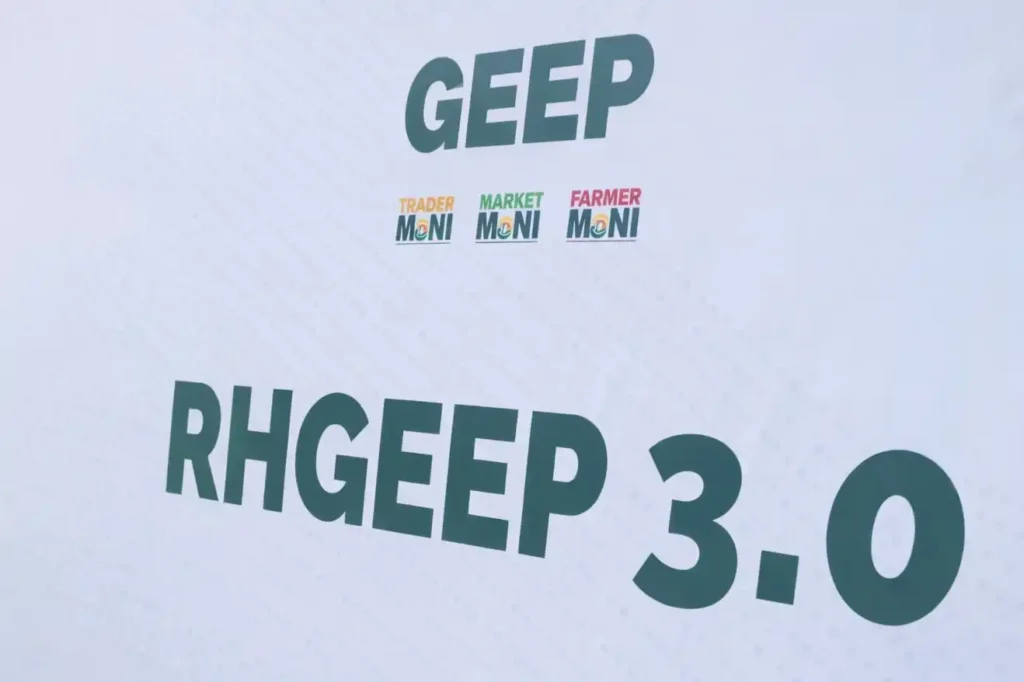
The Federal Government, through the National Social Investment Programme Agency (NSIPA), has announced that no fewer than 22,000 farmers will benefit from GEEP 3.0 N300,000 interest-free loans under the FarmerMoni Dry and Wet Season Programme.
 Follow us on Google News
Mr Hamza Baba, the National Programme Manager of the Government Enterprise and Empowerment Programme (GEEP) under NSIPA, made this known on Wednesday in Abuja during the inauguration of the Renewed Hope GEEP 3.0 and FarmerMoni Technical Working Group.
Baba described the loan as interest-free and collateral-free, explaining that the initiative was designed to strengthen agricultural productivity across the country.
“Under this particular scheme, we are expecting that from today our portal will be open for eligible farmers to go and register; to access our loans; and these loans are interest-free and collateral-free.
“The total sum per beneficiary is N300,000, and we arrive at this looking at the economic production of each farming activity. So, we are targeting the vulnerable, poor farmers at the grassroot,” he said.
He explained that certain conditions must be met before farmers can access the loan. According to him, applicants must be Nigerians and above 18 years of age.
“The farmer must own a land or rent a land. So, they have to be already into farming activities. We are not looking for new farmers.
“They should have bank account, NIN, municipal identification, and must belong to a farming cooperative or association in your local government,” Baba said.
He stated that the programme would cover all the 774 local governments in Nigeria, ensuring nationwide participation.
“We have at the state level, our state programme managers who are working with our enumerators, the banks, the FinTech recovery agents.
“They will be working with agricultural development projects and all farmer associations in each of the 37 states of the federation.
“We are targeting more than 22,000 farmers for this phase, looking at about 28 farmers per local government,” he said.
Baba added that another scheme under GEEP known as TraderMoni was specifically created for artisans and petty traders, separate from the FarmerMoni initiative focused on agriculture.
Also speaking at the event, the Minister of Humanitarian Affairs and Poverty Reduction, Dr Bernard Doro, said the unveiling of the Renewed Hope GEEP 3.0 represented more than just the launch of two policy initiatives.
According to him, the event reflects the firm resolve of the administration to turn its vision into concrete actions aimed at improving lives.
He said the plan is to improve lives, restore dignity and expand economic opportunities for Nigerians, especially the vulnerable.
“The Renewed Hope Agenda of President Bola Tinubu is anchored on inclusion, resilience and shared prosperity.
“It is a commitment to ensure that growth is not limited to a few but is broad-based and people-centred.
“The Renewed Hope G3.0 is a practical expression of this commitment,” he said.
The minister explained that through the programme, micro and small-scale entrepreneurs, artisans, traders and informal sector operators are provided with access to affordable financial support that enables enterprise growth, job creation and opportunity stability.
“This is financial inclusion made real. It is about bringing those previously excluded from formal financial systems into the economic mainstream and empowering them to participate meaningfully in national development.
“In the same vein, the FarmerMoni Dry and Wet Season Programme is a strategic intervention aimed at strengthening agricultural productivity across the country.
“By supporting farmers throughout both planting cycles, this programme addresses seasonal vulnerabilities, enhances yield and contributes directly to national food security. Our farmers remain the backbone of the Nigerian economy.”
He stressed that supporting farmers is not only an economic necessity but also a moral obligation.
“By investing in their productivity and resilience, we are reinforcing agriculture as a sustainable pathway out of poverty and a driver of rural development,” he said.
According to the minister, the programmes are deliberately designed to achieve one overarching objective — poverty reduction through empowerment.