The Minister of Communications, Innovation, and Digital Economy, Dr Bosun Tijani, says an additional 20 million Nigerians will gain access to the Internet as the Federal Government expands rural connectivity across the country.
 Follow us on Google News
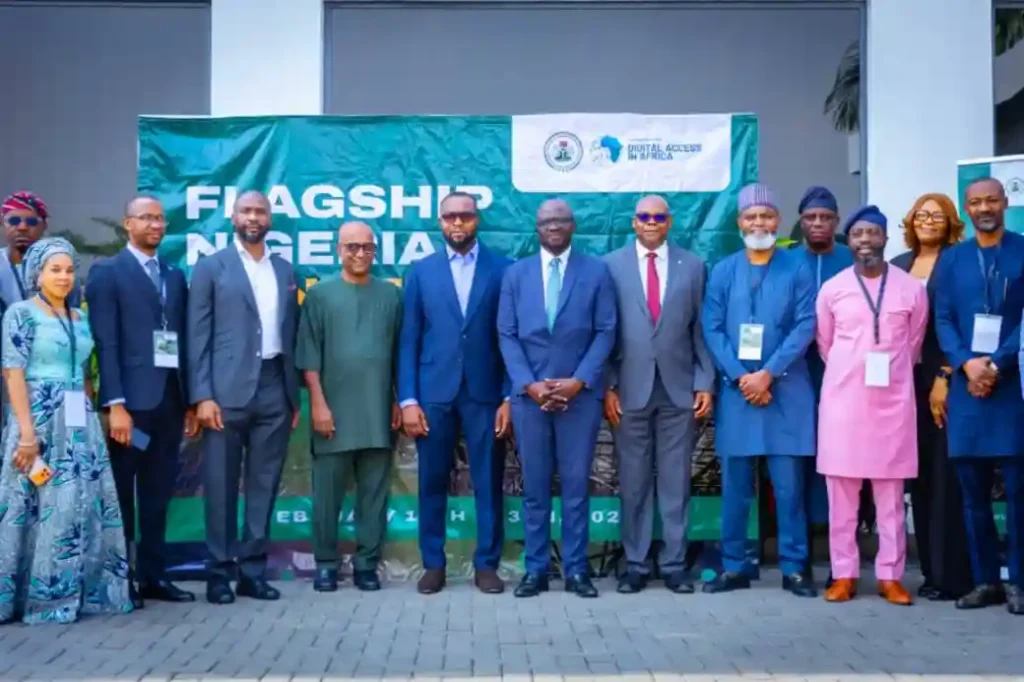
Tijani made this known on Wednesday in Abuja at the Flagship Nigeria Convening programme organised in partnership with the Partnership for Digital Access in Africa (PDA). The three-day programme is themed, “Closing Nigeria’s Usage Gap Through Affordable Devices and Digital Skills’’.
Nigeria Startup News reports that the event brought together stakeholders to address barriers to digital access and explore solutions for inclusive connectivity.
Speaking at the event, Tijani said Nigeria was currently making bold investments in digital infrastructure to drive economic transformation. According to him, Nigeria is the only country in Africa investing in an additional 3,700 towers to strengthen rural connectivity.
“The only country that is also investing in additional 3,700 towers for rural areas, which means we can now bring online about 20 million Nigerians that are currently unconnected at all,” he said.
He added that Nigeria was also investing in 90,000 kilometers of fiber-optic network, led by the World Bank.
“Nigeria is the only country that is investing in 90,000 kilometers of fiber-optic network which is led by the World Bank.
“We are the only country in Africa that is currently doing that but also investing in two communication satellites,” he said.
The minister explained that the Federal Government remained committed to deepening digital access and building the backbone of Nigeria’s digital economy. He noted that tariff adjustments and reviews in the telecoms sector had helped restore profitability and encouraged private investments exceeding $1 billion.
Tijani stressed that infrastructure alone would not solve the digital gap without skills and literacy. He said the government had clearly separated advanced technical skills from basic digital literacy needs.
He referenced the Three Million Technical Talent (3MTT) programme launched in 2023, which has already trained over 150,000 young Nigerians. He also disclosed plans to roll out a nationwide digital literacy programme using mobile technology and local languages.
According to him, Nigeria has developed the first government-backed large language model in Africa that enables artificial intelligence to communicate in Hausa, Igbo, Yoruba, and accented English. He said the innovation would form the foundation for delivering digital literacy training to Nigerians of all ages.
Providing updates on satellite expansion, Tijani said Nigeria’s existing communication satellite had become outdated and that President Bola Tinubu had approved the procurement of new satellites. He stated that the new satellites would help connect hard-to-reach areas and strengthen national security.
He added that fiber deployment is expected to begin between the second and third quarters of this year, while the new satellites are projected to become operational by next year.
In his remarks, Chief Executive Officer of PDA, Ibrahima Guimba-Saidou, said the programme aligns with Africa’s goal of connecting one billion people to the Internet by 2030. He commended Nigeria for its clear strategy and significant investments in connectivity, devices, and digital skills, but noted that electricity remains a major challenge.
“This is about making connectivity relevant to the people who need it the most, not just those in major cities,” he said.
He explained that PDA’s Mission 300 initiative focuses on expanding electricity access to remote areas so that communities, schools, health centers, and markets can benefit fully from digital services. He called for stronger collaboration between public and private sectors to close the digital divide quickly.
Earlier, the World Bank Country Director for Nigeria, Mathew Verghis, said Nigeria faces serious deficits in electricity access and backbone infrastructure but has strong growth potential due to its population.
“There is no digital inclusion without power, and no inclusive growth from electrification without connectivity,” he said.
Verghis added that digital inclusion requires reliable power, broadband connectivity, and affordable devices working together. He said the World Bank is ready to support both public and private sector partners in coordinating planning, construction, and financing of power and fiber infrastructure to accelerate universal access.