The Federal Republic of Nigeria has officially launched the Nigeria Beyond Oil and Gas Alliance (BOGA) Fund Programme, a two-year initiative aimed at assessing the economic risks and opportunities linked to the country’s evolving energy landscape and developing policy options that support economic diversification and long-term structural transformation beyond oil and gas.
 Follow us on Google News
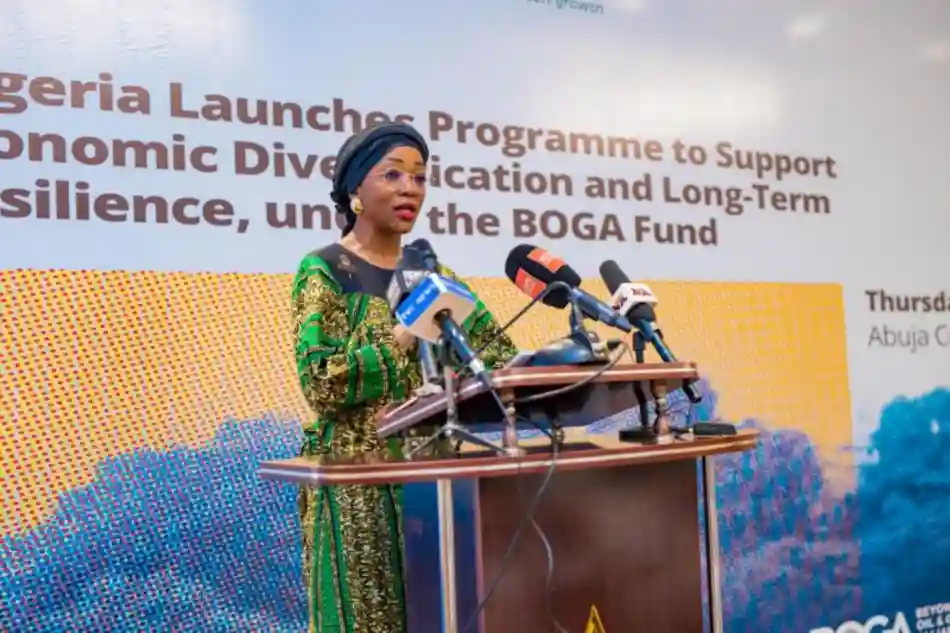
The national launch event took place at the Abuja Continental Hotel and brought together senior government officials, development partners, private sector representatives, and civil society organisations. The gathering highlighted a coordinated effort to prepare Nigeria for a future shaped by global energy transition trends.
According to organisers, the programme is designed to strengthen the analytical foundations for policymaking, encourage coordinated policy dialogue, and translate evidence into actionable recommendations. These recommendations will align with Nigeria’s climate and development priorities, including the delivery of the country’s Nationally Determined Contribution (NDC).
Delivering the keynote address, Mrs. Omotenioye Majekodunmi, Director-General of the National Council on Climate Change (NCCC), described the initiative as a strategic shift rather than a withdrawal from the energy sector.
“Nigeria’s journey beyond oil is not a retreat from our status as an energy powerhouse, but an evolution into a green energy giant. Our collaboration with BOGA reinforces our commitment to the 1.5°C pathway while prioritizing a development trajectory that is fair, funded, and focused on the prosperity of our people,” she said.
The event also featured a goodwill message from Sian Bradley, Head of the Beyond Oil and Gas Alliance (BOGA) Secretariat. She reaffirmed BOGA’s commitment to supporting countries at an early stage of planning for a just, orderly, and equitable transition away from oil and gas.
Bradley commended Nigeria’s recognition of economic challenges and the need for bold diversification pathways as outlined in its third NDC. She noted that the programme would support Nigeria’s first steps toward implementation, alongside broader efforts to advance decarbonisation, methane reduction, and upstream emissions cuts.
Through scenario analysis, transition risk assessments, evaluation of green development pathways, and structured stakeholder engagement, the programme will examine the potential impacts of global energy shifts across Nigeria’s oil and gas value chain. It will also identify viable economic alternatives and develop targeted policy recommendations to support workers and communities that may be affected by structural changes.
Speaking on behalf of APRI, Africa Policy Research Institute, the programme’s lead implementing partner, Dr Olumide Abimbola, Executive Director of APRI, explained the expected outcomes.
“This initiative will help Nigeria develop a clearer, shared understanding of what a changing global energy landscape could mean for Nigeria – our revenues, our jobs, our industries, and our communities – and what practical options are available to strengthen resilience. It will also help us identify credible pathways for economic diversification beyond oil and gas, and the kinds of policies and enabling conditions needed to unlock new opportunities and drive competitiveness,” he said.
On behalf of the Society for Planet and Prosperity (SPP), Prof. Chukwumerije Okereke, Director General of SPP, said Nigeria must approach the transition strategically.
“Nigeria’s challenge is not simply to transition away from fossil fuels, but to strategically manage the risks and opportunities of a changing global energy system. The BOGA Fund Programme is important because it anchors this transition in rigorous evidence, economic realism, and justice for workers and communities. SPP is honoured to contribute to this important endeavour alongside APRI, NCCC, BOGA, and our wider community of partners, and it is our prayer that this work will help shape Nigeria’s low-carbon sustainable development and the prosperity of our country,” he stated.
The programme is implemented by APRI in collaboration with SPP. Its development in Nigeria was led by the National Council on Climate Change (NCCC), which set up a cross-government working group. The group includes representatives from the Ministry of Petroleum, National Upstream Petroleum Regulatory Commission, National Midstream and Downstream Petroleum Regulatory Authority, Ministry of Environment, and Nigerian National Petroleum Company.
The Nigeria BOGA Fund Programme is expected to complement existing national and international efforts on climate action and emissions reduction by providing an integrated platform to support evidence-based policymaking, institutional coordination, and long-term economic resilience.