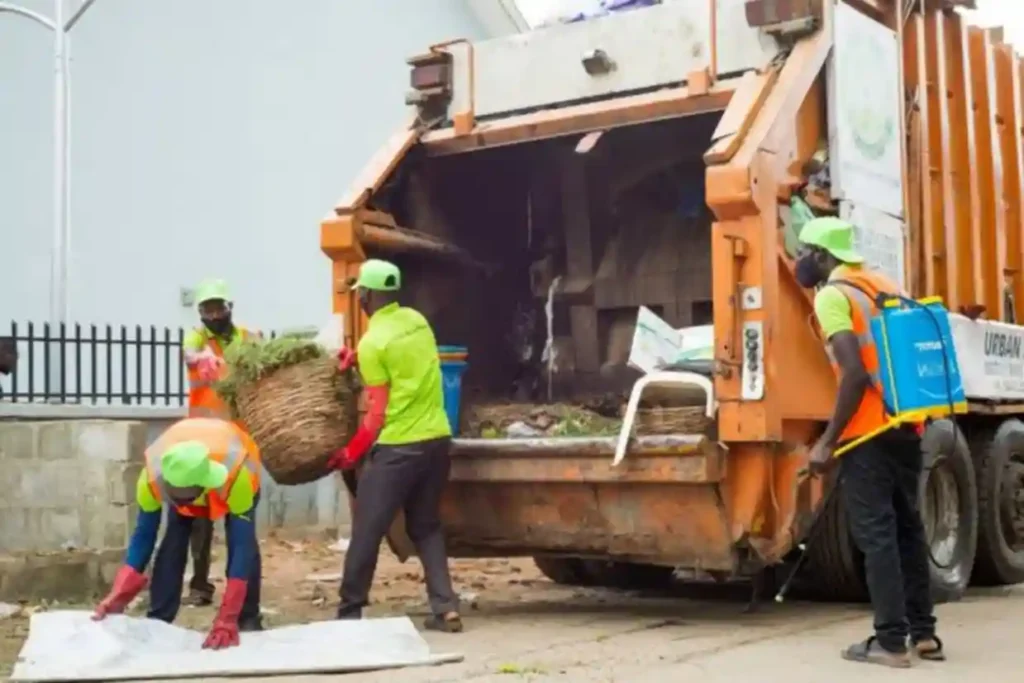
Lagos State is set to commence the Eco-Circulate project, a circular economy initiative aimed at building climate education, promoting waste valorisation, and encouraging responsible consumption across the state.
 Follow us on Google News
The project, which will take place in Ojokoro Local Council Development Area (LCDA), is designed to strengthen climate literacy and support inclusive economic participation across the megacity. It forms part of the Lagos State Government’s broader Circular Economy agenda focused on creating a more sustainable and innovative Lagos.
Titilayo Oshodi, special adviser to the Lagos State Government on Climate Change and Circular Economy, said the project reflects the state’s commitment to long-term environmental and economic resilience.
“We must move beyond linear models of growth and strengthen systems that keep resources in productive use. Through this initiative, we are positioning Lagos for long-term economic and environmental resilience,” she said.
The initiative leverages education, community engagement, and incentives to reward climate-friendly choices. It positions circular practices as a socially impactful subsidy model that delivers both environmental and economic benefits.
Beyond the exchange of recyclable materials for incentives, Oshodi noted that the programme aims to drive long-term behavioural change by increasing awareness and adoption of circular economy principles at the community level.
“We must begin to reflect on this intervention within our broader economic trajectory. Its value will not be measured by financial returns to communities alone, but by the quality of data, the strength of enterprise growth, and the extent to which it addresses environmental pressures and strengthens governance in Lagos,” she added.
Eco-Circulate is part of efforts to transition Lagos from a linear “collect and dump” model to a sustainable system that creates economic value, protects the environment, and improves residents’ quality of life.
Since its inception, the initiative has been activated in several communities, including Ayobo, Badagry, Ajah, Surulere, Onigbongbo, and Maryland.
According to the organisers, the programme has delivered measurable environmental outcomes, diverting significant volumes of recyclable materials away from landfills, drainage systems, and waterways. Over 40,000 tons of recyclable waste have been collected and valorised across multiple communities, contributing to an estimated 33 million tons of CO2e emissions avoided.
Oshodi said this edition will also incorporate climate literacy for children aged 8–10, designed to inspire practical, climate-smart actions and foster environmental responsibility from an early age.
“Residents of Ojokoro and surrounding communities are encouraged to come with their sorted recyclable materials, including plastics, PET bottles, metals, cans, cartons, textiles, and paper waste, which can be exchanged for cash, data, airtime, food items, clean cooking gas, and other rewards,” she noted.
The one-day community outreach programme will be held on Sunday, February 28, to inform, engage, and activate residents to participate actively in the circular economy.