
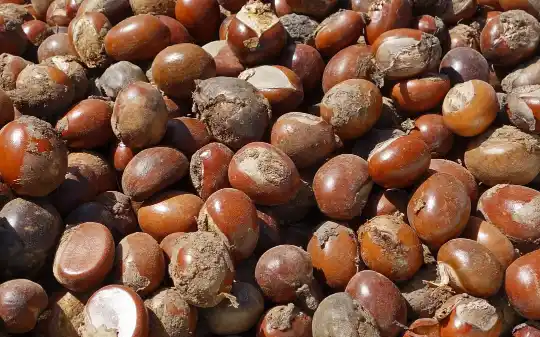
President Bola Ahmed Tinubu has approved the extension of the ban on the export of raw shea nuts for another year, from February 26, 2026, to February 25, 2027.
 Follow us on Google News
The decision, according to the Presidency, underscores the administration’s commitment to advancing industrial development, strengthening domestic value addition, and supporting the objectives of the Renewed Hope Agenda.
The ban is designed to deepen processing capacity within Nigeria, enhance livelihoods in shea-producing communities, and promote the growth of Nigerian exports anchored on value-added products. By restricting the export of raw shea nuts, the government aims to encourage local processing and increase the economic benefits retained within the country.
To further these objectives, President Tinubu authorised the two ministers of the Federal Ministry of Industry, Trade and Investment, and the Presidential Food Security Coordination Unit (PFSCU), to coordinate the implementation of a unified, evidence-based national framework. The framework is expected to align industrialisation, trade, and investment priorities across the shea nut value chain.
The President also approved the adoption of an export framework established by the Nigerian Commodity Exchange (NCX) and ordered the withdrawal of all waivers that previously allowed the direct export of raw shea nuts. He directed that any excess supply of raw shea nuts must be exported exclusively through the NCX framework, in line with approved guidelines.
In addition, President Tinubu directed the Federal Ministry of Finance to provide access to a dedicated NESS Support Window. This will enable the Federal Ministry of Industry, Trade and Investment to pilot a Livelihood Finance Mechanism aimed at strengthening production and processing capacity in the sector.
Shea nuts are the oil-rich fruits from the shea tree commonly found in Nigeria’s Savanna belt. They are used to produce shea butter, which is widely known for its moisturising, anti-inflammatory, and antioxidant properties. Shea butter is a key ingredient in cosmetics for skin and hair, as well as in edible cooking oil. The Federal Government noted that processed shea butter can fetch between 10 and 20 times the price of raw nuts.