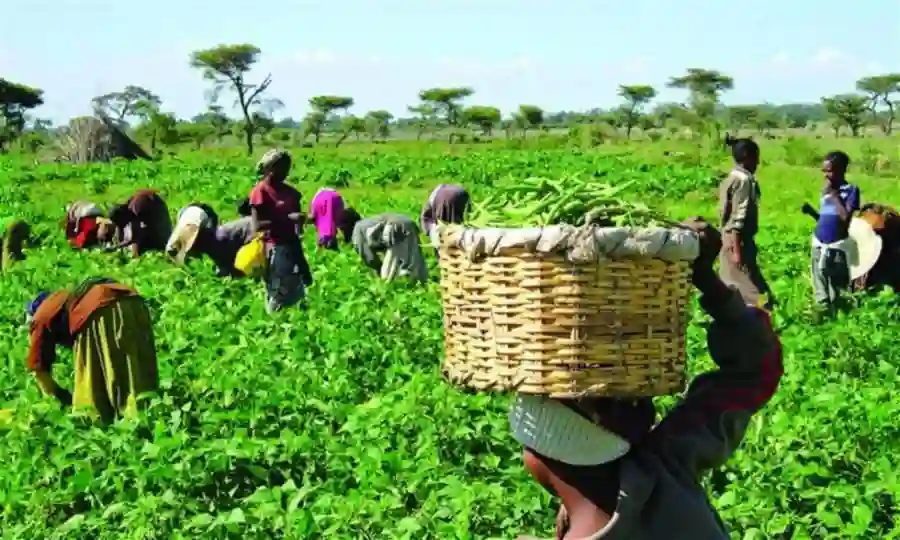
The Federal Government has disclosed plans to empower at least 30 percent of youth and 30 percent of women across Nigeria’s food system value chains, while working to reduce the gender gap among young people in agriculture by 50 percent.
 Follow us on Google News
The Minister of Agriculture and Food Security, , made this known at the first edition of the National AgriBusiness Strategy Youth Dialogue held in Abuja. The Dialogue, themed “Building Climate-Resilient and Finance-Enabled Pathways for Youth in Agrifood Systems in Nigeria,” focused on concrete targets for inclusion and measurable impact.
Speaking at the event, Senior Specialist, Continental and Regional Engagement for , Mr. David Adama, said the target was clear and time-bound.
“Our target is clear: we must empower at least 30 percent of youth and 30 percent of women in every food system value chain, while reducing the youth gap between men and women by 50 percent. We aren’t just here to talk; we are here to track measurable progress,” he said.
He added that the shift is no longer just about agriculture but about transforming entire food systems to be inclusive and competitive. “The ‘Kampala Era’ demands a shift toward total inclusivity, ensuring that whatever government does takes into account young people, women, and vulnerable groups,” Adama stated.
Kyari said Nigeria’s commitment goes beyond declarations, stressing that the government is aligning national policies with continental strategies to drive youth and women participation.
“The integration of the Sustainable Development Goals, the Comprehensive Africa Agriculture Development Programme, and the African Agricultural Youth Strategy into our National Agricultural Technology and Innovation Policy demonstrates our clear commitment to building a sustainable, inclusive, and innovation-driven agricultural sector,” the Minister said.
He explained that empowering young people and women in agriculture is not only a social objective but also an economic strategy.
“When we empower our youth with access to finance and opportunity, we are not simply supporting individual enterprises. We are shaping markets, strengthening resilience and defining the future of our agrifood systems,” Kyari said.
The Minister noted that Nigeria’s emergence as Chairperson of the 49th Session of the positions the country to influence global agricultural priorities around youth inclusion and sustainable financing.
He said the administration of President Bola Ahmed Tinubu is backing the inclusion targets with institutional reforms and financial support mechanisms.
“Through strategic collaboration with the Central Bank of Nigeria, National Agricultural Development Fund, the Bank of Agriculture and the Nigeria Agricultural Insurance Corporation, the President Bola Ahmed Tinubu-led Administration has expanded access to agricultural finance, derisked rural investment, and unlocked capital for youth-led enterprises,” he said.
According to him, the reforms are strengthening credit delivery, scaling climate risk insurance and extending digital financial services to underserved communities.
Permanent Secretary of the Federal Ministry of Agriculture and Food Security, Dr. Marcus Ogunbiyi, said food security cannot be achieved without deliberate inclusion of young people and women.
“Food security, a national priority under President Bola Ahmed Tinubu’s Renewed Hope Agenda, cannot be achieved without securing the future of Nigeria’s youth in agriculture,” he said.
Ogunbiyi listed climate variability, limited access to finance, weak infrastructure and barriers to land, technology and markets as key constraints facing young agripreneurs, especially women.
He said the Ministry is working to domesticate the African Agribusiness Youth Strategy and institutionalize the Youth Agripreneurs Programme Index for planning, monitoring and evaluation.
“We must move from rhetoric to results, from fragmented interventions to coordinated impact, and from pilot projects to scalable national programs,” he stated.
Adama noted that Nigeria is the first country to domesticate the Africa Agribusiness Youth Strategy through the Dialogue platform.
“To the young people here: you are leading this conversation. Take advantage of this opportunity to ensure your ideas are woven into the national plan,” he said.
The Dialogue brought together government officials, development partners, financial institutions and youth representatives to align on implementation timelines, measurable targets and shared responsibilities aimed at meeting the 30 percent youth and 30 percent women inclusion benchmark across Nigeria’s food systems.