
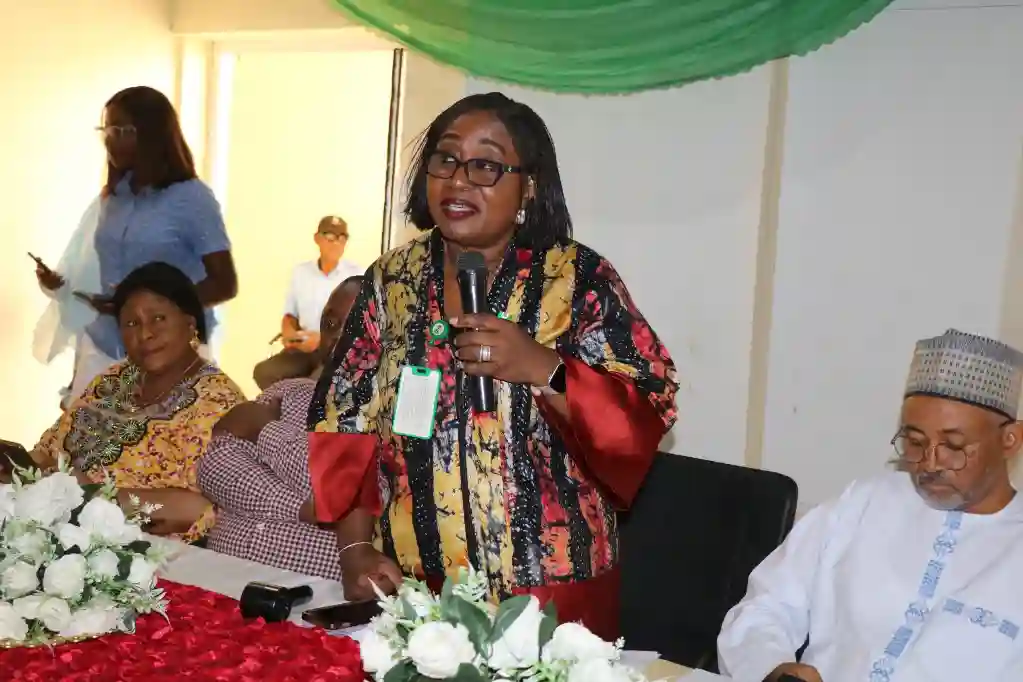
Stakeholders have urged the Federal Government to formally include women’s digital literacy in Nigeria’s national education policy, following new survey findings that expose a widening gap between interest and access in the country’s technology ecosystem.
 Follow us on Google News
The call was made at the 3rd Workshop of the Women in Digital Empowerment Network (WIDEN) AI for Sustainable Development Project, held at the National Open University of Nigeria (NOUN) headquarters in Abuja. The workshop was backed by a nationwide survey of nearly 1,000 women conducted under a British Council-funded collaboration involving NOUN, Nasarawa State University, Keffi (NSUK), and Brunel University London.
Presenting the core message of the gathering, Deputy Vice-Chancellor for Technology Innovation and Research at NOUN, Prof. Christine Ofulue, said empowering women digitally must move from advocacy to policy.
“Empowering women digitally is both a social imperative and an economic necessity,” she said, stressing that digital inclusion should be embedded within Nigeria’s formal education structure rather than treated as an optional intervention.
Survey results presented at the event revealed that nearly 60 percent of respondents were under the age of 24, showing strong youth representation. More than 71 percent expressed interest in pursuing careers in technology. However, despite this enthusiasm, over 50 percent identified themselves as beginners in digital skills, while only 8.7 percent had reached an advanced level.
Principal Investigator for Nigeria and Director of Advancement and Linkages at NOUN, Prof. Ganiyat A. Adesina-Uthman, described the findings as a wake-up call for policymakers.
“The appetite is clearly there,” she said. “But interest without structured support, curriculum integration, and accessible infrastructure will not translate into real participation in the digital economy.”
She added that 13.7 percent of respondents were living with physical or sensory impairments, highlighting the urgent need for inclusive programme design that accommodates women with disabilities.
According to Prof. Adesina-Uthman, the WIDEN framework offers a tested model that can be scaled nationally. She urged the National Universities Commission (NUC) and the Federal Ministry of Education to integrate the model into university and polytechnic curricula across the country and replicate it in all six geopolitical zones.
From the UK research team, Dr. David Botchie provided further data insights, noting that 99.6 percent of respondents were based in Nigeria and 91.3 percent were female. While 70.7 percent came from urban areas, he said the findings revealed deeper structural barriers for women in rural communities.
“The data clearly shows that location compounds the challenge,” he noted, emphasizing the need to deliberately extend digital programmes beyond major cities.
Representing NSUK, Prof. Sa’adatu Hassan Liman, through Prof. Ngozi Nwosu, reinforced the urgency of preparing women for what she described as the realities of the Fourth Industrial Revolution. She advocated expanded scholarships and targeted grants for women in coding, robotics, automation, and artificial intelligence, as well as the creation of junior arms of digital networks for girls at earlier stages of education.
A representative of the Director of University Education at the Federal Ministry of Education, Amina Yazid Ibrahim, linked women’s digital literacy directly to national development outcomes.
“Access to digital tools strengthens household incomes and improves national productivity,” she said, arguing that women’s participation in technology is not just a gender issue but an economic growth strategy.
A highlight of the workshop was the presentation of Nura-X, a female robot developed in Keffi by Prof. Rashidah Funke Olanrewaju, which has recently been inducted into the Nigeria Computer Society. The innovation symbolised what structured digital empowerment can achieve when women are given the right tools and support.
Across all sessions, one message remained consistent: Nigerian women are ready for the digital future, but the education system must evolve to meet them there.