
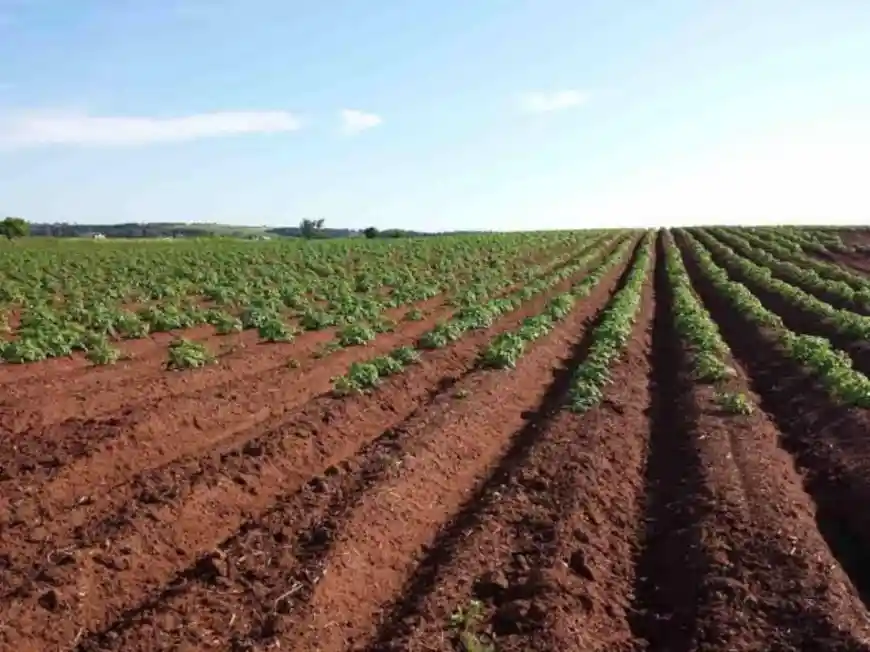
Nigeria’s agriculture sector has long been described as one of the country’s greatest economic opportunities, yet one major barrier continues to slow serious investment: access to secure and properly documented farmland. For investors, financiers and large-scale producers, uncertainty around land ownership and availability often creates hesitation. This is why many experts increasingly argue that Nigeria must prioritise the development and documentation of agricultural land banks.
 Follow us on Google News
A land bank, in simple terms, is an organised catalogue of farmland that has been properly identified, surveyed and legally prepared for productive agricultural use. Instead of investors spending years negotiating with multiple landowners, resolving boundary disputes or navigating unclear land titles, land banks provide ready-to-use farmland that has already been verified and documented.
According to the Nigeria Incentive-Based Risk Sharing System for Agricultural Lending (NIRSAL), properly structured land banks are critical to attracting large-scale agricultural investments.
“Finance flows where structure exists,” NIRSAL notes. “When land assets are properly documented and verified, they become reliable entry points for investors and financiers seeking opportunities in primary agricultural production.”
Across Nigeria, many agricultural investments fail to take off not because of lack of capital, but because investors cannot easily access land that is secure, suitable and ready for cultivation. Even when funding is available, land disputes, unclear ownership structures and community disagreements can delay projects for years.
For financial institutions, these uncertainties create significant risks. Banks and investment partners are reluctant to support projects where land tenure is unclear or contested. Properly documented land banks help reduce these risks by ensuring that farmland available for investment has already been surveyed, verified and legally secured.
Industry experts say this approach significantly improves the bankability of agricultural projects. When land assets are documented and integrated into structured investment models, financial institutions are more confident about providing loans, insurance and other financing tools required for large-scale production.
Land banks also reduce the time it takes to move from investment planning to actual production. Without them, investors often spend months or even years identifying farmland, negotiating with communities and resolving legal issues. With a documented land bank system, investors can quickly access farmland that has already been prepared for agricultural use.
Another major advantage of documented farmland is improved land use planning. With proper documentation, stakeholders can analyse soil quality, water availability, climate conditions and proximity to markets. This allows governments and investors to match specific agricultural activities to the most suitable locations.
For example, certain areas may be best suited for rice production due to water access, while others may favour livestock, grains or horticulture. With a national or state-level land bank database, such decisions become more strategic and data-driven.
Beyond individual investments, documented land banks can also strengthen public-private partnerships in agriculture. Governments can allocate verified farmland for structured agricultural projects while private investors bring capital, technology and expertise. This model allows both parties to work within a coordinated framework that supports production, job creation and rural development.
Agricultural finance specialists argue that improving access to documented farmland is also central to fixing broader challenges in agricultural finance. Too often, discussions focus only on the amount of funding available rather than the systems that enable investments to succeed.
“Agriculture finance fails more often because of systems than because of money or interest rates,” experts note. “Many conversations focus on how much money is deployed instead of the systems that surround that money.”
One of the most important of those systems is land access. Without secure farmland, even well-funded agricultural programmes struggle to achieve lasting impact. Capital may be available, but without properly structured land systems, projects face delays, disputes and operational uncertainty.
This is why organisations like NIRSAL are working with state governments, communities and traditional institutions to help formalise and document farmland across the country. Through processes such as geotagging, title verification and land suitability assessments, these efforts aim to create transparent pipelines of farmland that investors can trust.
As agricultural investment continues to grow in importance for Nigeria’s food security and economic diversification, many analysts believe that properly identified and documented land banks will play a decisive role in unlocking the country’s vast agricultural potential.