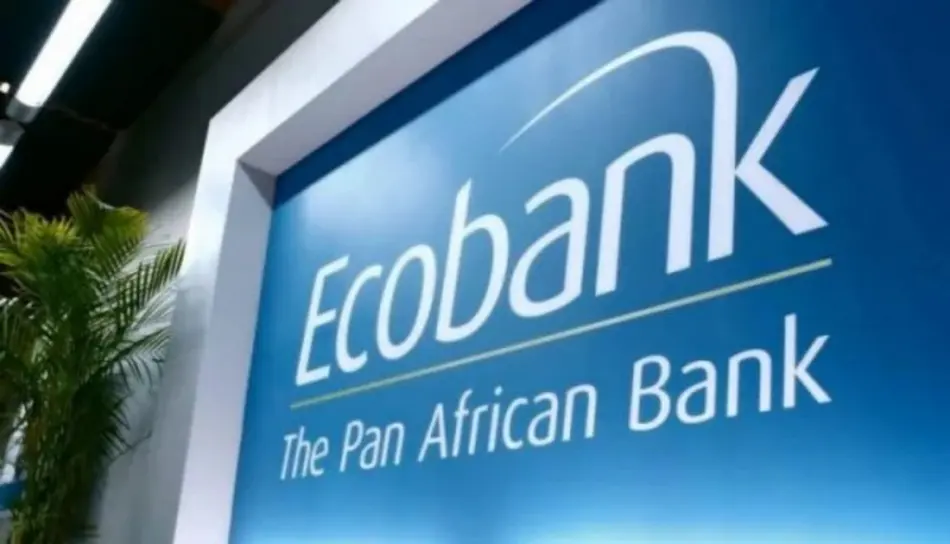
Ecobank Group says it increased loans to women-led businesses by 194 per cent in 2025, providing a record $780m in financing as part of efforts to expand opportunities for female entrepreneurs and narrow Africa’s estimated $42bn gender financing gap.
 Follow us on Google News
The pan-African banking institution disclosed this while releasing its Ecobank Gender Programme Report to mark International Women’s Day 2026, highlighting a significant scale-up of its gender-focused financial initiatives across the continent.
According to the bank, total lending to registered women-led enterprises rose sharply from $265m in 2024 to $780m in 2025, reflecting growing demand from female entrepreneurs and the expansion of programmes designed to improve access to finance.
Group Chief Executive Officer of Ecobank, Jeremy Awori, said empowering women-owned businesses remains central to driving economic growth and stability across Africa.
“Women entrepreneurs are among the most powerful drivers of local economic growth across Africa, yet many still face barriers to finance that limit their ability to scale,” Awori said.
“At Ecobank, we are working to close this gap by combining capital, capability building and market access through our pan-African platform.”
The bank said its flagship Ellevate programme has played a major role in supporting this increase in lending to women-led businesses. Since its launch in 2020, the initiative has expanded to 26 countries across West, Central, East and Southern Africa.
By the end of 2025, the Ellevate ecosystem had supported more than 103,000 registered women entrepreneurs, while about 24,000 participants received specialised mentoring and other non-financial business support designed to help them strengthen and scale their enterprises.
Ecobank noted that beyond formal businesses, it is also targeting women operating in the informal sector, including traders and artisans who make up a large share of Africa’s economic activity but often lack the documentation required to qualify for traditional bank loans.
To address this gap, the bank introduced the MAMA programme in Ghana to help informal female entrepreneurs gradually build financial records that can enable them access structured financing.
“Many of these entrepreneurs generate strong daily cash flows but remain excluded from traditional financing due to limited documentation,” the report noted.
“By supporting gradual business formalisation, the programme enables women to transition into the formal economy and gain access to larger financing opportunities over time.”
In just its second year of operation, the MAMA initiative has enrolled about 10,000 women entrepreneurs and disbursed more than $1.8m in subsidised credit facilities to support their businesses.
Ecobank has also introduced new financial instruments to mobilise additional capital specifically targeted at women-led enterprises. In March 2025, Ecobank Ivory Coast launched a Gender Bond, the first of its kind in the West African Economic and Monetary Union region.
The bank said the bond attracted strong investor interest and raised XOF 11bn, equivalent to about $18.2m, within 48 hours of its launch.
Awori said the significant growth in financing for women entrepreneurs reflects both rising demand and the success of programmes created to support female-led businesses.
“The strong growth in lending to women-led businesses reflects both the demand from entrepreneurs and the impact of initiatives such as Ellevate and our Gender Bond,” he said.
“These help mobilise capital specifically to support women-led growth.”
Ecobank said it plans to deepen its digital tools for women entrepreneurs and expand partnerships with development finance institutions as part of broader efforts to strengthen access to finance for female-led enterprises across Africa.