
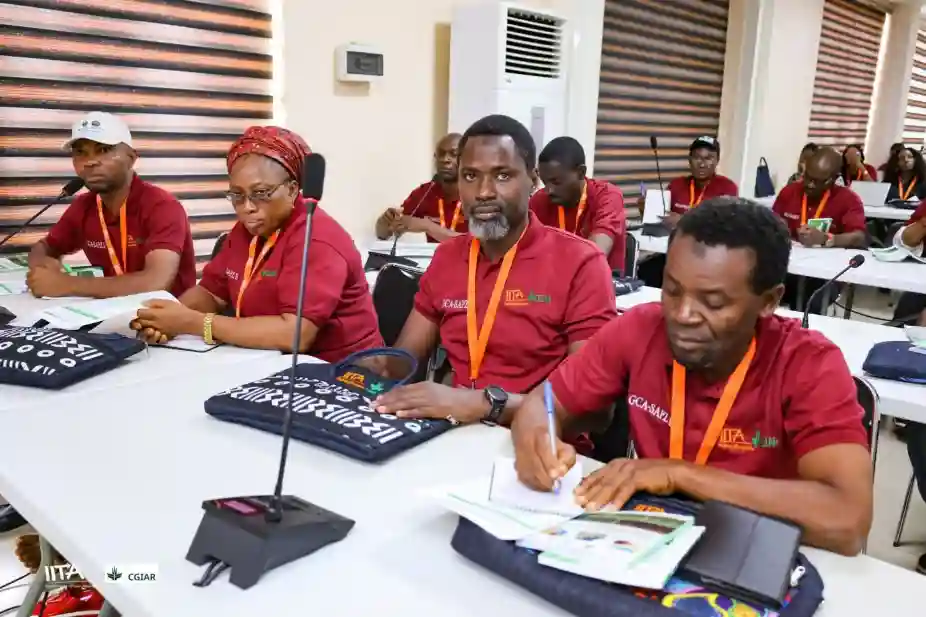
The International Institute of Tropical Agriculture (IITA), in partnership with the Global Center on Adaptation (GCA), is organising a three-day Training of Trainers (ToT) workshop aimed at strengthening agricultural practices under Phase 2 of Nigeria’s Special Agro-Industrial Processing Zones (SAPZ) programme.
 Follow us on Google News
The workshop brings together agricultural practitioners and stakeholders from Anambra, Ekiti, and Niger states, focusing on improving technical knowledge in seed production, soil health, sustainable land management, and the use of digital tools in agriculture. The initiative forms part of broader efforts to enhance productivity, strengthen food security, and expand employment opportunities across Nigeria’s agricultural value chain.
Participants are currently engaged in a series of interactive sessions designed to equip them with both theoretical and practical knowledge. The training includes lectures, practical demonstrations, facility visits, evaluations, question-and-answer sessions, and group discussions intended to prepare participants to train farmers and agricultural extension workers within their respective states.
A major focus of the workshop is soil health and sustainable land management, which experts describe as critical for improving crop productivity and building climate-resilient farming systems.
Speaking during one of the sessions, a facilitator noted that “healthy soil is the foundation of sustainable agriculture and improved crop yield,” stressing that better soil management practices are essential for long-term productivity.
Participants are also receiving training on soil health assessment and monitoring methods, causes and effects of soil degradation, and strategies to address soil challenges specific to Nigerian farming systems. Other sessions highlight the importance of soil health in the production of major crops such as cassava, maize, and soybean.
In addition, the workshop explores the use of digital soil data and information systems to support informed decision-making among farmers and agricultural planners. Trainers are also being introduced to the principles of land suitability analysis to help determine the most appropriate crops for different soil and environmental conditions.
According to organisers, the goal is to ensure that participants leave the programme with the knowledge and practical tools needed to train others and support sustainable agricultural transformation in their respective states.