
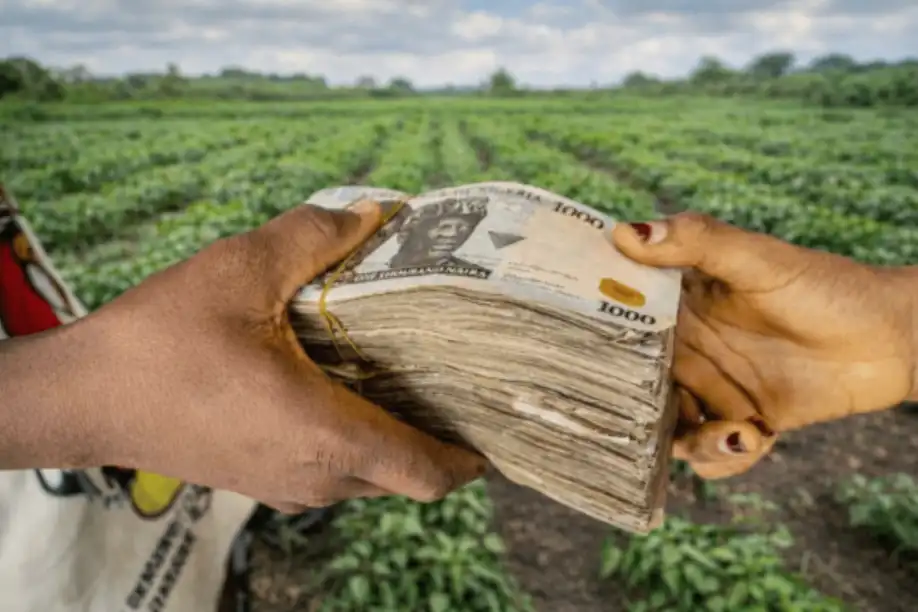
Two million Nigerian households are set to benefit from a renewed Federal Government push to transform agriculture by linking farmers to profitable markets, boosting private investment, and deploying technology to improve incomes and transparency by 2030.
 Follow us on Google News
This target, anchored in the Federal Government’s collaboration with Heifer International, reflects a broader shift from subsistence farming to a structured, market-driven agribusiness system designed to deliver sustainable livelihoods at scale. At the centre of the strategy is a deliberate effort to strengthen market systems so that smallholder farmers are no longer isolated producers but active participants in profitable value chains.
Speaking in Abuja, the Minister of Agriculture and Food Security, Abubakar Kyari, made it clear that the transformation agenda is not just about increasing production, but about ensuring farmers earn more from what they produce. According to him, “the development of efficient market systems remains critical to repositioning Nigeria’s agriculture from subsistence production to a competitive and sustainable agribusiness sector.”
The emphasis on market systems signals a shift in thinking. Rather than focusing only on inputs like fertiliser or seeds, the government is prioritising how farmers sell, who they sell to, and the value they receive. By connecting farmers directly to structured markets, the initiative aims to eliminate inefficiencies that have long kept rural incomes low.
Kyari explained that stronger market linkages would open access to higher-value markets, allowing farmers to move beyond local, low-paying buyers. This, in turn, is expected to attract private sector investment into agricultural services such as logistics, storage, processing, and financing. “Stronger market linkages would enable farmers to access higher-value markets while stimulating private investment… ultimately reducing dependence on donor support and fostering resilient rural economies,” he said.
Technology is another key pillar of the plan. The government is betting on digital tools to close long-standing information gaps that have disadvantaged farmers. With better access to pricing data and market intelligence, farmers can negotiate more effectively and avoid exploitation.
“The growing role of technology in improving price transparency and expanding market access for farmers” is central to the reforms, Kyari noted, adding that digital platforms will empower producers to “negotiate better prices and minimise exploitation by middlemen.”
Already, a number of agribusiness innovators are supporting this transition. Companies such as Extension Africa, Pullus Africa, Nimsy Agro, Vet Konnect, and Thrive Agric are using technology to connect farmers with markets, provide advisory services, and improve access to inputs and finance. These platforms are helping to build the ecosystem required for a modern agricultural economy where farmers are treated as entrepreneurs rather than beneficiaries.
Beyond market access and technology, mechanisation is also receiving renewed attention. A key component of the government’s collaboration with Heifer International involves a mechanisation support initiative in partnership with the Bank of Agriculture. The programme introduces digital tracking systems to monitor tractor usage, maintenance schedules, and servicing.
This approach is designed to address one of the long-standing challenges in Nigeria’s mechanisation efforts: poor accountability and rapid equipment breakdown. By tracking usage in real time, the system ensures that machinery is properly maintained and used efficiently, extending its lifespan and improving service delivery to farmers.
Kyari described the initiative as “a practical model for advancing Nigeria’s mechanisation agenda while strengthening agricultural service delivery,” noting that the integration of technology and institutional support is critical to achieving long-term impact.
For Heifer International, the focus is clear and measurable. The organisation is aligning its interventions with Nigeria’s agricultural priorities, with a specific target of helping two million households achieve sustainable living incomes by 2030.
Its President and Chief Executive Officer, Surita Sandosham, emphasised that the approach goes beyond general support to precise, data-driven intervention. According to her, the organisation is deploying geo-referencing and advanced data mapping to ensure that resources reach the right farmers directly.
She explained that these tools will ensure “that support such as subsidised inputs and extension services reaches verified farmers directly on their farmlands with transparency and efficiency.” This level of targeting is expected to reduce leakages, improve accountability, and maximise the impact of every intervention.
While crop agriculture is receiving significant attention, the livestock sector is also being integrated into the broader transformation agenda. The Federal Government, through the Ministry of Livestock Development, has partnered with the Food and Agriculture Organization of the United Nations (FAO) to strengthen animal health systems and improve productivity.
At a strategic meeting in Abuja, the Minister of Livestock Development, Idi Mukhtar Maiha, highlighted the importance of disease control in safeguarding farmer livelihoods. “We must continue to strengthen our animal health systems and build the capacity required to respond effectively to disease outbreaks,” he said, adding that the collaboration with FAO will “help protect livestock assets, improve productivity, and support the broader transformation of the sector.”
As part of this effort, FAO approved a $350,000 emergency Technical Cooperation Programme to support Nigeria’s response to the ongoing outbreak of Highly Pathogenic Avian Influenza. The intervention will focus on 11 affected states, strengthening surveillance, coordination, and rapid response systems to contain the disease and prevent further spread.
The partnership also extends to long-term disease control strategies, including efforts to eradicate Peste des Petits Ruminants, a highly contagious disease affecting sheep and goats. Plans are underway to convene a national technical meeting involving veterinary experts and institutions to review Nigeria’s eradication strategy and address gaps in vaccine supply.
To support this, the government will engage the National Veterinary Research Institute to assess its vaccine production capacity while exploring additional procurement options to meet national demand.
In addition, both parties are working to improve Nigeria’s preparedness for zoonotic diseases through the One Health approach, in collaboration with the Federal Ministry of Health and the Nigeria Centre for Disease Control. This integrated strategy recognises the link between human, animal, and environmental health, and aims to strengthen the country’s overall resilience to disease outbreaks.
The broader picture that emerges is one of coordinated reform. From market access and digital innovation to mechanisation and livestock health, the government is building a multi-layered system designed to unlock value across the agricultural sector.
At its core, however, the success of the entire initiative will be measured by its impact on people. The goal of lifting two million households into sustainable income levels is not just a statistic; it represents a structural shift in how agriculture contributes to economic growth and rural development in Nigeria.
By aligning policy, technology, private investment, and international partnerships, the Federal Government is attempting to create a system where farmers are better connected, better informed, and better rewarded for their work.