
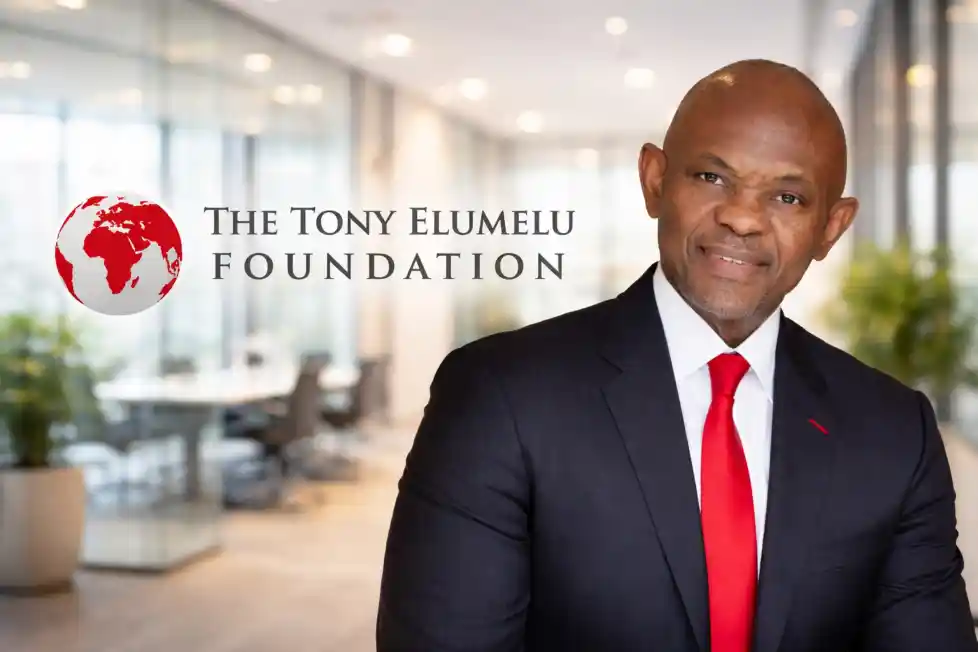
The Tony Elumelu Foundation has selected 3,200 young African entrepreneurs for its 2026 programme, providing each with a $5,000 non-refundable seed grant alongside training, mentorship, and long-term business support aimed at building resilient, future-ready enterprises across the continent.
 Follow us on Google News
Speaking during a virtual media parley, the Foundation’s Chief Executive Officer, Somachi Chris-Asoluka, described the latest cohort as a significant step in expanding access to opportunity, noting that the initiative continues to prioritise inclusion across gender and geography. According to her, the selection reflects a deliberate effort to ensure that promising entrepreneurs, regardless of location, are equipped with the resources required to scale their ideas into sustainable businesses.
She said, “The numbers you’re going to see tomorrow, and the breakdown of those numbers, are incredibly exciting because they reflect our commitment to ensuring that no African entrepreneur is left behind, regardless of their gender or location.”
At the centre of the programme is the $5,000 seed capital awarded to each participant, a non-returnable grant designed to help entrepreneurs move from idea to execution without the burden of repayment. Beyond funding, beneficiaries are integrated into a structured support system that combines business training, mentorship, and access to a pan-African network of entrepreneurs and industry leaders.
Chris-Asoluka emphasised that the Foundation’s approach goes beyond financial intervention, stressing that long-term success depends on continuous guidance and ecosystem support. “We don’t just provide a grant and walk away; we have a lifelong relationship with our entrepreneurs because our goal is to see them grow into large-scale enterprises that create economic prosperity for all stakeholders,” she said.
The 2026 programme has also been adapted to reflect changing global realities, with a strong focus on equipping entrepreneurs with skills in artificial intelligence and environmentally sustainable business practices. Participants are introduced to what the Foundation describes as “AI thinking,” alongside specialised training in Green Business Management, positioning them to remain competitive in an increasingly digital and climate-conscious global economy.
According to Chris-Asoluka, this shift is not optional but necessary. She noted that businesses must evolve with emerging technologies and environmental demands to survive and grow. The Foundation’s strategy is therefore designed to prepare entrepreneurs not only to operate within current market conditions but to anticipate and respond to future trends.
The selected entrepreneurs will be managed in four groups and supported by a network of global partners, including the Dutch Government, Young Africa Unlimited, and the United Nations Development Programme. This collaborative model reflects a broader effort to scale impact and ensure that participants benefit from both local and international expertise.
Data from the Foundation indicates that its model is delivering measurable results. Chris-Asoluka revealed that approximately 75 per cent of supported businesses remain operational after five years, a figure that significantly exceeds global averages for startup survival. She attributed this outcome to the combination of funding, mentorship, and sustained engagement that defines the programme.
In addition to direct support for entrepreneurs, the Foundation continues to engage policymakers on structural challenges affecting small businesses. Chris-Asoluka highlighted issues such as unreliable electricity and infrastructure gaps, noting that these factors directly impact the growth and competitiveness of emerging enterprises. “We work to help policymakers understand the absolute necessity of road networks and stable power for these entrepreneurs to thrive and compete on a global stage,” she said.
As the official unveiling of the 2026 cohort approaches, attention remains on sectors with strong potential for both economic growth and social impact, including agriculture, healthcare, retail, and the green economy. The Foundation maintains that empowering entrepreneurs in these areas is critical to driving job creation and reducing poverty across Africa.
Chris-Asoluka also encouraged applicants who were not selected to remain persistent, pointing out that a significant number of successful participants gained entry after multiple attempts. She reiterated that the programme is designed as a long-term platform for opportunity, rather than a one-time intervention.
“We cannot change the perception of our continent from negative to positive without telling these success stories of small businesses in our communities,” she said, underscoring the broader vision behind the initiative.