
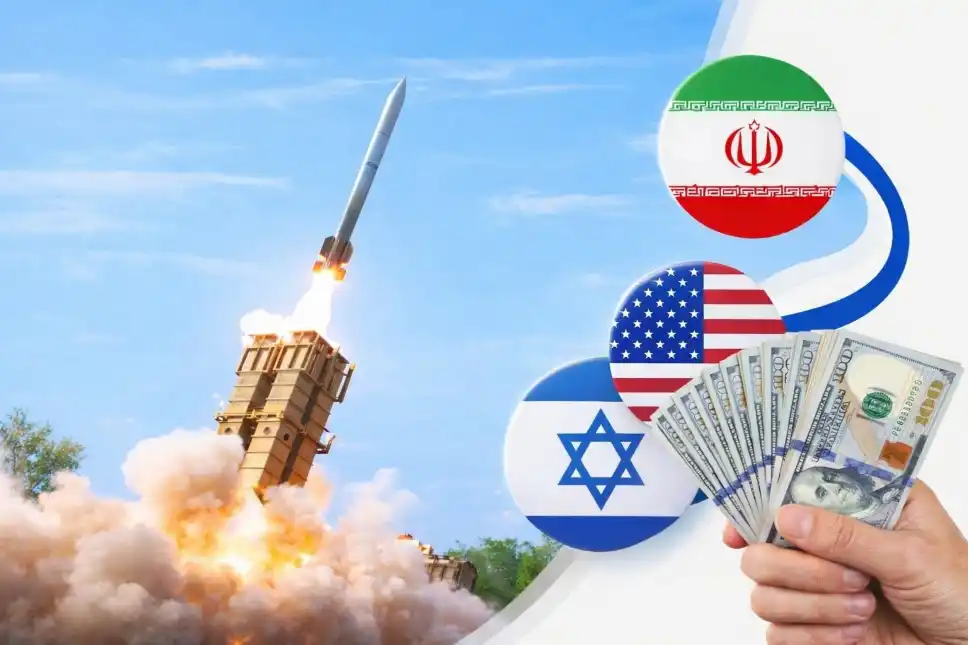
Making money by predicting events in the Israel–Iran war is no longer a theory. It is already happening on specialised platforms where global events are traded like financial assets. These platforms, known as prediction markets, allow users to profit from being right about what happens next.
 Follow us on Google News
Unlike traditional investing, the process is more direct. You are not buying stocks or currencies. You are taking positions on real-world outcomes.
Step 1: Signing up on prediction platforms
The first step is joining a prediction market platform such as Polymarket or Kalshi. These platforms host questions about global events, including conflicts like the Israel–Iran war.
Users create an account, verify basic details, and fund their wallet. Some platforms use cryptocurrency, while others allow standard payment methods depending on regulation in your region.
Once registered, you gain access to live markets where people are already trading on ongoing events.
Step 2: Choosing a war-related market
After signing in, users browse available questions related to the conflict. These are usually framed in simple terms such as whether a military strike will happen within a specific period, whether the United States will intervene, or whether tensions will escalate further.
Each question becomes a market where thousands or even millions of dollars may already be placed, reflecting global sentiment and expectations.
Step 3: Buying “Yes” or “No” shares
To participate, users select either “Yes” or “No” based on what they believe will happen. Each option has a price, which represents the market’s estimated probability.
For instance, if a “Yes” share is priced low, it means the market sees the event as unlikely. Traders who believe otherwise can buy early at that lower price.
If the event eventually happens, each correct share pays out at a fixed value, allowing the trader to earn a profit.
Step 4: Trading before the outcome
Many users do not wait for the final result. Instead, they trade based on changing information. As news breaks or tensions rise, prices move quickly.
A trader who bought shares early can sell them later at a higher price as confidence in that outcome increases. This allows profits to be made even before the event is confirmed.
This is why some traders closely monitor military developments, political statements, and breaking news to act ahead of the market.
Step 5: Using information as an advantage
Successful participants rely heavily on information. They analyse news reports, follow expert commentary, and watch for early signals such as troop movements or diplomatic warnings.
Because money is involved, markets often react quickly. In some cases, prices have shifted even before official announcements, suggesting that traders act on fast-moving or privileged information.
Step 6: Understanding the risks and concerns
Despite the potential for profit, the risks are significant. War is unpredictable, and outcomes can change suddenly. There are also concerns about insider information, market manipulation, and the ethics of profiting from conflict.
Large sums of money have already been placed on events linked to the Israel–Iran war, with some individuals reportedly making substantial gains. However, losses are just as possible.
In the end, prediction markets offer a new way to engage with global events, but they sit at the intersection of speculation, finance, and ethical debate.