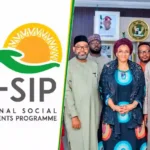

The Federal Government has launched the OVP-GenU Secretariat, a coordination office for the GenU Nigeria initiative, which aims to connect 20 million youths to education, skills and livelihood opportunities by 2030.
 Follow us on Google News
Vice President Senator Kashim Shettima formally unveiled the Office of the Vice President–Generation Unlimited (OVP-GenU) Secretariat on Tuesday in Abuja, positioning it as a central structure to drive the implementation of youth-focused interventions across the country. The GenU Nigeria initiative, a UNICEF-led Public-Private-Youth Partnership (PPYP), is designed to equip young Nigerians with the tools needed to thrive in a rapidly changing economy.
Speaking during the launch, the Vice President, who was represented by the Deputy Chief of Staff to the President, Senator Ibrahim Hassan Hadejia, said the establishment of the secretariat would fast-track execution and strengthen collaboration among key stakeholders. According to him, the office is expected to serve as a unifying platform for government agencies, development partners and the private sector.
He said, “The office will accelerate programme execution and deepen partnership across various agencies of government,” stressing that coordination has been a major gap in previous youth development efforts.
The Vice President also highlighted the strategic importance of aligning skills development with real-world demand. He explained that one of the major benefits of the secretariat is its ability to ensure that training programmes are directly linked to the needs of communities, industries and the wider society.
“One of the benefits of establishing the secretariat would be the proper alignment of skills to the demands of community, industry and society through a transparent process that will be accessible to all,” he added.
Minister of Budget and Economic Planning, Senator Abubakar Atiku Bagudu, described the initiative as a strong complement to the Federal Government’s broader economic agenda. He noted that the GenU framework aligns with the Renewed Hope Ward Development Programme (RHWDP), which targets economic growth at the grassroots level.
Bagudu said the initiative would help accelerate government efforts aimed at stimulating local economies across Nigeria’s 8,809 electoral wards. He also pledged the full support of his ministry in ensuring the success of the programme.
Also speaking, the Minister of State for Education, Prof. Suwaiba Sa’idu Ahmad, said the GenU programme would play a critical role in shaping the country’s education and skills development strategy. She noted that the Federal Ministry of Education would adopt elements of the programme, particularly the planned skills census, as a guide for future planning.
She said the output of the census would be integrated into national strategies for vocational and technical education, ensuring that training programmes are both relevant and impactful.
In her remarks, UNICEF Representative in Nigeria, Wafaa Saeed Abdelatef, commended the Federal Government for demonstrating strong commitment to youth development by hosting the secretariat within the Office of the Vice President. She described the move as a clear signal of Nigeria’s leadership on the continent in advancing opportunities for young people.
She said UNICEF was “excited, proud and encouraged at what Nigeria was doing,” particularly in leveraging coordinated approaches to job creation and youth empowerment. She also reaffirmed the organisation’s commitment to providing technical expertise to support the implementation of the programme.
Further insights into the operational direction of the secretariat were provided by the Special Adviser to the President on Job Creation and MSME, Mr Temitola Adekunle-Johnson, and the coordinator of the secretariat, Rimamskeb Nuhu. Both officials emphasised the potential of the initiative to tackle youth unemployment by building on existing government platforms.
Adekunle-Johnson assured stakeholders that the network of Shared Hubs under the National MSME Clinics would be utilised to expand access to skills acquisition across sectors.
Nuhu, on his part, called for strong institutional support, urging ministries to actively participate in the rollout of key components such as the National Skills Census.
“We require two critical commitments from the ministries represented here today. First, we ask for your full support in the upcoming National Skills Census… Second, we seek formal representation from your respective ministries within the Secretariat itself,” he said.
He added that such collaboration would ensure effective coordination, eliminate duplication of efforts and guarantee the long-term sustainability of the system.