
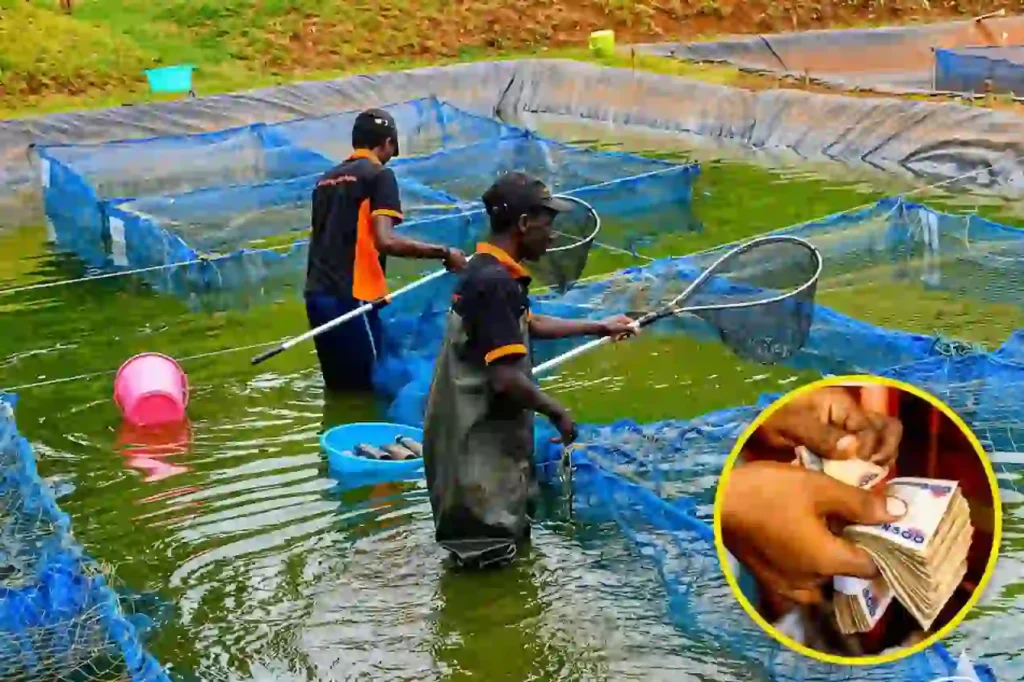
TradeMark Africa (TMA) is set to launch a new fisheries and aquaculture programme expected to generate over 280,000 jobs for women and youth across Africa, as stakeholders intensify efforts to remove structural barriers limiting participation in the sector under the African Continental Free Trade Area (AfCFTA).
 Follow us on Google News
The development comes as the Federal Government renewed its call for coordinated action to address longstanding financial and market constraints affecting women and youth in fisheries and aquaculture value chains. Speaking at the AfCFTA–ECOWAS Regional Workshop on Women and Youth in Fisheries and Aquaculture Value Chains held in Abuja, Fatima Sugra Tabi’a Mahmood, Permanent Secretary of the Federal Ministry of Marine and Blue Economy, described the sector as critical to food security, employment generation, poverty reduction, and economic diversification across the continent.
Represented by Angela Okereke, Director of Marine Abiotic Resources, Mahmood noted that women and youth remain central to the fisheries ecosystem, contributing significantly across production, processing, distribution, and marketing. She stated that while women dominate post-harvest activities, young people are increasingly driving innovation and expansion within the industry.
Despite their contributions, she pointed to persistent structural challenges, including limited access to finance, poor infrastructure, high post-harvest losses, restricted market access, and weak integration into formal trade systems. “These challenges must be collectively addressed to unlock the sector’s full potential under the AfCFTA framework,” she said.
Mahmood reaffirmed the government’s commitment to repositioning the sector through sustainable fish production, improved value addition, stronger regulatory systems, and expanded access to domestic and regional markets. She also highlighted the importance of harmonising standards, strengthening sanitary and phytosanitary measures, and leveraging digital technologies to deepen regional trade integration.
Also speaking, Anataria Uwamariya, Director of Business Competitiveness at TMA, disclosed that the forthcoming programme will focus on boosting intra-African trade by improving access to fish feed and critical inputs, enhancing cross-border trading conditions, and strengthening institutional capacity within the fisheries sector.
According to her, more than half of the projected 280,000 jobs will be created in West Africa, underscoring the region’s strategic importance within the AfCFTA framework.
Florence Mulenga-Sinyangwe, representing the AfCFTA Secretariat, said ongoing efforts are targeting key trade barriers such as high tariffs, certification bottlenecks, and financing gaps that continue to limit inclusive participation. She noted that AfCFTA has transitioned into full implementation, with a strong emphasis on reducing trade costs and advancing inclusivity through its Protocol on Women and Youth in Trade.
On his part, Christopher Mensah Yawson of the ECOWAS Commission stressed the demographic significance of women and youth in West Africa, where women account for nearly half of the population and the median age stands at 18.2 years. He called for greater formalisation of the fisheries sector to improve access to finance and attract investment, noting that unlocking its full potential would significantly expand economic opportunities across the region.