
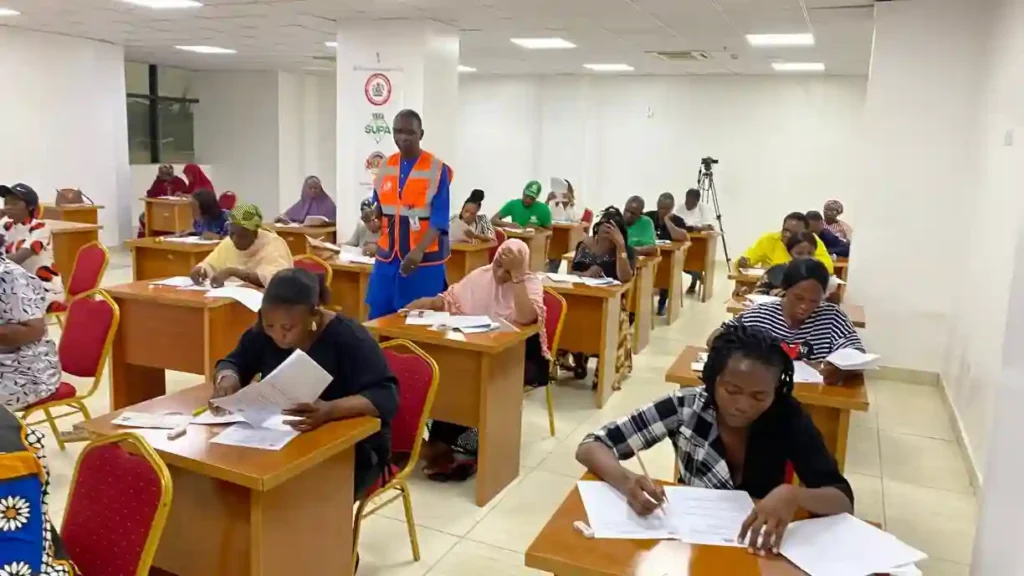
The Industrial Training Fund (ITF) has concluded the international certification examinations for beneficiaries of its Skill Up Artisans (SUPA) programme in the Federal Capital Territory (FCT), as part of efforts to equip Nigerian artisans with globally recognised technical skills.
 Follow us on Google News
The two-day examination exercise, supervised by Turkish certification company Alberk QA Technic, involved 296 artisans trained under the SUPA initiative in Abuja.
Speaking on the development, the Director-General of ITF, Afiz Oluwatoyin Ogun, described the certification process as a major step towards improving the global competitiveness and employability of Nigerian artisans.
According to him, the examinations covered more than 20 vocational and technical trades considered important to Nigeria’s industrial and economic growth. The trades included fashion design, welding and fabrication, cyber security, automechanics, tiling, bricklaying, painting and decoration, electrical and electronics, and carpentry.
Dr. Ogun said the certification process, conducted under the standards of Alberk QA Technic, would validate the practical competencies acquired by the artisans and provide them with internationally recognised qualifications.
He noted that the involvement of the Turkish certification body has further strengthened the credibility, transparency, and international acceptance of the exercise.
“The certification examinations represent another important milestone in our commitment to building a globally competitive artisan workforce for Nigeria,” he said.
The ITF boss also disclosed that the City & Guilds of London Institute had earlier approved ITF as an examination centre and conducted a mock certification exercise for SUPA trainees in preparation for international certification standards.
The SUPA programme was introduced by ITF to improve the productivity, earning capacity, and employability of Nigerian artisans, while also creating opportunities for them within and outside the country.
The latest certification exercise is expected to strengthen the credibility of Nigerian artisans in international labour markets, especially as demand continues to grow for certified technical professionals across different industries.