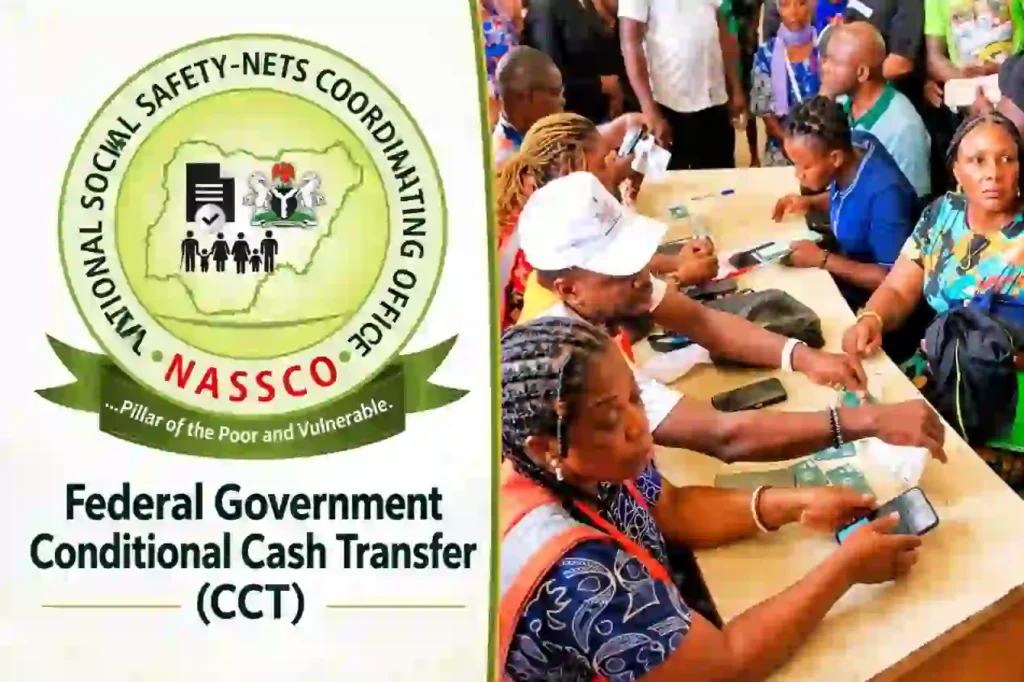
The Federal Government reportedly disbursed ₦658.9 billion in direct cash transfers to 10.46 million poor and vulnerable households by September 2026, according to the World Bank’s latest Nigeria Development Update.
 Follow us on Google News
However, the bank has urged the government to expand the programme, improve payment amounts and ensure beneficiaries receive assistance more consistently.
In its report, titled “Beyond the Federal Purse: How Higher Revenues Shaped State Priorities,” the World Bank said cash transfers could help households cope with economic hardship, but their impact depended on the number of people reached, the adequacy of payments and the regularity of disbursements.
To strengthen the intervention, the bank called for faster implementation and wider coverage. It also urged the Federal Government and state governments to establish dedicated budget lines and gradually increase funding from domestic public resources.
Nigeria, it said, needs a sustainable social protection system that provides predictable support rather than relying mainly on emergency interventions. State governments are expected to complement federal efforts with their own budgetary commitments.
Biometric and digital verification systems have been used to identify beneficiaries and deliver payments. However, the bank wants further improvements to ensure assistance reaches more vulnerable households and provides meaningful relief.
The ₦658.9 billion figure represents reported disbursements up to September 2026. It is not an announcement of a new payment round, nor does the report confirm that a fresh application window has opened.
Under the national social safety-net structure, eligible households are identified through community-based targeting, household data collection and verification. A Proxy Means Test (PMT) may also be used to assess household poverty levels before eligible families are considered for inclusion in the National Social Register (NSR).
As implementation varies by state and locality, residents should follow announcements from authorised government officials and programme representatives.
How to benefit
There is no confirmed public online application form for the existing Household Uplifting Programme–Conditional Cash Transfer (HUP-CCT). Households should contact their State Operations Coordinating Unit (SOCU), local government social welfare office or authorised community representatives to ask about registration, validation and beneficiary status. No payment to an agent guarantees selection.