
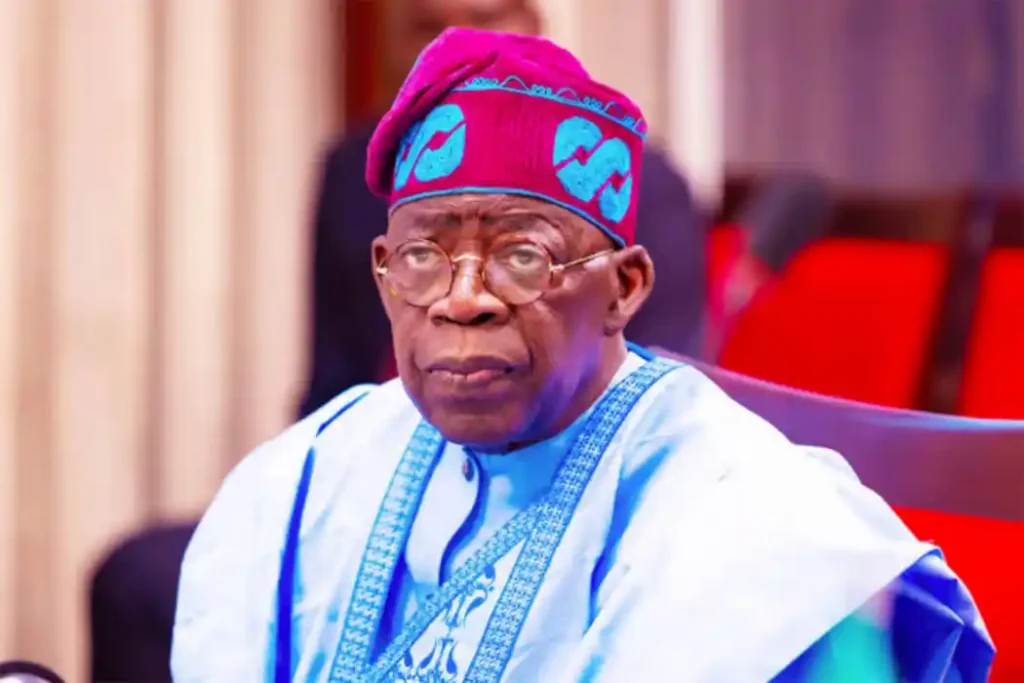
The federal government has launched a bold initiative aimed at empowering over 8.8 million Nigerians through the Renewed Hope Ward Development Programme (RHWDP), targeting all 8,809 electoral wards across the country.
 Follow us on Google News
Unveiled during the 150th meeting of the National Economic Council (NEC) at the State House in Abuja, the RHWDP is designed as a grassroots economic stimulus plan that aligns federal, state, and local government development efforts. The programme is one of the most comprehensive attempts to stimulate local economies, boost employment, and improve the overall standard of living in rural areas.
Speaking at the NEC meeting on Thursday, President Bola Tinubu described the economy as “working” and “on the path of recovery,” but stressed the need for deeper investment in the rural economy. He said, “The economy is working. We are on the path of recovery, but we need to stimulate growth in the rural areas. We know the situation in the rural areas, let us collaborate and do what will benefit the people.”
The RHWDP was presented to the council by the Minister of Budget and Economic Planning, Atiku Bagudu. According to Bagudu, the initiative aims to drive double-digit economic growth through direct intervention in all wards, using Nigeria’s local governance framework.
Bagudu said, “Today Mr President attended the NEC meeting and he commended the state governors for the cooperation they have extended to him and to the federal government. And today, in a very historic next step, Mr President witnessed the presentation of the memo on Renewed Hope Ward Development Programme, which is a strategy to support the macroeconomic reforms being undertaken by the administration.”
He explained that the government, having stabilised the macro economy, now seeks to “drill down development to the lowest levels” by supporting 1,000 economically active persons in each ward, rising to 2,000 in larger wards.
“We believe this will generate employment, reduce poverty, enhance food security and even enhance social protection,” he stated.
Bagudu said the legal foundation for the programme draws from Chapter 2 of the 1999 Constitution and the Fifth Alteration Act, which mandate all tiers of government to harness resources and promote national prosperity.
“This can only be done cooperatively. Mr President as an ardent believer in federalism today, presented the Renewed Hope Ward based development programme as a collaboration between federal, state and local governments, a Federation project and to be funded with the increased revenues accruing to the Federation Account, as well as other programmes that the federal government and states are undertaking,” he explained.
He added, “Equally, it is to identify in each ward at least 1000 economically active persons that will be supported so that economic activity will be boosted in each ward of the Federation. The idea is to utilize this unique feature of our economy to generate double digit growth in most of the wards as we march towards a one trillion dollar economy.”
A National Steering Committee with representatives from the six geopolitical zones will oversee the implementation, with the Ministry of Budget and Economic Planning serving as the secretariat.
Bagudu also referenced a recent International Monetary Fund (IMF) Article IV consultation, which backed Nigeria’s macroeconomic direction. He said, “The IMF acknowledged that the bold reforms have improved stability and enhanced resilience, liberalising and strengthening the function of the foreign exchange market, removing foreign subsidies, ending monetary policy, strengthening revenue administration and raising hydrocarbon production, which all have contributed to improve macroeconomic stability.”
He noted that the Renewed Hope programme directly responds to these macroeconomic improvements by shifting focus to the grassroots, investing in people and local enterprise.
“Mr president that always believes that to reduce poverty and food insecurity, we must invest collaboratively with federal and state in the creative energy of Nigerians and the geographical wards and having achieved the successes at the macroeconomic level, that is why this programme is unfolded today at the National Economic Council, which graciously approved the programme,” Bagudu said.
Echoing this sentiment, Governor Hope Uzodimma of Imo State praised the federal government’s revenue generation efforts, but emphasised the need to translate financial gains into real-life benefits at the local level.
“We acknowledged Mr. President’s efforts in driving increased revenue generation and the positive results already being recorded. But the real challenge now is how this additional income will improve the lives of people at the grassroots,” Uzodimma said.
He described the programme as one designed to decentralise development, empower local communities, and create jobs within rural economies.
“The meeting presented an opportunity for him to brief the governors and the need for the national government and subnational government to work together for the overall interest of our people and country, Nigeria.
“Well, we acknowledged his triumphs for revenue generation and the results already recorded as a result of the various reform policies of his administration. The country is earning more money now, the subnational governments are also earning more money,” he added.
Uzodimma noted that the president’s new grassroots development model will help fast-track the impact of increased revenue by ensuring funds reach the people directly through projects and support systems in each ward.
“The president came up with a programme that will fast-track the process of this additional money creating a bigger impact on Nigerians by making sure that it trickles down to the grassroots. For that reason, they brought a programme to stimulate economic activities at the ward level,” the governor stated.
President Tinubu also called on state governors to increase their investment in rural infrastructure, agricultural mechanisation, education, and poverty reduction efforts.
“We have to embrace mechanisation in agriculture, fight insecurity and improve school enrolment through school-feeding,” Tinubu urged.
According to a statement by Stanley Nkwocha, media assistant to the Vice President, the president’s comments followed the presentation of the RHWDP by Minister Atiku Bagudu.
The Renewed Hope initiative is being positioned as a vital link between federal reforms and real-time economic transformation at the grassroots. It comes at a time when Nigeria is striving to build a $1 trillion economy, improve food security, increase employment, and strengthen the country’s microeconomic fundamentals.
By targeting economically active people in each ward, the government hopes to stimulate entrepreneurship and local production, areas identified as key for inclusive growth and sustained economic recovery.
The launch of the RHWDP follows broader policy changes including subsidy removal, foreign exchange reforms, and tighter fiscal measures—steps that have generated more funds for government spending but also placed increased pressure on ordinary Nigerians.
The programme’s implementation will rely heavily on cooperation between the three levels of government, and will depend on how effectively state and local officials engage with community members, monitor progress, and ensure that support reaches the intended beneficiaries.
The initiative is also expected to serve as a model for how increased government revenue can be converted into tangible economic gains that uplift communities, promote self-reliance, and provide long-term benefits for the country as a whole.
The use of targeted funding for job creation, rural electrification, agriculture, and small business development within each ward offers a way to connect macroeconomic reforms to microeconomic realities, reducing poverty and expanding opportunity for millions.
With backing from both the National Economic Council and the President, and reinforced by legal frameworks, the RHWDP represents a new phase of economic decentralisation. It prioritises inclusivity, local ownership, and practical results, reinforcing the federal government’s shift toward people-centred economic growth.
The federal government’s goal of transitioning into a trillion-dollar economy relies not just on large-scale reforms but on policies like the RHWDP that aim to change daily life for everyday Nigerians, especially those in underdeveloped and underserved communities.