
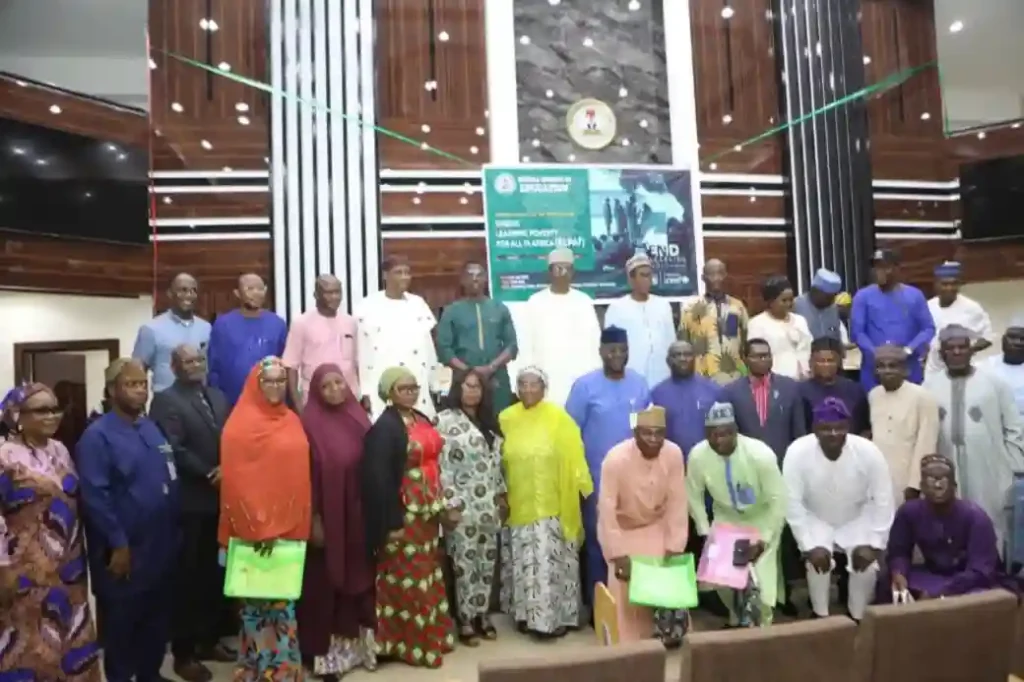
The Federal Government of Nigeria officially launched the Ending Learning Poverty for All in Africa (ELPAF) campaign, a bold African Union (AU)-led initiative aimed at ensuring that all children across the continent achieve foundational literacy and numeracy skills.
 Follow us on Google News
The event, held in Abuja, was a significant step toward addressing what experts call a “silent erosion of human potential.”
Speaking at the launch, the Honourable Minister of State for Education, Professor Suwaiba Sa’id Ahmad, was represented by Permanent Secretary Mr. Abel Olumiyiwa Enitan.
He described ELPAF as “a transformative call to action” and emphasized the urgency of the issue. Quoting the World Bank’s 2019 definition of learning poverty, the inability of a 10-year-old to read and understand a simple sentence, he revealed that more than 80% of children in sub-Saharan Africa are affected.
Despite high school enrollment rates, actual learning remains low. “Many children are in school, but they are not truly learning,” Professor Ahmad noted. She reaffirmed Nigeria’s commitment to the Renewed Hope Agenda and mentioned key education reforms including the National Foundational Literacy and Numeracy Programme, Nigeria Learning Passport, Accelerated Basic Education Programme, and teacher development strategies.
Director of Education Support Services, Hajia Larai Nana Ahmed, acknowledged challenges such as overcrowded classrooms and poor infrastructure but noted ongoing government efforts such as the school feeding programme and initiatives promoting inclusive education.
Dr. Omolara Loudoun, speaking on Nigeria’s selection as one of the 25 pilot countries for ELPAF, described the campaign as “a roadmap for measurable transformation.” AU representative Dr. Mahaman Bachir reiterated the Union’s strong support for national reforms in the education sector.
UNICEF has stated that over 70% of Nigerian children still lack basic reading skills. Mrs. Onoja Joy, Deputy Director of Basic Education, called for full national implementation of ELPAF to ensure quality and inclusive education becomes a reality for all.