

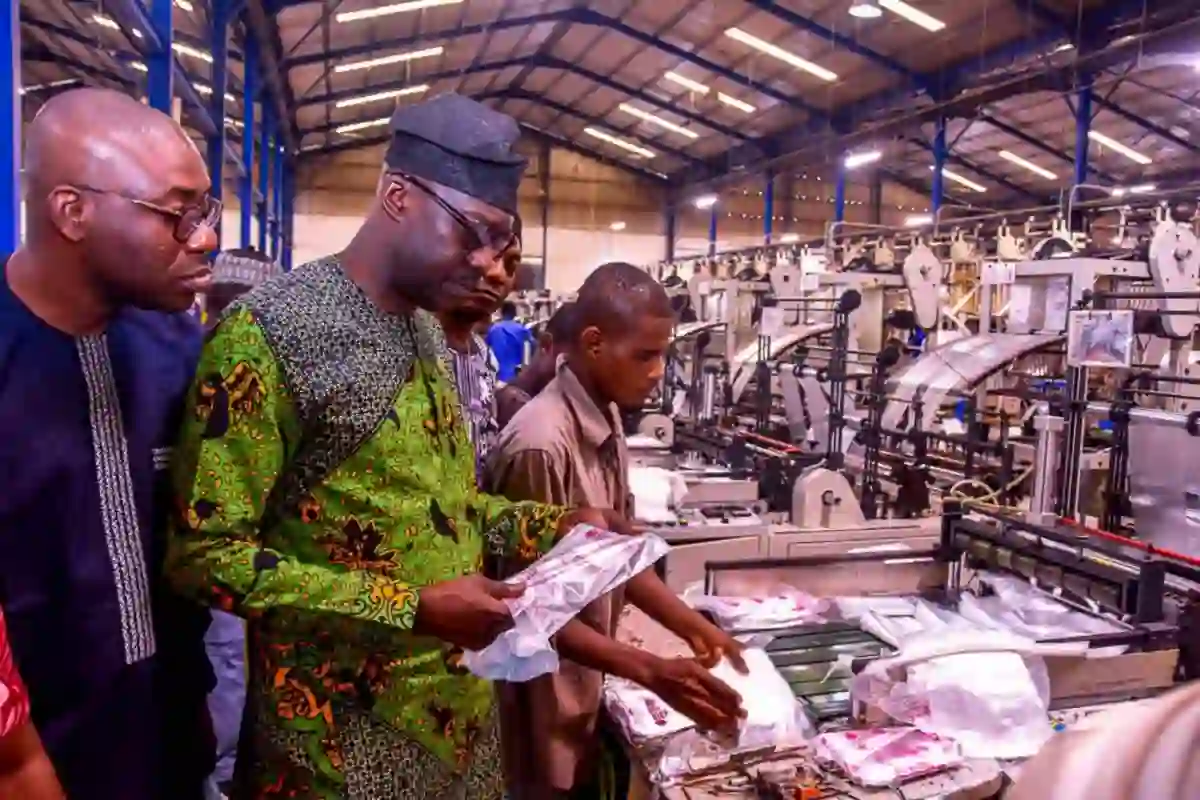
Africa’s manufacturing outlook is drawing renewed attention after the World Bank noted that “today, only 2% of global manufactured goods come from Nigeria and other African countries,” a figure analysts say exposes the continent to trade shocks, currency swings, and long-running economic imbalances. The warning comes at a time when Africa is preparing for a major consumer and industrial expansion, even though experts stress that such progress will not happen instantly.
Economic observers say the continent must first work through key barriers, such as weak infrastructure, fragmented markets, skills shortages, and inconsistent regulation. Still, they argue that Africa’s long-term potential is significant, especially as its population is projected to hit 2.5 billion by 2050. Half of that number will be under 25, representing a massive group eager for modern goods, digital services, and growing economic opportunities. Despite this demographic strength, the current situation remains challenging. Africa is still heavily dependent on imports for most finished goods, even though it produces many of the raw materials global manufacturers use. The World Bank’s reminder that only 2% of manufactured goods come from Africa underscores how vulnerable the region remains.
Analysts say building a strong manufacturing base is essential for resilience and broader development. They note that industrialization creates jobs, raises public revenue, and strengthens essential services. It can improve living standards, expand educational access, speed up the adoption of new technologies, and equip young people with skills needed in a fast-changing global economy. Many economic planners believe that a thriving manufacturing sector could support prosperity, generate opportunities, and contribute to long-term stability across African countries.
For this vision to materialize, experts recommend a collaborative effort among entrepreneurs, industrialists, and policymakers to build a unified continental manufacturing ecosystem. They argue that increased regional cooperation and cross-border coordination can help develop industrial champions capable of transforming the sector. According to them, the idea that “it takes a village to raise a child” also applies to industrialization, because no single business can scale regionally without support from a strong ecosystem.
Officials at the International Finance Corporation (IFC) explain that their work focuses on investing in manufacturing hubs to help build such ecosystems. One area where they see early progress is textiles. The IFC notes that West Africa grows cotton, East Africa is developing garment factories, and North Africa, with better access to European markets, could play a role in final assembly and export. According to the institution, the goal is not to support isolated success stories but to create a continental value chain where, for example, a factory in Ghana might rely on inputs from Benin, assemble products in Kenya, and export them through Tunisia. They say this kind of cooperation is how regional champions emerge, adding that these champions could form the backbone of Africa’s industrial future and create millions of jobs across different skill levels.
African leaders point to the African Continental Free Trade Area as a sign of progress. The agreement now covers 54 countries and could unite 1.4 billion people into what is expected to be the world’s largest free trade area by population. Countries such as Ethiopia, Morocco, and Rwanda are investing in industrial parks and manufacturing zones, while foreign direct investment continues to rise as international brands see opportunities in Africa’s expanding middle class.
However, long-standing challenges still weigh down the sector. Infrastructure remains inadequate, electricity systems are unreliable, and border bottlenecks continue to disrupt intra-African trade. Regulatory inconsistencies and the diversity of political and economic systems across the continent also make large-scale coordination difficult. Experts say these obstacles complicate any attempt to build a single supply chain that could stretch from Lagos to Lusaka to Tunis.
Even so, governments are moving forward with reforms. Several states are digitizing customs procedures, improving ports, and working to harmonize product standards. Investment sources are also expanding, with growing involvement from Chinese, Turkish, and Indian companies alongside traditional Western partners. Africa’s young workforce, described as abundant and increasingly skilled, remains one of the continent’s biggest advantages.
Energy is emerging as another strategic asset. With strong potential in solar, hydro, and geothermal power, analysts say Africa has an opportunity to industrialize using green energy rather than relying heavily on fossil fuels. In a global market that is becoming more carbon-conscious, they argue that clean energy is not only environmentally beneficial but also economically competitive. They believe greener factories will gain better access to international markets in the future.
Experts also highlight Africa’s strategic location, youthful population, and strong ambition as assets that can drive long-term growth. They say rising global demand for supply chain diversification gives the continent an edge. Many point to Asia’s development path as a useful guide, saying Africa can also turn cotton into clothing, cocoa into chocolate, and minerals into batteries. According to them, the time to build this manufacturing village is now.

