

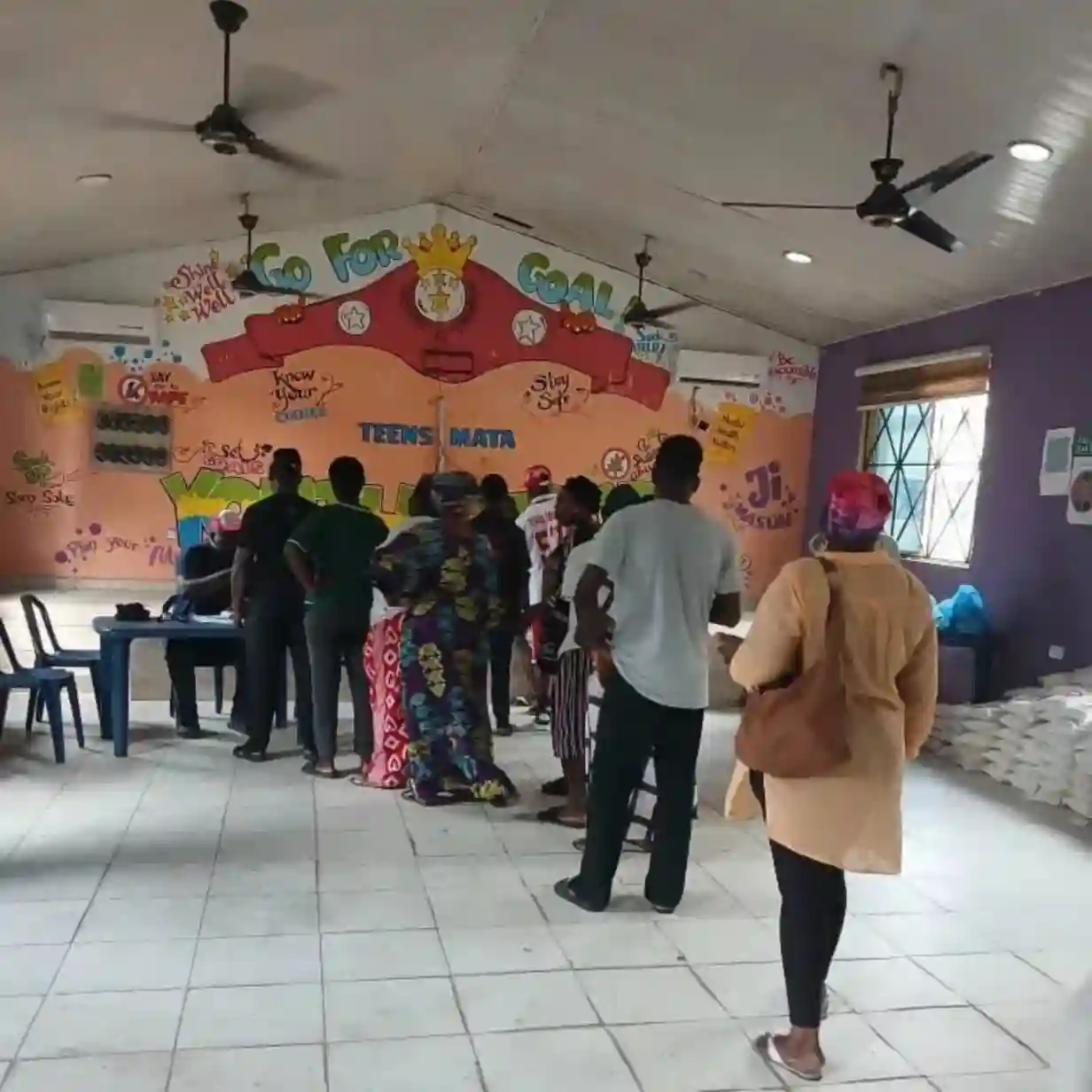
The Lafiaji Development Association (LDA) at the weekend distributed food palliatives worth over ₦7 million to vulnerable residents across the Lafiaji community on Lagos Island, demonstrating commitment to grassroots welfare.
Speaking at the event, President of the Association, Mr. Adekunle Solomon Gonzalo, said the initiative was driven by compassion and a clear understanding of the realities facing residents who continue to struggle with rising living costs.
“This is my seventh year as President of the Lafiaji Development Association,” Gonzalo said. “The only major challenge we have faced as an organisation, and indeed as a nation, was during the COVID-19 lockdown. We were able to pull through.”
He explained that the decision to introduce the palliative programme came from observing worsening conditions within the community and the need to provide immediate relief to households.
“Last year, we saw the writing on the wall because of the economic situation in the country. We felt the need to feed our family—the Lafiaji community,” he said. “It cost us about ₦6 million last year, but this year we went the extra mile, spending over ₦7 million to ensure more people had food on their tables.”
Also speaking at the event, the Asiwaju of Lafiaji and Immediate Past President of LDA, Mr. Babatunde Abozo, highlighted key programmes executed during his tenure, noting that welfare and public health remained central priorities.
“We organised health walks for the elderly and youths and collaborated with the Lagos State Ministry of Health for medical check-ups,” Abozo said. “Those who required treatment had their medical bills covered. We also carried out environmental sanitation exercises and distributed palliatives to elderly members of the community.”
Project Coordinator of the initiative, Mr. Bernard Sanya, said careful planning helped ensure a smooth exercise.
“We catered for over 600 people, and everything was well coordinated,” Sanya said. “From logistics and security to crowd movement, we put structures in place, including access cards with QR codes, to ensure order and transparency.”
According to him, extensive groundwork was carried out to identify and reach vulnerable residents across the five zones of Lafiaji, including Simpson, Oke Suna, Obalende, Araromi, and Ije.
“We moved through churches, mosques, and traditional homes,” he explained. “Lagos is home to different religions, and our aim was to cover everybody and ensure no one was left out. The QR code system helped us maintain due protocol.”
Sanya noted that LDA, founded in 1982, is a non-governmental organisation focused on community development and social intervention.
“Despite massive immigration into Lagos, we do not forget the indigenous people who still live here,” he said. “This programme targets those citizens who truly need support, especially in the post-COVID and post-recession era.”
He added that the palliative distribution, which was previously organised once a year, will now be expanded.
“Going forward, we intend to organise it twice yearly,” Sanya said. “Donations from members—sometimes as much as ₦500,000—make these projects possible.”
One of the trustees, Mr. Florentino Olatunji Kolajo Sanyo, traced the roots of LDA to a shared sense of responsibility among professionals from the community.
“We came together because we felt the need to return to our roots and assist our community,” Sanyo said. “LDA is made up of professionals—lawyers, doctors, accountants, journalists—people committed to giving back.”
He recalled that the Association pioneered several social interventions in the area.
“We were among the first to provide free medical check-ups, free medicines, and free glasses,” he said. “We support education, sponsor GCE exams, organise youth programmes, and empower young people in the community.”
To ensure fairness, Sanyo explained that beneficiaries are selected through a zonal structure.
“The Lafiaji community is divided into five zones, and priority is shared among them,” he said. “We issue identity tickets to ensure order and reach as many people as possible.”
The Lafiaji Development Association said it remains committed to easing the burden there.

