

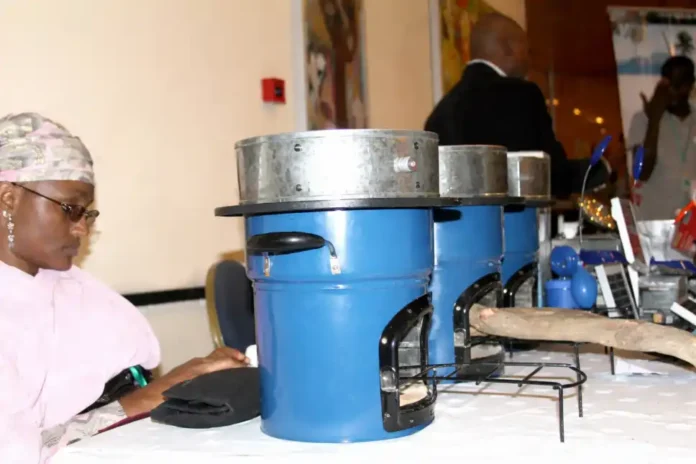
The Benue State Government has announced plans to distribute two million clean cookstoves to households across the state as part of efforts to reduce dependence on firewood, cut carbon emissions and improve household welfare.
The initiative is being implemented through a partnership with Greenplinth Africa and was formalised through a Memorandum of Agreement signed during the Green Conference held in Lagos.
The programme is expected to reach millions of households, particularly in rural communities where firewood remains the primary cooking fuel.
According to stakeholders, the large-scale cookstove distribution will help reduce environmental damage caused by deforestation while also addressing indoor air pollution that affects many households.
Director-General of the Benue State Council on Climate Change, Dr Daniel Mailumo, said the initiative would provide safer cooking alternatives while supporting the state’s environmental goals.
“The deployment of clean cookstoves to Benue means rural women will no longer rely on firewood but on low-emission alternatives. This will help us protect our environment as we drive towards net-zero emissions,” Mailumo said.
Under the programme, each beneficiary household will receive two clean cookstoves designed to burn cleaner fuels and reduce smoke emissions during cooking.
In addition to the cookstoves, households will also receive stainless steel cooking pots and 40 kilograms of farm waste briquettes produced from agricultural residues such as rice husks.
Officials said the briquettes will serve as an alternative fuel source, reducing the need for firewood while creating economic value from agricultural waste.
Deputy Managing Director and Chief Finance Officer of Greenplinth Africa, Babatunde Aina, said the agreement reflects a firm commitment to delivering the project.
“A memorandum of agreement means we are going to do it,” Aina said, explaining that the programme would also generate economic opportunities while reducing carbon emissions.
Aina further revealed that households participating in the initiative will receive monthly financial incentives in addition to the cooking equipment provided.
He also noted that beneficiary families will be enrolled in a health insurance scheme aimed at improving access to healthcare.
“We want to ensure the girl-child has more time to study and mothers are protected from respiratory ailments caused by smoke inhalation,” Aina said.
According to him, the project addresses several social and environmental challenges at once, including rural poverty, indoor air pollution and deforestation.
Women and girls are expected to benefit significantly from the programme because they are often responsible for gathering firewood and cooking in many households.
The introduction of cleaner cookstoves is expected to reduce the health risks associated with inhaling smoke from traditional firewood stoves.
A member of Greenplinth Africa’s management team, Salisu Dahiru, said the initiative forms part of a broader effort to expand climate solutions across Nigeria.
Dahiru explained that similar programmes are being developed to distribute millions of cookstoves and expand large-scale tree planting projects linked to carbon credit systems.
He also noted that Nigeria’s climate governance framework, including the Climate Change Act, provides legal backing for emission reduction efforts across federal, state and local governments.
According to him, partnerships between governments and private sector organisations are helping accelerate climate action and deliver practical environmental solutions.
Stakeholders at the conference said the Benue initiative could become a model for other states seeking to promote cleaner energy use while improving the livelihoods of households.

