

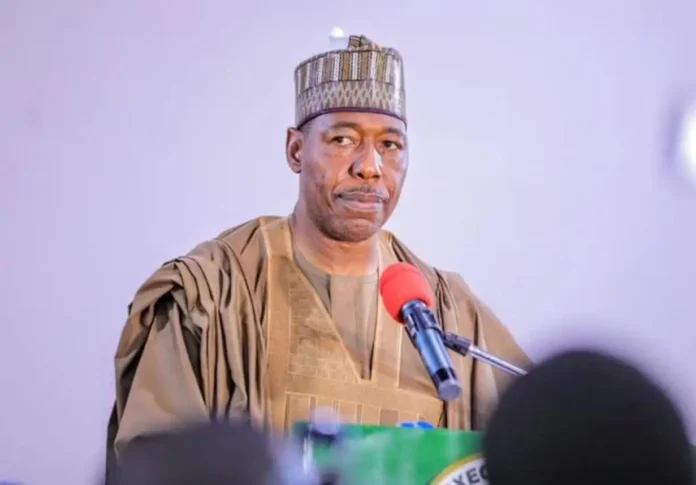
Governor Babagana Zulum of Borno State has distributed digital tablets to students for learning with the support of digital teachers.
This took place on Tuesday as the governor inaugurated new secondary schools in the rural communities of Fikiyel and Balbaya, encouraging students to learn using digital tablets in their classrooms. The projects include three blocks of 20 classrooms and four blocks of 20 classrooms at the Government Secondary Schools (GSSs) Fikiyel and Balbaya in Bayo Local Government Area of the state.
Zulum said his administration is committed to providing more digital equipment and tablets to newly constructed schools in rural communities and other parts of the state. Each student in the inaugurated schools received a tablet for digital learning with the support of digital teachers.
The teachers are expected to help students adapt to digital applications, e-textbooks, and other online learning tools for easier and more interactive classroom experiences. The governor also directed the Ministry of Education to ensure the digitalisation of all public secondary schools in Borno for the integration of digital tools, e-learning platforms, and smart classrooms.
Zulum commended the contractors and suppliers for delivering quality work, noting that the desks provided in the schools were designed to last for more than 20 years. Each of the schools, according to him, is equipped with modern classrooms, laboratories, libraries, sports facilities, and administrative complexes to enhance learning and comfort for both students and teachers.
During his visit, the governor also laid the foundation stone for the construction of Bayo High Islamic College in Fikayel. The new college will have 48 classrooms and is expected to accommodate 3,000 students.
Zulum explained that the High Islamic College was designed to integrate out-of-school children, especially Almajirai, into a formal and modern education system. He said the college would operate a hybrid curriculum under the National Board for Arabic and Islamic Studies (NBAIS), combining core Islamic education with science, technology, and humanities.
“It is our sincere hope that the people of Fikayel will benefit from this school because we are targeting the enrollment of out-of-school children into this school so that learners can learn Arabic,” Zulum said.
He added, “We are also targeting to streamline the non-formal educational Sangaya System into the formal educational system by introducing intensive literacy, numeracy, digital literacy, and vocational training.”
Read Also: FG launch plan to train one million Nigerians in digital skills
The state Commissioner for Education, Mr Lawan Wakilbe, said High Islamic Colleges have already been built in 20 local government areas across Borno State.

