

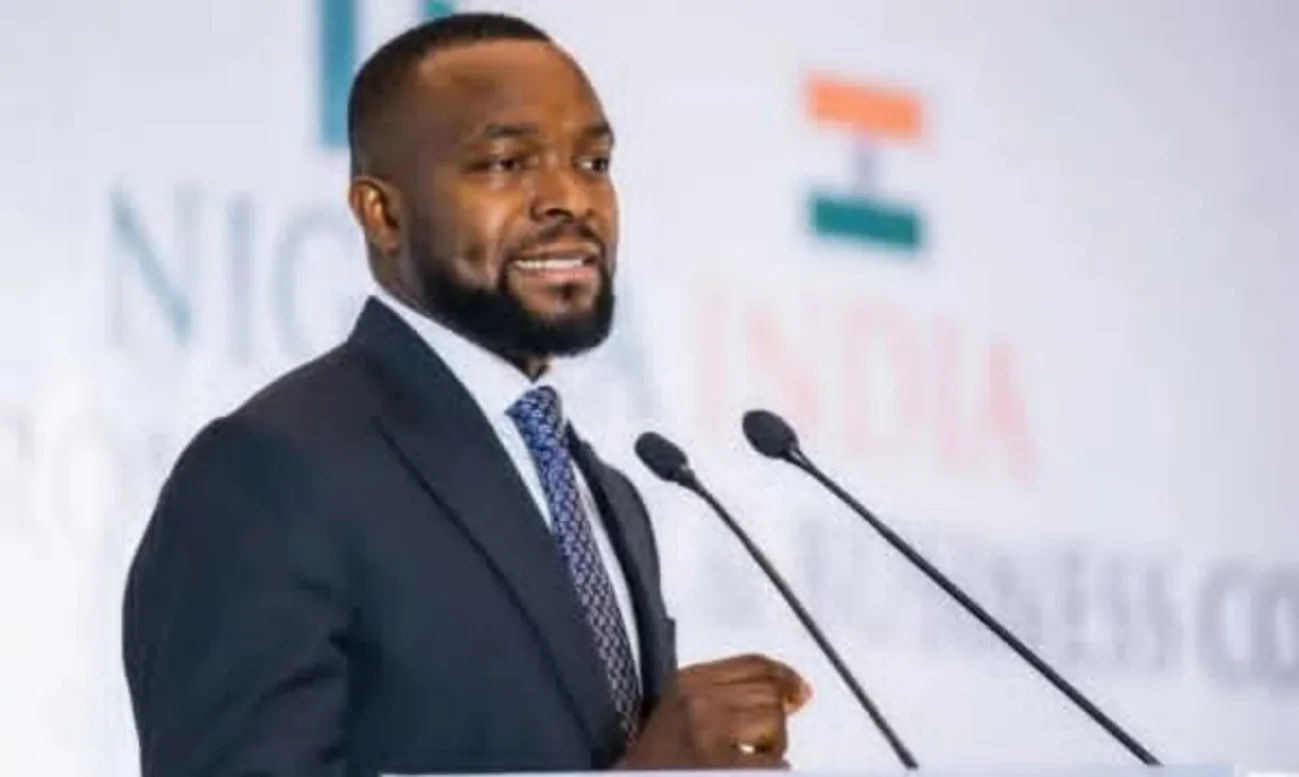
Nigeria’s Minister of Communications, Innovation and Digital Economy, Dr. Bosun Tijani, has issued a public clarification following widespread backlash over banditry comments he made during an interview on Channels Television, where he discussed digital connectivity gaps and national security while speaking on the 3 Million Technical Talent (3MTT) programme.
The interview, which aired earlier in the week, sparked intense debate online after viewers focused on a segment where Tijani spoke about how poor connectivity in remote areas could be exploited by criminals. Many interpreted his remarks as suggesting that terrorists and bandits possess advanced or untraceable communication technology, a claim that drew criticism from security analysts, tech professionals, and members of the public.
Responding to the growing controversy, Tijani released a statement titled “Clarification on Channels Interview,” urging Nigerians to watch the full interview, which he said was largely centred on the progress and impact of the 3MTT programme. “Over the past two days, there has been significant public discussion around a comment I made during an interview on Channels Television,” he said. “I would like to clarify the intention behind that part of the conversation.”
According to Tijani, his comments were aimed at highlighting how gaps in digital infrastructure and connectivity create development and security vulnerabilities. “In responding to a question during the interview, my objective was to explain that gaps in digital infrastructure and connectivity in some parts of the country represent a development and security vulnerability,” he said. “These gaps limit economic opportunity, restrict access to services, and weaken coordination and inclusion.”
He linked this explanation to the federal government’s broader digital agenda under President Bola Ahmed Tinubu, stating that the administration is investing heavily to close connectivity gaps nationwide. “This is precisely why the administration of President Bola Ahmed Tinubu is making historic investments in digital infrastructure to ensure no part of Nigeria is left behind,” Tijani said.
He outlined three major initiatives, including Project Bridge, described as a 90,000-kilometre national fibre-optic backbone designed to connect every geopolitical zone, state, and local government area. He also cited plans to deploy 3,700 new telecom towers to unserved and underserved communities, which he said would connect more than 23 million Nigerians currently without access to reliable communication services.
In addition, he noted efforts to strengthen NIGCOMSAT through the replacement of its current satellite and the launch of two new communication satellites.
“Together, these investments will deepen connectivity across the country, strengthen Nigeria’s digital economy, and ensure that digital infrastructure contributes meaningfully to economic prosperity, inclusion, and national development,” Tijani said, adding that his comments were made “to highlight why closing connectivity gaps matters, and how this administration is deliberately working to address them.”
Despite the clarification, reactions remained sharply divided. Many users accused the minister of avoiding the core issue of his inability to track criminals. One commenter wrote, “Clarification did not clarify clearly. The controversy was on terrorists’ uncontested access to telephony and their seeming invisibility to tracking.” Another said, “You boldly and confidently lied on a national TV about how terrorists’ calls can’t be tracked, then you rush back here to totally change the narrative.”
Others questioned the performance of the ministry itself. A user wrote, “The conversations are less about your comments and more about how little impact your ministry has made, despite the many promises you gave.” Another added, “You are been criticized for your not understanding what you said with regards to how bandits communicate and why you feel they can’t be traced.”
Some argued that the explanation focused too much on infrastructure and “praising Tinubu” rather than the specific claim about tracking criminal communications. “Most people in the Networking and IT community want to read something, but he did not say anything relating to that,” one post read. Another user asked, “Are they or aren’t they using registered SIM cards? How many cell towers are in the desert that they can bounce calls off of?”
As the debate continues, Tijani maintains that his remarks were taken out of context and that the central message of the interview was Nigeria’s digital development and job creation through programmes like 3MTT.
The interview remains available on YouTube, where it continues to attract views and renewed scrutiny.

