

 Add us on Google
Nigeria has called on the international community to significantly increase global financing to protect and restore nature’s economic value through predictable, equitable, and accessible funding mechanisms.
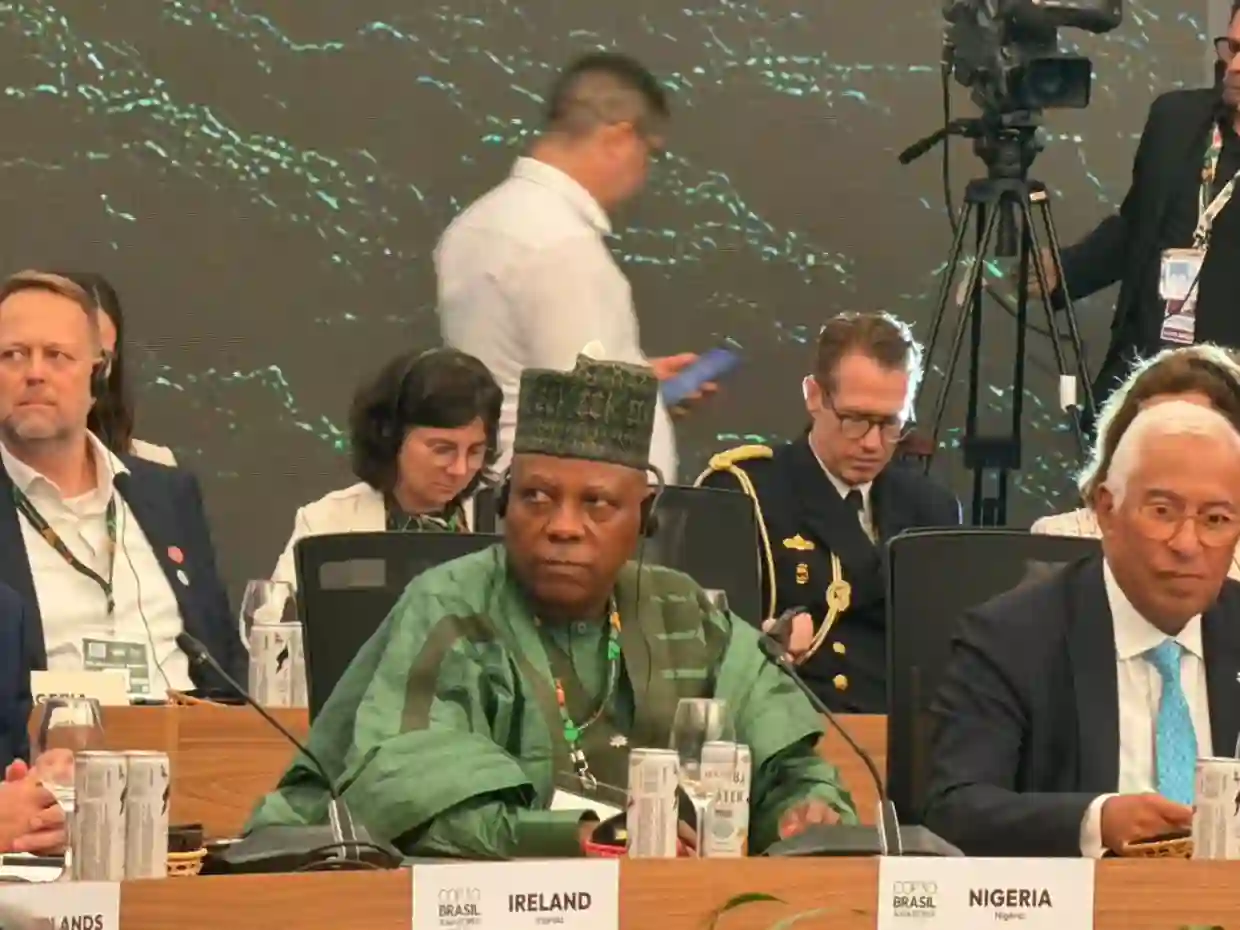
Speaking in Belem, Brazil, Vice President Senator Kashim Shettima, who represented President Bola Ahmed Tinubu at a high-level thematic session titled “Climate and Nature: Forests and Oceans,” at the ongoing United Nations Climate Change Conference (COP30), stressed that forests, landscapes, and oceans are shared global resources that require collective protection.
According to him, “since forests, landscapes, and oceans are shared resources that are outside the jurisdiction of any single nation, their protection requires global solidarity.”
Senator Shettima lamented that while nature is arguably the world’s most critical infrastructure, it has long been treated as a commodity to exploit rather than an asset to invest in. He noted that Nigeria is guided by this understanding and is “solidly driven by this knowledge to integrate nature-positive investments into its climate finance architecture.”
The Vice President explained that through Nigeria’s National Carbon Market Framework and Climate Change Fund, the government aims to mobilise up to three billion US dollars annually in climate finance. “These resources will be reinvested in community-led reforestation, blue carbon projects, and sustainable agriculture,” he stated.
He urged the international community to recognise the economic value of nature and channel significant financial resources toward protecting and restoring it through predictable and accessible mechanisms. “We call on our global partners to recognise the economic value of nature and to channel significant finance towards protecting and restoring it through predictable, equitable, and accessible funding mechanisms,” Senator Shettima said.
The Vice President also highlighted the injustice faced by developing nations in the global climate crisis. He noted that the Global South countries “have contributed least to this crisis but are today paying its highest price.” He insisted that for climate justice to be achieved, countries that have benefited more “from centuries of extraction must now lead in restoration.”
Senator Shettima further called on developed countries to increase grant-based financing, operationalise Blue Carbon Markets, and implement debt-for-nature swaps to enable developing nations to invest in conservation. “We urge the international community to scale up grant-based finance for nature-based solutions, implement debt-for-nature swaps that free developing countries to invest in conservation, operationalise Blue Carbon Markets under Article 6 of the Paris Agreement, and strengthen community-led governance so that indigenous peoples, farmers, and fisherfolk are rewarded for their stewardship rather than displaced by it,” he added.
He emphasised that nations that took their forests and oceans for granted have paid heavily for it, stressing Nigeria’s commitment to active participation in global ecological dialogues. “We, too, are under siege. We see the signs of danger in deforestation, desertification, illegal mining, coastal erosion, and rising sea levels within our borders. The Sahara advances by nearly one kilometre each year, displacing communities and eroding livelihoods. Each piece of land these threats overcome invites conflict into human lives, compounding our development challenges,” he said.
The Vice President told world leaders that Nigeria’s Climate Change Act 2021 enshrines nature-based solutions as a legal obligation of the state, adding that the government is “taking bold, coordinated steps to restore balance between climate, nature, and development.”
He explained that the National Council on Climate Change provides the institutional backbone for integrating climate action into all sectors of governance. “We are implementing the Great Green Wall Initiative, reforesting degraded lands across eleven frontline states, planting over ten million trees and creating thousands of green jobs for our youth and women,” he noted.
He also stated that Nigeria’s National Afforestation Programme and Forest Landscape Restoration Plan aim to restore more than two million hectares of degraded land by 2030. “We have also launched our Marine and Blue Economy Policy to harness the vast potential of our seas sustainably — promoting climate-smart fisheries, coastal protection, and marine biodiversity conservation,” he added.
Senator Shettima reaffirmed Nigeria’s commitment to working with global partners to advance an agenda where climate action aligns with nature restoration and human prosperity. He dismissed the portrayal of Africa as a mere victim of climate change, describing it as “an outdated narrative about a continent that is also a source of its solutions.”
He pointed out that Africa’s rainforests, mangroves, peatlands, and oceans are among the world’s largest untapped carbon sinks, while the continent’s youth represent “the world’s greatest untapped source of innovation and resolve.”
“Nigeria believes that COP30 must mark the beginning of a new compact — one that recognises Africa’s ecosystems as global assets deserving of global investment and protection. We invite all partners to join Nigeria and the African Union in advancing the African Nature Finance Framework, designed to unlock private capital for reforestation, ecosystem restoration, and blue economy development across the continent,” he said.

