

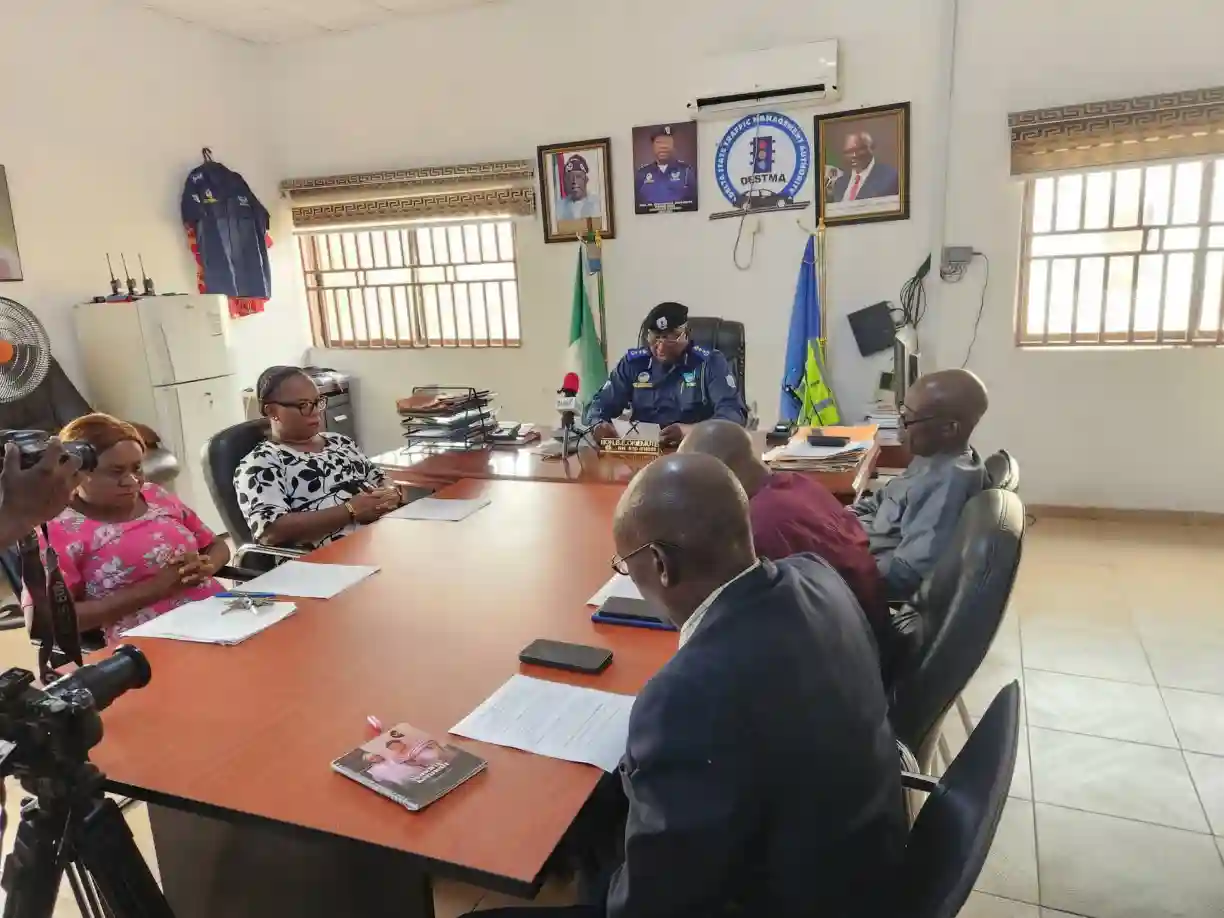
The Director-General of the Delta State Traffic Management Authority (DESTMA), Hon. Benjamin Okiemute, announced that his first year in office has delivered major reforms that have transformed the agency’s structure, operations, and revenue performance. Speaking during a media briefing to mark his one year in office, he explained that DESTMA was in poor condition before his appointment, describing it as an agency without a substantive DG, with dilapidated infrastructure, low staff morale, and only two functional patrol vehicles serving all operational commands.
Hon. Okiemute said he immediately launched an ambitious reform plan focused on restructuring the agency, reorganising staff, and restoring operational capacity by repairing patrol vehicles and tow trucks. He stated that new operational units such as the Provost Unit, Intelligence Unit, and the DESTMA Marshal were created to strengthen internal discipline and improve field operations.
He revealed that 4,328 vehicles were impounded during enforcement activities across Delta State within the year. He also confirmed that DESTMA’s revenue rose to over ₦110 million, which he described as a 273 percent increase. According to him, the reforms have led to improved traffic flow on major routes, better road safety, and stronger cooperation with security agencies. He added that he ordered a full staff audit to remove ghost workers and boost productivity.
The DG highlighted more achievements, including repairing additional patrol vehicles, deploying a rapid-response Sienna to the Provost Unit, opening a whistleblower line, and recognising outstanding officers for their performance. He noted that infrastructural upgrades were also completed, such as renovating zonal offices, improving impound facilities, and building a modern conference hall.
Hon. Okiemute said routine pep talks are now held to improve staff morale. He added that ongoing efforts include amending the DESTMA law, transitioning the agency into a paramilitary structure, and expanding its operational budget to support long-term institutional development.

