

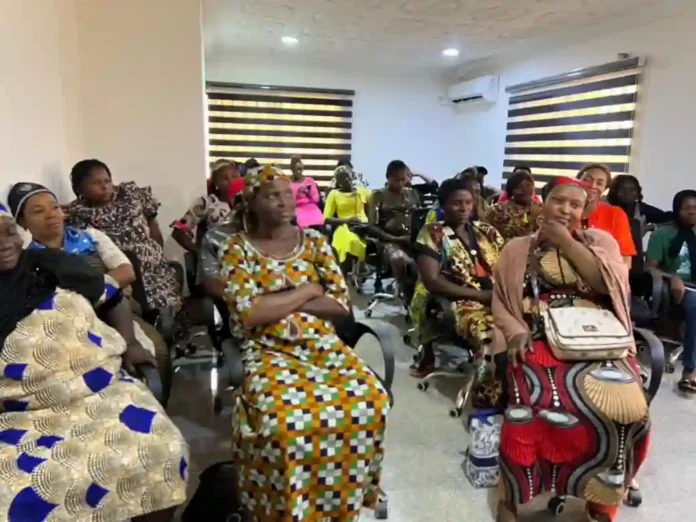
The EMMA Project has empowered rural women traders and farmers in Abuja by providing smartphones and targeted digital support designed to strengthen their businesses and close the widening digital gap.
At its second session held in Maitama, Abuja, the initiative—driven by a collaboration between Liverpool John Moores University (LJMU), United Kingdom, and Igbinedion University, Okada—focused on practical empowerment. Over 30 rural women participated, engaging in peer mentoring and hands-on learning tailored to real business challenges.
Through a transparent balloting process, selected participants received smartphones, a move seen as critical in helping them access online markets, communicate with customers, and manage transactions more efficiently. For many of the women, this marked their first direct entry into digital commerce tools.
“The goal is not just to give out devices, but to enable real economic participation,” a representative of the EMMA team explained during the session. “With the right tools and guidance, these women can expand beyond their immediate environments and compete in broader markets.”
The project, known as Electronic Moni-Mata (EMMA), combines academic expertise with grassroots engagement, ensuring that technology adoption is supported by continuous learning and mentorship. Participants were introduced to basic digital skills, financial management techniques, and strategies for leveraging mobile technology in daily trade activities.
Speaking on the initiative, Dr. P.L. Ozor noted, “We are deeply encouraged by the support from the Vice Chancellor of Igbinedion University, Prof. Lawrence Ikechukwu Ezemonye. This partnership reflects how academic institutions can directly impact communities.”
The Abuja session builds on earlier outreach in Okada, reinforcing a growing model that links education, technology, and local enterprise. By integrating smartphones with peer support systems, the EMMA Project is actively reshaping how rural women engage with business, information, and opportunity.

