

The Federal Government, through the Federal Executive Council (FEC), on Wednesday approved a $100 million African Development Bank (AfDB) loan for the Youth Investment Fund, a programme designed to support young Nigerian entrepreneurs aged 18 to 35 across micro, small and medium enterprises (MSMEs).
The approval was announced after the council’s 10th meeting in 2025, presided over by Bola Tinubu at the State House, Abuja.
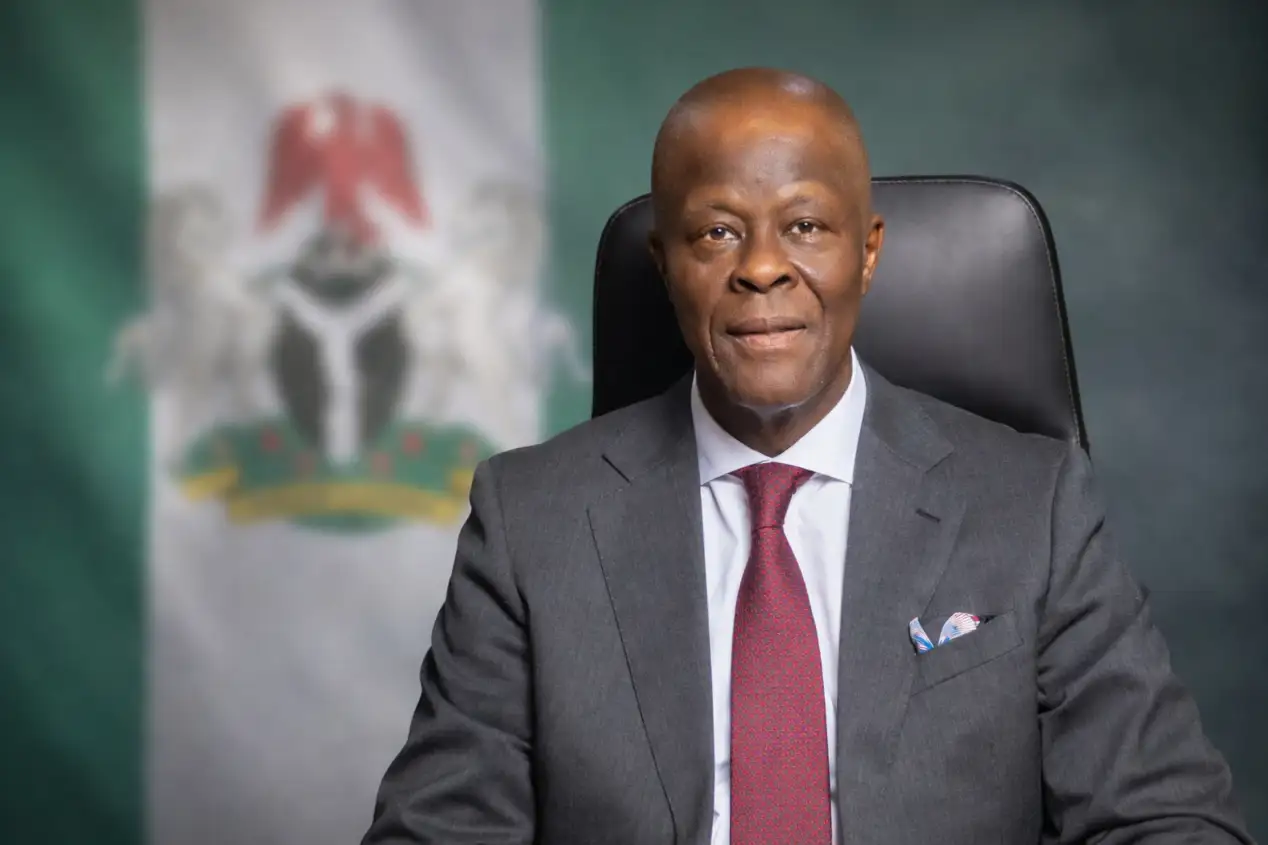
Minister of Finance and Coordinating Minister of the Economy, Wale Edun, said the Youth Investment Fund will provide a mix of equity, debt, grants and other forms of financial support targeted at empowering young people, especially at the grassroots level.
According to Edun, the initiative is aimed at unlocking the productive capacity of Nigeria’s youth population by improving access to finance, reducing barriers faced by startups, and supporting sustainable enterprise growth across sectors.
He further disclosed that FEC also approved financing from the Islamic Development Bank for the UBAS Integrated Agricultural Development Project, describing it as long-term concessional funding from multilateral development partners intended to promote inclusive economic growth.
Edun explained that a major highlight of the meeting was the presentation of the 2026–2028 Medium-Term Expenditure Framework (MTEF) and Fiscal Strategy Paper, which sets the tone for government spending priorities over the next three years.
According to him, President Tinubu commended ministers for their commitment to the Renewed Hope agenda and emphasised the need for strict prioritisation in public spending, given current fiscal constraints.
The President, Edun noted, directed ministries, departments and agencies to channel capital expenditure toward growth-enhancing projects, strategic legacy infrastructure and programmes with the highest possible economic impact.
Providing an overview of recent economic performance, Edun cited data from the National Bureau of Statistics indicating that Nigeria’s economy grew by 3.89 per cent year-on-year in the third quarter of 2025.
He said the growth was supported by expansion in agriculture and industry, alongside easing inflationary pressures, although overall performance remains below the administration’s annual growth target of seven per cent.
“The emphasis is on improving expenditure efficiency and ensuring maximum value for every naira,” Edun said, adding that the economic management team is currently collating sectoral priorities for the President’s final approval.
He also noted that the 2024 capital budget, which was extended for nearly one year by the National Assembly, has been largely fulfilled, reflecting progress in capital project execution.
On the 2025 fiscal year, Edun said capital releases are ongoing, with warrants already issued and ministries expected to conclude utilisation by December 30.
He added that while the Ministry of Budget and Economic Planning will lead the preparation of the 2026 proposals, the finance ministry remains available to provide necessary support throughout the process.
Edun also highlighted the approval of a new $50 million Islamic Development Bank-financed agricultural development project for Bauchi State, describing it as part of efforts to strengthen capital budgeting and restore the January–December budget cycle.
Shedding more light on the fiscal framework, Minister of Budget and Economic Planning, Atiku Bagudu, said FEC adopted the 2026–2028 MTEF developed in collaboration with the Economic Management Team, private sector stakeholders, civil society and development partners.
Bagudu explained that the framework reflects national priorities and aligns fiscal planning with the administration’s broader economic reform agenda.
He listed key assumptions underlying the framework, including a benchmark oil price of $64.85 per barrel, an oil production benchmark of 1.8 million barrels per day, and an exchange rate of N1,512 to the dollar for the 2026 budget.
According to him, total federal government revenue for 2026 is projected at N34.33 trillion, representing a 16 per cent decline compared to the 2025 estimate.
He said statutory transfers are expected to amount to N3 trillion, while debt servicing is projected at N10.91 trillion and personnel costs at N15.27 trillion.
The projected fiscal deficit, Bagudu said, stands at N20.1 trillion, equivalent to 3.61 per cent of Gross Domestic Product.
He added that President Tinubu has directed stronger coordination between fiscal and monetary authorities, increased investment in security and training institutions, and tighter measures to block revenue leakages in the oil, gas and solid minerals sectors.
Bagudu stressed that priority will also be given to transformative infrastructure projects capable of driving long-term economic growth and improving national competitiveness.
“The President believes that with a stabilised macroeconomy and diligent implementation of the MTEF, Nigeria will achieve higher growth and deepen reforms under the Renewed Hope agenda,” he said.
The approval of the MTEF by FEC, according to Bagudu, provides a firmer basis for concluding work on the 2026 Appropriation Bill, even as government manages capital rollovers and addresses the persistent gap between revenue and expenditure.
Answering questions from reporters, he said the next steps in the budget process would follow established institutional procedures.
Bagudu said President Tinubu, whom he described as “a strong believer in institutional order,” will transmit the budget to the National Assembly once it has been finalised and forwarded to him after FEC’s consideration.
“The National Assembly determines when they are ready to receive the budget,” he said, noting that the approved MTEF, now headed to the legislature, offers clearer guidance for completing the 2026 budget document.
He disclosed that a substantial portion of the 2025 capital expenditure is expected to be rolled over into 2026, acknowledging the multi-year nature of many government projects.
According to him, once the National Assembly grants approval, ministries will utilise the carried-over funds in line with agreed priorities.
“Distinguishing what must be completed within one fiscal period and what naturally spills into another can be complex,” Bagudu said, adding that ongoing engagement between the Executive and lawmakers is helping to ensure alignment.
On the challenge of revenue and expenditure mismatch, he said the issue is common to many budgets, whether national or corporate.
He pointed to fluctuating interest rates and their impact on debt servicing obligations as key pressures on public finances.
Despite revenue shortfalls, estimated at 16 per cent below last year’s projections, and the use of deliberately conservative oil assumptions, Bagudu said the government has continued to meet debt obligations and sustain capital spending, particularly on priority infrastructure projects under the Renewed Hope Agenda.
Providing further context on the oil benchmark, he said the 2026 projections were intentionally conservative to reduce fiscal volatility.
While the 2025 budget was based on $75 per barrel and production of 2.06 million barrels per day, the 2026 framework assumes $64.85 per barrel and production of 1.84 million barrels per day.
Emphasising the administration’s focus on human capital development, Minister of State for Health, Ishaq Salako, said sustained funding under the 2024–2028 Medium-Term Fiscal Framework would continue to support the revitalisation of primary healthcare facilities nationwide.
He said work has been completed on more than 4,000 primary health centres, with an additional 8,000 scheduled for upgrade across the country.
Salako highlighted progress in immunisation, noting that the HPV vaccine has protected over 14 million Nigerian children against cervical cancer.
He also said the combined rubella-measles vaccine reached nearly 30 million children within one year.
“These achievements demonstrate President Tinubu’s commitment to social welfare and improved health outcomes for Nigerians,” Salako said.
The approvals and fiscal directives taken at the meeting, officials said, signal a continued push for inclusive, job-rich growth, stronger security infrastructure and enhanced human capital development.
FEC also approved the establishment of service centres for agricultural mechanisation across Nigeria’s six geopolitical zones, alongside the deployment of 4,000 communication towers to underserved communities.
Minister of Information and National Orientation, Mohammed Idris, disclosed this at a post-council briefing.
He said the new agricultural mechanisation centres are expected to enhance year-round farming activities, support local communities and boost national food production.
The minister also outlined plans to expand digital connectivity, noting that about 23 million Nigerians currently lack adequate communication infrastructure.
“To address this, the Ministry of Communications and Digital Economy will deploy 4,000 towers to underserved areas, improving connectivity, economic activity, and security in these communities,” Idris said.
He noted that the initiatives complement the recently approved 2026–2028 MTEF and Fiscal Strategy Paper, which prioritise growth-oriented projects and social welfare programmes across sectors.
“These decisions reflect the government’s commitment to inclusive development, ensuring that all Nigerians benefit from economic and technological advancements,” Idris added.
Earlier, before the commencement of the FEC meeting, President Tinubu administered the oath of office to five newly appointed Permanent Secretaries.
Those sworn in were Alhaji Abdulkarim Ozi Ibrahim from the North Central region; Dr John Chidiebere Ezeamama; Dr Abdul Sule Usman Garba from the North West; Dr Ishiyaku Musa Mohammed representing the North East; and Dr Ukaire Binyerem Chigbowu from Abia State, representing the South East.
The President also administered the oath of office to the Chairman of the National Population Commission, Aminu Yusuf, as well as two other commissioners.
During the meeting, the Council observed a minute of silence in honour of former Minister of Foreign Affairs and Nigeria’s Permanent Representative to the United Nations, Ambassador Joy Uche Ogwu.
Ogwu, who died at the age of 79, served under former President Olusegun Obasanjo.

