

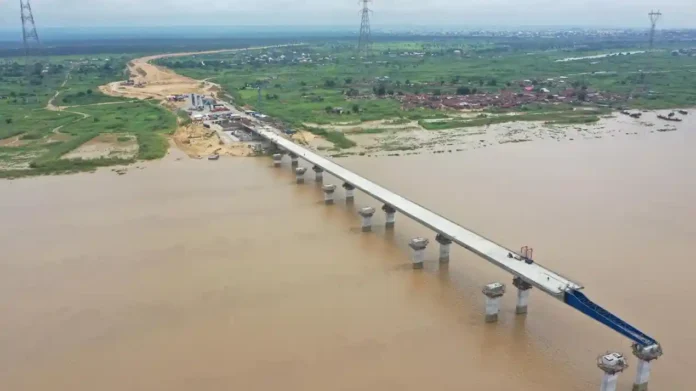
The Federal Government has announced a ban on sand mining within a 10-kilometre radius of the River Niger to safeguard the structural integrity of the First and Second Niger Bridges, which are critical transport assets.
The Minister of Works, David Umahi, disclosed this on Friday in Asaba during the commissioning of the Second Niger Bridge Closed-Circuit Television (CCTV) Cameras Monitoring Centre. He said the decision was approved by the Federal Executive Council as part of efforts to protect key federal infrastructure nationwide.
Umahi explained that the restriction was necessary to prevent environmental degradation that could pose risks to the stability of the bridges. He directed the Delta State Police Command to enforce the ban and arrest offenders involved in illegal sand mining within the prohibited area.
The minister also clarified that tolling on the Second Niger Bridge will not commence until all access and bypass roads on the Anambra and Delta sections are completed. He noted that although the tollgate is ready, the government will ensure smooth connectivity before introducing toll charges.
He added that the CCTV monitoring centre will enhance security along the federal highway. According to him, there will be no security checkpoints on the bridge, as security agencies will monitor activities remotely and respond to emergencies within five minutes.
In his remarks, the Asagba of Asaba, Prof. Epiphany Azinge, commended the Federal Government for completing the Second Niger Bridge and highlighted its socio-economic benefits.
Also speaking, the Chairman of the Anambra State Council of Traditional Rulers, the Igwe of Obosi, Chidubem Iweka, said the bridge has reduced congestion on the first Niger Bridge and improved traffic flow during the Yuletide. He expressed confidence that the security cameras would boost commuter safety and called for speedy completion of access roads. The project remains vital to regional mobility.

