

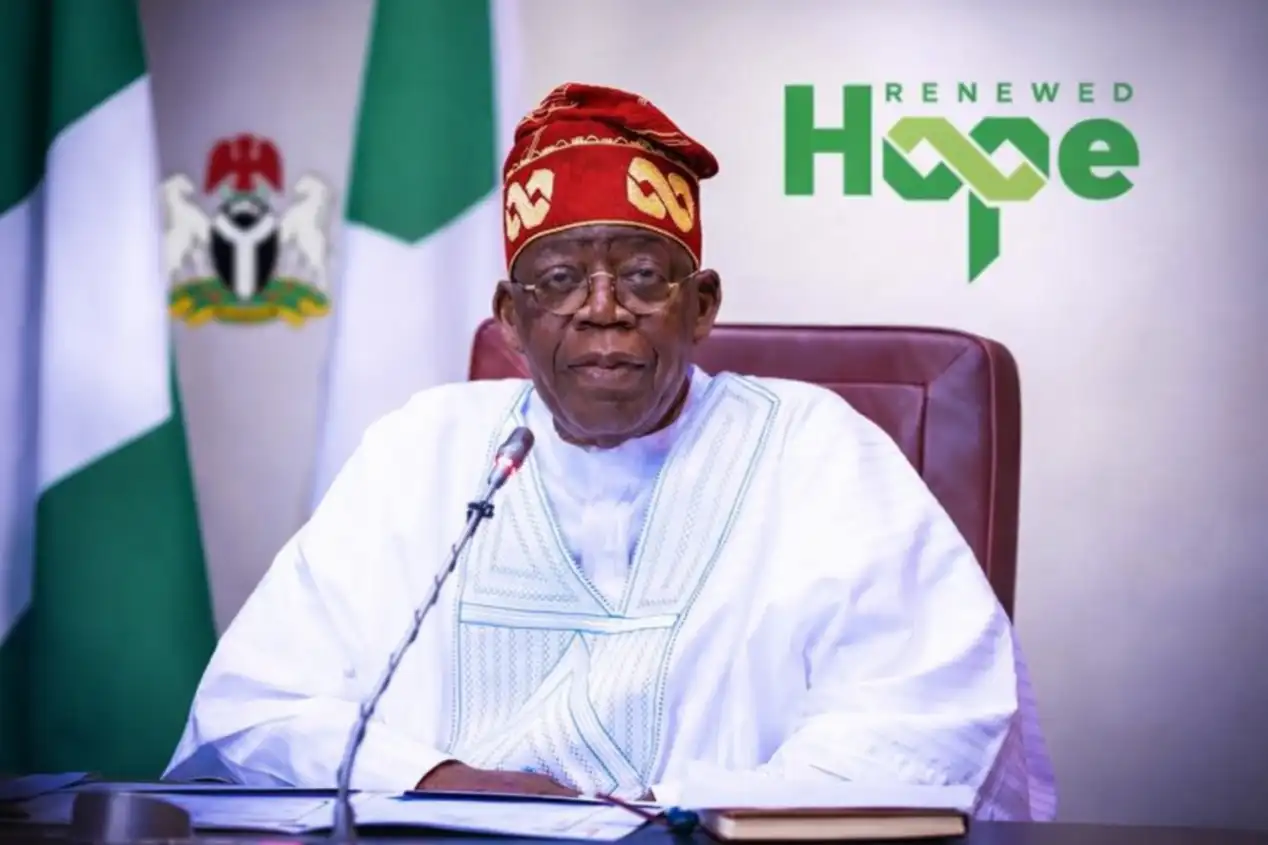
The Federal Government has expanded women-focused economic and social programmes under the Renewed Hope Agenda, positioning women as key drivers of Nigeria’s development rather than beneficiaries of welfare, a policy direction championed by Bola Ahmed Tinubu to link women’s participation directly to growth, stability and national productivity.
Under the Renewed Hope Agenda, policies targeting women have expanded beyond social welfare to structured economic, environmental and security frameworks designed to integrate women more fully into national productivity.
Women account for 49.43 per cent of Nigeria’s population, a demographic position government officials say validates women’s participation as critical to national growth and development.
President Tinubu has described investment in women as a strategic pathway to sustainable national development, with the 2025 Federal Budget reflecting this approach through increased allocations for women-led enterprises, agriculture, climate action and social protection.
Speaking on the policy direction, the President said, “The 2025 budget’s unprecedented allocation for women’s enterprise is not merely expenditure, it is strategic investment in our nation’s most valuable asset, generating returns through inclusive economic growth and sustainable development.”
In 2025, the Federal Government launched the Renewed Hope Social Impact Programme for Women, Children and Families to strengthen social and economic inclusion.
One of the flagship initiatives is the Women Agro Value Expansion Programme (WAVE), implemented by the Federal Ministry of Women Affairs and Social Development to strengthen women’s participation in agriculture, enterprise development and digital skills.
According to the Ministry, WAVE has provided digital and enterprise skills training to more than 50,000 women, approved ₦12 billion in credit facilities, and expanded access to social protection schemes across several states.
The Minister of Women Affairs and Social Development, Hajiya Imaan Sulaiman-Ibrahim, said the programme reflects the government’s intention to integrate women more fully into national productivity.
According to the Minister, “Nigeria’s agricultural transformation will rise or fall on the shoulders of women. When women are empowered, they rise with extraordinary impact, lifting households, strengthening communities, and securing our nation’s food future.”
Also advancing this agenda is the PowerHer 774 initiative, which aims to provide affordable energy access to three million women across all 774 local government areas.
Complementing these efforts is the Nigeria for Women Programme Scale-Up (NFWP-SU), which targets the empowerment of over four million women through access to finance, skills development and institutional support.
Progress under the programme includes the formation of more than 22,000 Women Affinity Groups and support for over 458,000 women with savings and access to financial services.
Beyond economic participation, the Federal Government has reinforced women’s roles in peace and security governance with the launch of Nigeria’s Third National Action Plan on Women, Peace and Security (2025–2030) in Abuja in December 2025.
The plan was inaugurated by the First Lady, Oluremi Tinubu, on behalf of the Federal Government, with participation from ministries, security agencies, development partners and civil society groups.
The action plan strengthens women’s participation in conflict prevention, peacebuilding, protection, crisis response and post-conflict recovery.
Oluremi Tinubu said women’s economic participation strengthens education outcomes, healthcare access and community stability.
In the energy and environmental space, the Federal Government has identified cooking energy as a critical intervention linking women’s welfare, public health and climate action.
Hajiya Imaan Sulaiman-Ibrahim said the transition from firewood and biomass to cooking solutions is essential to reducing health risks faced by women and girls, while addressing deforestation.
As part of this effort, the Ministry inaugurated a National Steering Committee on Clean Cooking Energy for Women to support adoption of Liquefied Petroleum Gas and other cooking technologies.
Women are also being integrated into climate action initiatives. The Minister of Environment, Balarabe Lawal, said Nigerian women are increasingly shaping climate solutions.
Through the National Green Women Platform and land restoration programmes under the Great Green Wall, women are participating in environmental sustainability efforts.
As part of its inclusive empowerment agenda, the Federal Government launched the Women in Mobility Programme at Eagle Square, Abuja, in partnership with the Credit Corporation of Nigeria.
The programme commenced with 1,000 pioneer beneficiaries and is expected to scale to 10,000 women by the first quarter of 2026.
Hajiya Imaan Sulaiman-Ibrahim said the initiative provides structured credit for women to participate in ride-hailing, delivery services and mobile trading.
International development partners have acknowledged Nigeria’s approach. United Nations Deputy Secretary-General, Amina Mohammed, described the framework as one that “delivers measurable societal and economic returns.”
Similarly, World Trade Organisation Director-General, Ngozi Okonjo-Iweala, said women-focused grants have enabled thousands of female entrepreneurs to scale operations and contribute to exports.

